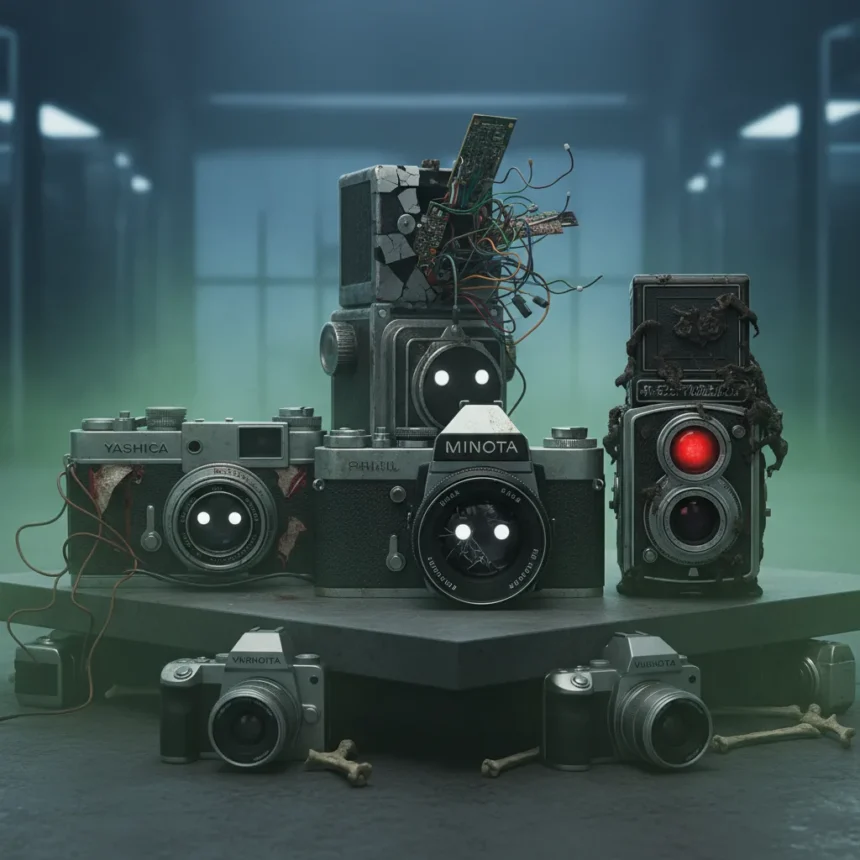
Iconic camera brands ownership has become a graveyard of abandoned trademarks. Walk into any online camera retailer and you’ll find products badged with names like Minolta, Yashica, Rollei, and Agfa—but these aren’t the cameras your parents shot with. The original manufacturers either went bankrupt or exited imaging entirely, leaving their brand names orphaned and now licensed to companies with no heritage connection whatsoever.
Key Takeaways
- Historic camera brands like Minolta and Yashica ceased operations decades ago but their trademarks survive under new ownership.
- Current owners of these brands are primarily foreign firms making budget cameras with no ties to the original manufacturers.
- Minolta name is now used by third parties for rebranded cheap point-and-shoots sourced from China.
- Yashica is owned by Hong Kong-based MHNG, which licenses it for entry-level mirrorless and compact cameras made in China.
- Consumers often expect heritage quality but receive low-spec imports at budget prices.
How Minolta Became a Zombie Brand
Minolta’s story is the clearest example of how a legendary brand dies. The original Minolta company merged with Konica to form Konica Minolta, which exited the camera business entirely in 2006. Rather than retire the name, it was sold off. Today, third parties license the Minolta trademark for rebranded cheap point-and-shoots manufactured in China and sold globally through online retailers. These cameras share nothing with the precision instruments Minolta built in the 20th century—not the engineering, not the optics, not the philosophy. Just the name on the box.
The disconnect is jarring. You search for a Minolta camera expecting to find something with the brand‘s DNA, and instead you get a generic budget compact with a Minolta sticker. It’s not deception by omission—it’s deception by nostalgia. The brand name carries weight it no longer deserves.
Yashica, Rollei, and Agfa: The Pattern Repeats
Yashica, the Japanese camera maker, has been defunct since the 1980s. Its trademark is now owned by a Hong Kong-based firm called MHNG, which licenses it for entry-level mirrorless and compact cameras manufactured in China. Rollei, the iconic German brand, has filed for bankruptcy multiple times and is now controlled by foreign firms producing toy-like cameras and action camera clones. Agfa, which originally focused on imaging products, sold its camera division long ago and now the brand name survives for photo paper, films, and low-end digital cameras under new management.

What unites all four is the same pattern: original company exits imaging, trademark gets acquired by a third party with no historical stake in the brand, and cheap imports get slapped with a famous name. The cameras work. They’re affordable. But they’re not what the brand once represented, and consumers who buy them expecting Minolta or Yashica quality are being misled by the power of a name.
Why This Matters in Today’s Camera Market
The camera market is experiencing a nostalgia boom. Film photography is trendy again. Vintage cameras command premium prices. In this environment, zombie brands prey on consumers who associate names like Yashica and Minolta with quality and heritage. A buyer searching for a Yashica mirrorless camera on Amazon might assume they’re getting something with a connection to the brand’s history. They’re not. They’re getting a budget import.



This is fundamentally different from how active brands like Fujifilm or Leica operate. Those companies maintain continuity. They innovate within their heritage. Zombie brands offer only the name. The specs are generic. The build quality is budget. The innovation is nonexistent. Yet the name still sells because consumers don’t know the brand is dead.
What Happens to These Products?
Yashica digicams and Rollei action cameras compete in the budget segment against actual entry-level lines from Canon, Nikon, and Sony. They’re available globally through Amazon, eBay, and AliExpress at prices ranging from around $50 to $300 for digital compacts and film cameras. Agfa film sells for roughly €10–20 per roll in European markets. Yashica hybrid cameras run approximately $150 USD. These aren’t premium products. They’re positioned as affordable alternatives, and the pricing reflects that.
The real shock isn’t that these products exist—it’s that the brand names still carry enough weight to make people buy them. A consumer in Europe sees an Agfa camera and thinks of German precision. A photographer in Asia sees a Yashica and recalls the brand’s film camera legacy. Neither expectation matches reality. The products are made by the same manufacturers producing generic cameras under a dozen other names. The only thing iconic about them is the badge.
Can These Brands Ever Be Resurrected?
Theoretically, yes. A company could acquire one of these trademarks and invest in actual heritage-connected products. But that hasn’t happened and isn’t likely to. The brands are profitable exactly because they’re cheap to operate. New owners buy the trademark for a fraction of what it once cost, slap it on existing products, and harvest the brand equity without spending a penny on innovation or quality. Why invest in real engineering when you can sell nostalgia?



The tragedy is that these names represent real innovation. Minolta pioneered autofocus. Yashica built reliable rangefinders. Rollei created the Hasselblad’s competitor. Agfa was an imaging giant. Their legacies are now reduced to marketing labels on generic hardware. The brands didn’t come back from the dead—they’re just haunting the internet, pretending to be what they once were.
Are these zombie camera brands worth buying?
If you understand you’re buying a budget camera with a famous name, then yes—they’re fine for casual use. But if you’re expecting heritage quality or any connection to the brand’s original legacy, you’ll be disappointed. Buy one for the price, not the name.
Why do companies still use these dead brand names?
Trademarks are valuable even when the original company is gone. A new owner can license or acquire a famous name for cheap, then use it to sell generic products at higher prices than they could under an unknown brand. It’s marketing leverage without the cost of building brand equity.
What’s the difference between a zombie brand and a revived brand?
A revived brand maintains or rebuilds its original values—think of how Kodak Pixpro cameras attempt to preserve some heritage connection. A zombie brand just borrows the name while abandoning everything else. Minolta, Yashica, Rollei, and Agfa are zombies because they have no continuity with their originals.
The camera industry’s zombie brands are a cautionary tale about how nostalgia can be weaponized. A name that once meant something—precision, innovation, reliability—now means nothing except that someone paid to use it. Consumers deserve to know the difference between a brand with heritage and a brand that’s just wearing a dead company’s skin.
Where to Buy
Yashica MF-1 | Yashica City 200 | $55.95
Edited by the All Things Geek team.
Source: TechRadar