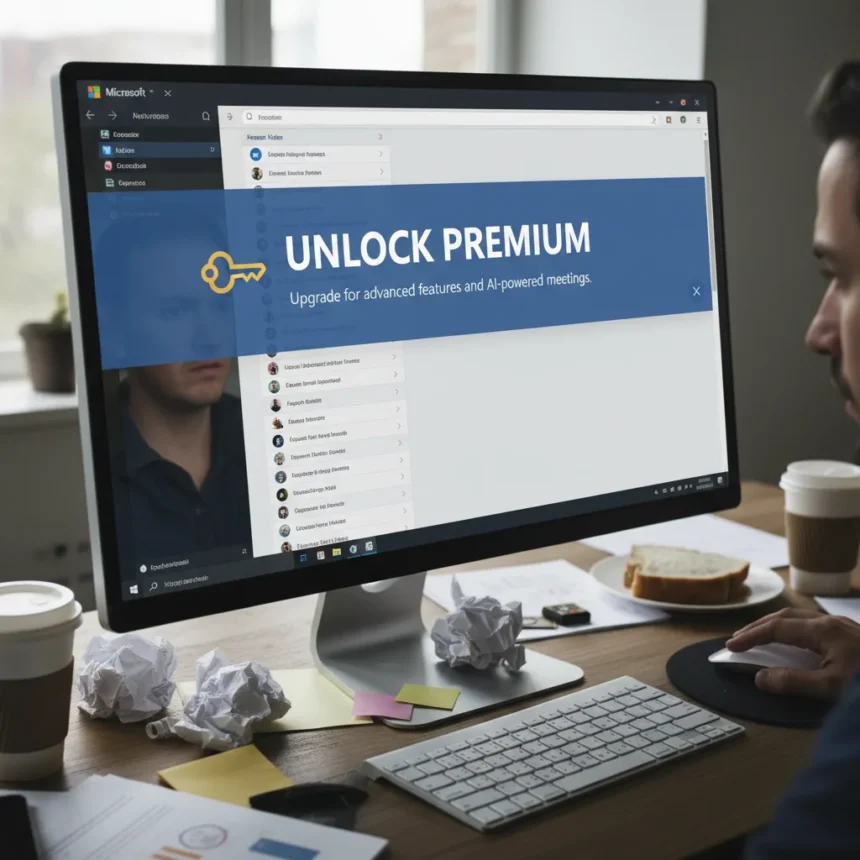
Microsoft Teams users worldwide are outraged over a new persistent ‘Unlock Premium’ banner appearing in the application, with complaints centered on aggressive upselling tactics and poor user experience design, according to reporting from Windows Central. The Microsoft Teams Premium banner has triggered immediate backlash from free-tier users who describe the placement and messaging as intrusive and unprofessional, raising questions about whether Microsoft’s design philosophy has shifted toward prioritizing monetization over usability.
Key Takeaways
- A persistent ‘Unlock Premium’ banner in Microsoft Teams is prompting widespread global user complaints.
- Users characterize the banner as ‘really unprofessional’ due to its aggressive promotional placement.
- The backlash highlights broader concerns about Microsoft’s UX design decisions in productivity software.
- The banner disrupts the free user experience with intrusive upselling tactics.
- This shift raises questions about balancing monetization with user satisfaction in freemium products.
Why the Microsoft Teams Premium banner is sparking outrage
The Microsoft Teams Premium banner represents a departure from subtle monetization toward in-your-face upselling. Users report the banner appears persistently within the app interface, interrupting workflows and constantly redirecting attention toward paid features. What distinguishes this approach from typical freemium monetization is the sheer prominence of the call-to-action. Rather than a discrete upgrade prompt buried in settings or a gentle suggestion in the onboarding flow, the banner occupies valuable screen real estate in the active workspace, making it impossible to ignore during daily use.
The core complaint centers on professionalism. When a user opens Microsoft Teams to collaborate with colleagues, they expect the interface to prioritize communication and productivity, not sales messaging. The persistent banner violates this expectation, creating friction between the application’s stated purpose and its actual behavior. This is not a subtle upsell—it is aggressive monetization that treats the free tier as an interruption vector rather than a viable product experience. Users describe this as fundamentally at odds with how enterprise software should behave, especially in a tool designed for professional communication.
The broader UX design question Microsoft faces
This Microsoft Teams Premium banner incident exposes a tension at the heart of freemium product strategy: how aggressive can monetization pressure become before it damages the product itself? Microsoft’s decision to introduce a persistent, intrusive banner suggests the company has either underestimated user sensitivity to this tactic or prioritized short-term conversion metrics over long-term user satisfaction and retention.

The backlash also reveals that users distinguish between legitimate feature limitations and aggressive sales tactics. Free-tier users expect to encounter paywalls around premium functionality—that is the nature of freemium models. What they do not expect is constant, interruptive messaging designed to nag them into upgrading. This distinction matters because it shapes how users perceive the company’s values. A product that respects user agency by offering premium features without harassment feels different from one that treats the free tier as a frustration device designed to drive conversions. Microsoft’s approach leans toward the latter, and users are noticing.
How this reflects Microsoft’s broader design philosophy
The Microsoft Teams Premium banner is not an isolated decision—it fits into a larger pattern of how Microsoft manages monetization across its product portfolio. The company operates at the intersection of consumer and enterprise software, which creates competing pressures. Enterprise customers demand professional, distraction-free interfaces. Consumer and small-business users on free tiers expect not to be constantly pestered. A persistent, aggressive banner fails both audiences. Enterprise users see unprofessionalism; free-tier users see disrespect.



The question this raises is whether Microsoft’s design teams have adequate input into monetization decisions, or whether revenue targets are being set by business units without sufficient consideration for user experience consequences. A well-designed freemium product balances these tensions by making premium features genuinely valuable while keeping the free tier functional and respectful. The Microsoft Teams Premium banner suggests this balance has shifted decisively toward monetization pressure, at the expense of UX quality.
What alternatives exist for freemium monetization?
Other productivity platforms have navigated freemium monetization without resorting to persistent, intrusive banners. Some applications use feature-gating alone—premium users simply have access to capabilities that free users do not, with no ongoing messaging. Others use time-based or usage-based trials that introduce premium features temporarily, allowing users to experience value before deciding to pay. Still others reserve upgrade prompts for specific moments when users encounter a premium feature they want to use, rather than interrupting the entire interface with constant promotional noise.
These alternatives exist because they work. They generate revenue without degrading the user experience or signaling to users that the company does not respect their time. The fact that Microsoft chose a more aggressive approach suggests either a deliberate strategic shift toward maximizing conversion at any UX cost, or a failure of design leadership to push back against revenue targets that compromise product quality. Either way, users are responding by calling out the decision as unprofessional—a damaging perception for a company that markets itself on productivity and professionalism.
Does the Microsoft Teams Premium banner actually drive conversions?
The short-term answer is probably yes. Aggressive upselling tactics do generate some incremental conversions, which is why they are so common in freemium products. The longer-term question is whether the banner damages user satisfaction, increases churn, or erodes trust in Microsoft’s design judgment enough to offset those gains. This is a calculation that only Microsoft has visibility into, and the company has not publicly addressed whether the banner is performing as intended or if user feedback has prompted any reconsideration.



Is the Microsoft Teams Premium banner appearing for all users?
The research brief does not specify whether the banner is rolling out globally to all free-tier users simultaneously or whether it is appearing in specific regions or user segments first. The reporting indicates the banner is appearing for Microsoft Teams users worldwide, but the exact rollout timeline and geographic distribution remain unclear from available information.
Will Microsoft change the Microsoft Teams Premium banner based on user feedback?
Microsoft has not publicly responded to the backlash or indicated whether the company plans to modify the banner’s placement, messaging, or frequency. User complaints often do influence product decisions at Microsoft, particularly when they highlight professionalism concerns that could affect enterprise adoption. However, without an official statement, it is unclear whether the company views the current design as working as intended or whether internal discussions about modifications are already underway.
The Microsoft Teams Premium banner controversy reflects a fundamental tension in freemium product design: the temptation to maximize monetization pressure often conflicts with the user experience quality that drives long-term success. Microsoft’s decision to introduce a persistent, intrusive banner has succeeded in generating revenue conversation—just not the kind the company likely wanted. User backlash centered on professionalism and respect suggests that Microsoft may have optimized for short-term conversion at the expense of the brand perception and user satisfaction that matter far more over time. For a company selling productivity software to enterprises and professionals, that is a costly trade-off.
Edited by the All Things Geek team.
Source: Windows Central