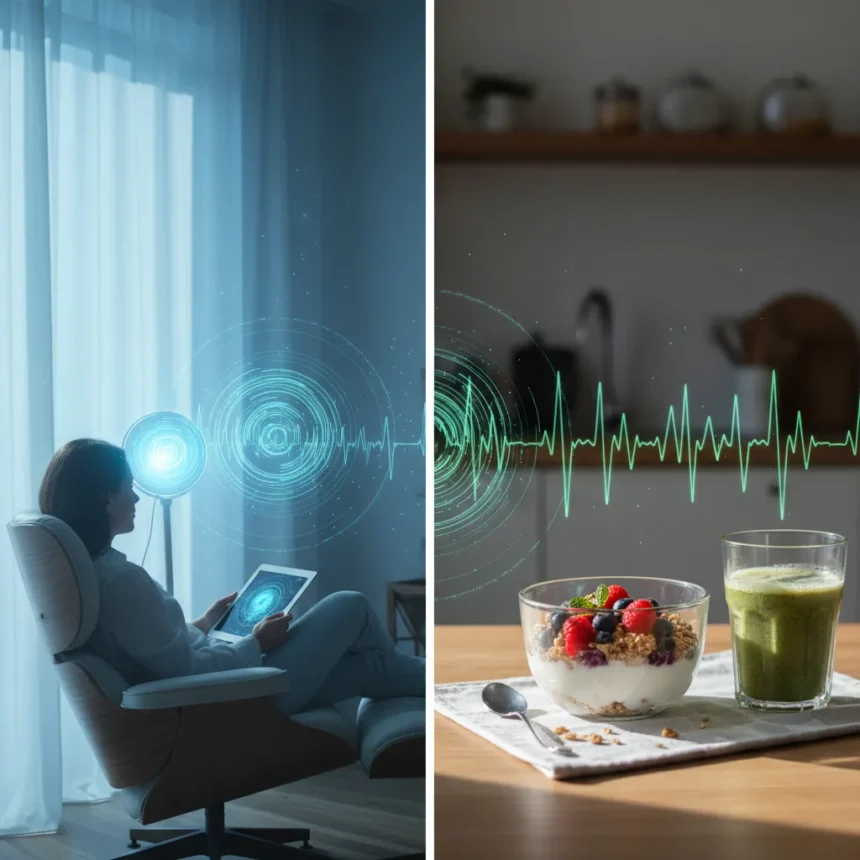
Morning light and gut health represent a caffeine-free alternative to waking up, according to sleep experts who argue the combination works faster than coffee for instant energy. Rather than reaching for a cup of coffee, the routine pairs immediate light exposure with gut microbiome activation to reset your circadian rhythm and boost alertness within minutes of waking.
Key Takeaways
- Sky blue light exposure suppresses melatonin and signals daytime to your brain within 10-30 minutes of waking.
- Your gut produces approximately 90% of your body’s serotonin and up to 400 times more melatonin than your brain.
- Warm lemon water or fermented foods consumed within 30 minutes of waking activate gut microbes and enhance serotonin regulation.
- Light therapy lamps (10,000 lux) provide an alternative to natural sunlight for circadian reset, especially during winter or shift work.
- Evening blue light from screens suppresses melatonin production and disrupts sleep quality, making morning light exposure even more critical.
How Morning Light and Gut Health Replace Caffeine
The routine works by addressing two biological systems simultaneously. Morning light and gut health together create a faster wake-up response than caffeine because they target the root of alertness: your circadian rhythm and neurotransmitter production. Caffeine masks fatigue temporarily but does not reset your internal clock or support the gut bacteria responsible for producing the serotonin and melatonin that regulate sleep-wake cycles.
Sleep experts emphasize that this approach is not about replacing one stimulant with another—it is about restoring the biological processes that caffeine disrupts. When you drink coffee late in the day, it interferes with melatonin production and destabilizes your gut microbiome, creating a cycle of poor sleep and morning grogginess. The 2-step routine breaks that cycle by working with your body’s natural chemistry rather than against it.
Step 1: The Sky Blue Fix—Light Exposure for Instant Alertness
Get 10 to 30 minutes of natural morning sunlight immediately upon waking, or use a light therapy lamp set to 10,000 lux if sunlight is unavailable. Look toward the light source without staring directly at the sun. This exposure suppresses melatonin production and signals to your brain that it is daytime, triggering rapid alertness. The mechanism is straightforward: blue light wavelengths from the sky trigger photoreceptors in your eyes that directly influence your pineal gland, the organ responsible for melatonin regulation.

Light therapy lamps typically cost between $20 and $100 and are widely available online and in retail stores. They are particularly useful during winter months, in high-latitude regions, or for people working night shifts who cannot access natural sunlight in the morning. The key is consistency—the same time every morning signals your body to establish a stable wake time, which reinforces your circadian rhythm over days and weeks.
Step 2: The Gut-Brain Kickstart—Fermented Foods Within 30 Minutes
Consume warm water with lemon, or eat fermented and prebiotic foods such as yogurt, kefir, kimchi, onions, garlic, or bananas within 30 minutes of waking. These foods activate your gut microbiota and support the production of short-chain fatty acids (SCFAs), which enhance communication between your gut and brain. Your gut produces approximately 90% of your body’s serotonin and up to 400 times more melatonin than your pineal gland. By feeding your gut bacteria immediately after waking, you optimize their ability to regulate these critical neurotransmitters throughout the day.



The gut-brain axis is where the real power of this routine lies. Your gut microbiome influences tryptophan metabolism, the amino acid precursor to serotonin production. When your gut bacteria are well-nourished and diverse, they produce more serotonin and regulate melatonin more effectively, leading to better sleep quality and faster morning alertness. This is why fermented foods and prebiotics are so effective—they directly feed the bacteria responsible for neurotransmitter synthesis.
Why This Works Better Than Caffeine and Melatonin Supplements
Caffeine provides a temporary energy boost by blocking adenosine receptors in your brain, but it does nothing to address the underlying circadian dysfunction that causes morning fatigue. Worse, caffeine consumed late in the day interferes with melatonin production and disrupts sleep quality, creating a vicious cycle of dependence. Melatonin supplements, while useful for occasional jet lag, can cause morning grogginess and are not designed for daily use. The 2-step routine avoids these pitfalls by working with your body’s natural biology rather than fighting it.
Morning light and gut health also address the root cause of fatigue: a disrupted circadian rhythm and poor neurotransmitter regulation. By resetting your internal clock and optimizing gut bacteria function each morning, you establish stable sleep-wake cycles that reduce fatigue over time. This is not a quick fix—it is a sustainable approach that improves sleep quality, daytime alertness, and overall energy levels within days to weeks of consistent practice.
Optimizing Your Sleep Environment and Schedule
Beyond the 2-step routine, sleep experts recommend maintaining a consistent sleep schedule, keeping your bedroom dark and cool, and avoiding caffeine, alcohol, and screens in the evening. Evening blue light from phones, tablets, and computers suppresses melatonin production and delays sleep onset, undoing the benefits of your morning light exposure. A dark, cool bedroom (around 65–68°F or 18–20°C) supports melatonin production and deep sleep.



The synergy between morning light exposure, gut health, and evening habits creates a complete circadian reset. When you combine all three—morning light, fermented foods, and evening darkness—your body’s natural sleep-wake cycle becomes self-reinforcing. You fall asleep faster, sleep deeper, and wake more naturally, reducing your dependence on caffeine entirely.
Can fermented foods alone improve morning energy?
Fermented foods support gut health and serotonin production, but they work best paired with morning light exposure. Light exposure is what actually resets your circadian rhythm and suppresses melatonin immediately upon waking. Fermented foods enhance the effect by optimizing the neurotransmitters that maintain alertness throughout the day. Together, they are more effective than either alone.
How long does it take to feel the effects of this routine?
Morning light exposure provides noticeable alertness within 10–30 minutes of exposure. Gut health improvements take longer—typically days to weeks—as your microbiome adapts to consistent fermented food intake and establishes stable serotonin production. For best results, commit to the routine consistently for at least two weeks before evaluating whether your morning energy has improved.
Is a light therapy lamp as effective as natural sunlight?
Light therapy lamps set to 10,000 lux are comparable to natural morning sunlight for circadian reset, especially for people in climates with limited winter daylight or those working night shifts. Natural sunlight is ideal, but a quality light therapy lamp is a reliable alternative when outdoor light is unavailable. Consistency matters more than the light source—the same time every morning, whether natural or artificial, is what trains your circadian rhythm.
The 2-step routine of morning light and gut health is not revolutionary, but it is often overlooked in favor of quick caffeine fixes. By addressing your circadian rhythm and gut microbiome simultaneously, you address the actual causes of morning fatigue rather than masking them. If you are tired of depending on coffee and want sustainable, science-backed energy, this routine offers a genuine alternative that improves sleep quality and daytime alertness over time.
Edited by the All Things Geek team.
Source: Tom's Guide