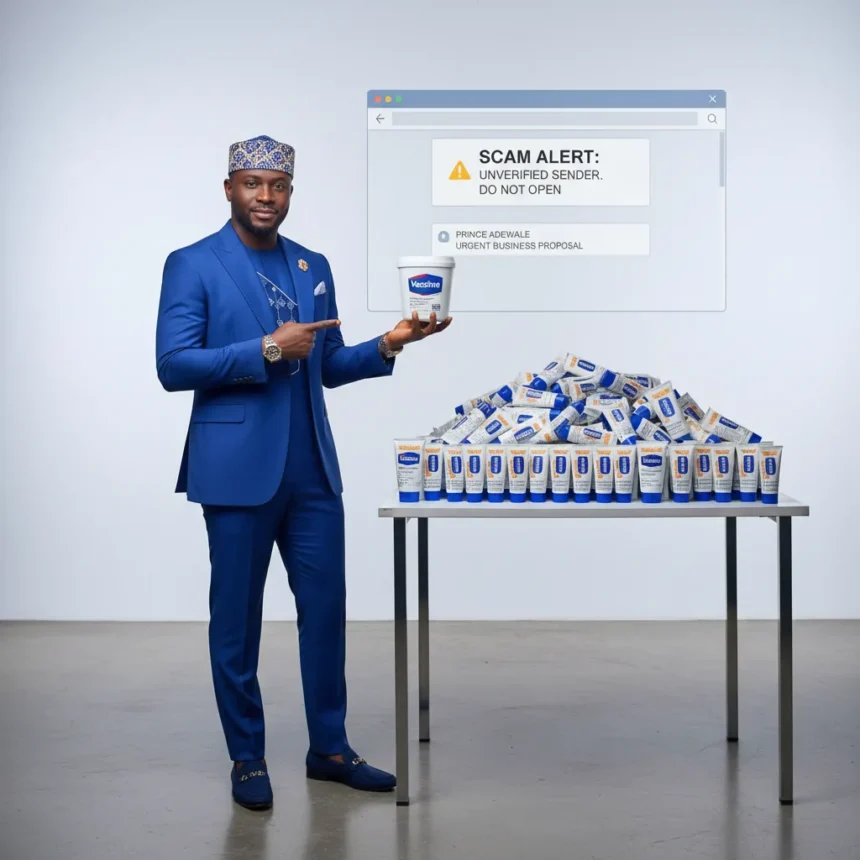
The Nigerian prince scam has been a punchline for decades, but a new Vaseline Nigeria campaign flips the joke into a serious message about trust and authenticity. Chris Okagbue, an actor and member of the Onitsha royal family of Anambra State, serves as a brand ambassador for Vaseline Nigeria and is the face of a campaign that compares spam emails claiming to be from a Nigerian prince with counterfeit skincare products flooding the market.
Key Takeaways
- Real Nigerian prince Chris Okagbue stars in Vaseline campaign addressing the Nigerian prince scam
- Campaign draws parallel between spam emails and fake Vaseline products to highlight erosion of trust
- Vaseline introduced QR verification system on products to combat counterfeits
- Instagram post reached nearly 2 million views and 177,000 likes
- Nigerian prince scams still generate significant revenue despite being widely recognized as fraudulent
How a Real Prince Turned a Scam Into a Teaching Moment
The campaign’s core insight cuts deeper than surface-level humor. Okagbue’s message warns that repeated exposure to fake versions of something erodes trust in the authentic one. When people see the same lie repeated enough times, they start doubting the truth. This principle applies equally to email fraud and counterfeit beauty products. The campaign uses the familiarity of the Nigerian prince scam—a phenomenon so widespread it has become internet folklore—to educate consumers about a real problem: counterfeit Vaseline products circulating in Nigeria.
The viral response suggests the audience appreciated the boldness. A single Instagram post featuring Okagbue addressing the scam reached nearly 2 million views and attracted 177,000 likes, with hundreds of positive comments. The campaign managed to be funny without being flippant about either problem, striking a tone that resonated across social media.
Why Counterfeit Products Matter as Much as Email Scams
The Nigerian prince scam has become so embedded in popular culture that many people forget it still works. Estimates suggest these emails generate up to $700,000 yearly, despite being instantly recognizable as fraudulent to most readers. The persistence of the scam reveals something uncomfortable: repetition and familiarity can make people doubt legitimate claims. Vaseline’s campaign applies this insight to a different threat—counterfeit skincare products that undermine consumer confidence in the real brand.

Vaseline responded by introducing a new QR verification system on its products, allowing customers to confirm authenticity at the point of purchase. This tangible solution pairs with the campaign’s messaging, giving consumers a tool to avoid fakes. The approach transforms the ad from pure entertainment into a practical guide for protecting themselves.
The Broader Message Behind the Nigerian Prince Scam Campaign
What makes this campaign effective is its refusal to treat either problem as trivial. The Nigerian prince scam persists because it exploits human hope and curiosity. Counterfeit products exploit consumer trust. Both damage the reputation of the real thing. By pairing them visually and thematically, Okagbue’s message becomes unavoidable: when fakes are everywhere, people stop believing in genuine versions.



The campaign also benefits from Okagbue’s authentic connection to the subject. He is not just an actor playing a prince—he is a member of Nigerian royalty commenting on a scam that has appropriated his heritage and social status. This authenticity gives the campaign credibility that a conventional celebrity endorsement would lack. Audiences recognize the difference between a hired spokesperson and someone with genuine standing to speak on the topic.
What This Means for Brand Trust and Consumer Behavior
The viral success of this campaign reveals that consumers are hungry for brands that acknowledge real problems instead of pretending they do not exist. Vaseline did not ignore the counterfeit issue or hide behind corporate speak. Instead, it leaned into cultural awareness and used humor to communicate a serious message about verification and authenticity.
The QR verification system represents a practical evolution in anti-counterfeiting measures. Rather than relying solely on packaging design or holograms, Vaseline gave customers an interactive way to confirm what they are buying. This approach mirrors strategies used by luxury brands and pharmaceuticals, bringing consumer verification tools into the mainstream skincare market.
Why Does the Nigerian Prince Scam Still Work?
Despite being widely recognized as fraudulent, the Nigerian prince scam remains profitable because it only needs to work once in thousands of attempts. A tiny percentage of recipients—people in financial desperation, elderly individuals less familiar with internet fraud, or simply people having an unusually credulous moment—still fall for it. The scam’s longevity proves that repetition and familiarity do not always breed skepticism; sometimes they breed acceptance.



How Can Consumers Spot Counterfeit Vaseline Products?
The new QR verification system on Vaseline products allows customers to scan and confirm authenticity instantly. Beyond that, consumers should purchase from authorized retailers and examine packaging closely. Counterfeit products often have subtle printing errors, inconsistent logos, or unusual textures that differ from the genuine product.
Is the Nigerian Prince Scam Campaign Still Running?
The campaign gained significant traction on social media with the viral Instagram post. While the research brief does not specify the campaign’s current status or duration, the viral momentum suggests it achieved its awareness goals. The campaign’s success lies not in how long it runs but in how effectively it reframed a tired joke into a meaningful conversation about trust, authenticity, and protecting consumers from both digital fraud and counterfeit products.
Edited by the All Things Geek team.
Source: Creativebloq