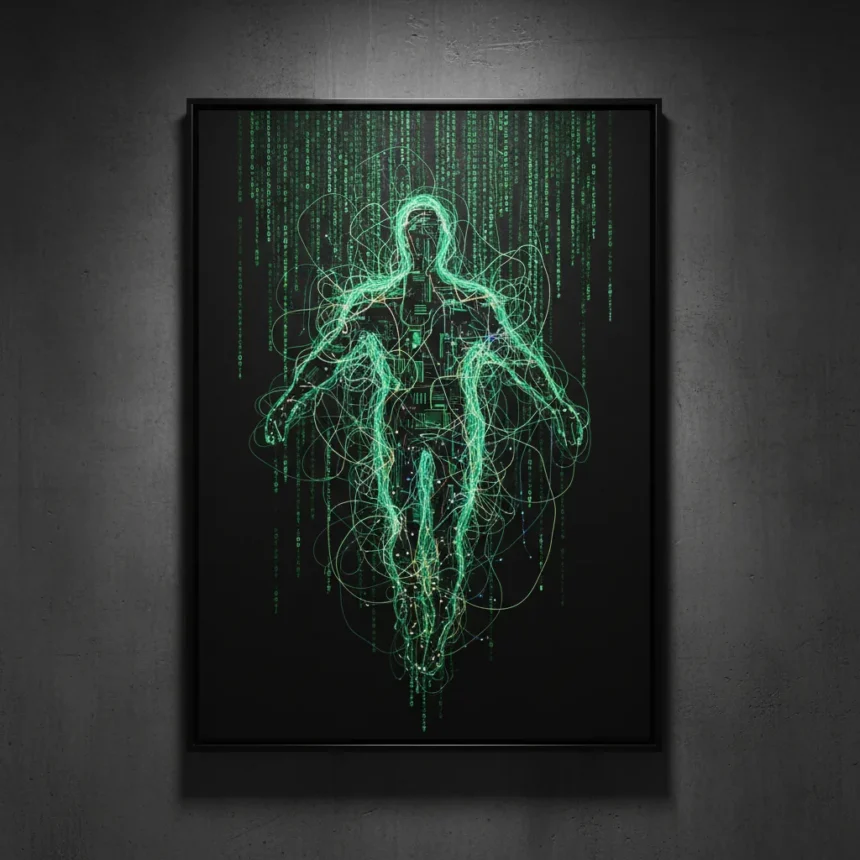
The original Matrix poster has become a lightning rod for design criticism, with some claiming it resembles early AI-generated slop. But dismissing it as simply bad design misses what made it visually distinctive for 1999, and why collectors still hunt for original one-sheets today.
Key Takeaways
- The original Matrix poster used a deliberately corrupted typeface based on Times font, sliced and rearranged to look like digital code.
- The poster’s color palette leaned heavily toward blue, matching the film’s visual grading and creating a cohesive aesthetic.
- Original one-sheet Matrix posters are very scarce and expensive in the collector market, indicating lasting cultural value.
- The poster’s aesthetic reflects 1999 design trends, not poor execution or AI-like randomness.
- Directors’ criticism of the poster as AI slop reflects modern design sensibilities, not objective visual failure.
What Made the Original Matrix Poster Visually Distinctive
The original Matrix poster wasn’t a failure of design—it was a deliberate choice to make typography itself look corrupted. The film’s logo used Times font, creatively sliced and rearranged with horizontal lines to suggest digital interference or code overlay. This approach aligned perfectly with the film’s themes about reality being disrupted by digital systems. The design communicated the movie’s premise through pure visual language, not through narrative clarity or photorealism.
What critics now call AI slop was actually intentional visual noise serving a conceptual purpose. The blue color palette that dominates the poster wasn’t accidental either—it matched the film’s original color timing and grading, creating visual continuity between marketing and the actual movie experience. This level of cohesion between poster design and final film aesthetic was relatively sophisticated for mainstream Hollywood marketing in 1999.
Why the Poster Divides Modern Audiences
The gap between modern criticism and the poster’s original reception reveals how design trends shift. What looked latest in 1999—the intentional visual glitch effect, the heavy blue cast, the corrupted typography—now reads to some viewers as chaotic or poorly executed. The directors’ comparison to AI slop likely reflects their current design sensibilities, not an objective reassessment of their film’s marketing materials.

The poster’s aesthetic also reflects the specific constraints and possibilities of 1999 graphic design. Digital tools for creating intentional visual distortion were less refined than today. What could be achieved through deliberate design choices sometimes looked crude by contemporary standards, even when the intent was clear. The poster occupies an awkward middle ground: too intentional to be accidental, but visually rough enough to seem unpolished by 2020s standards.
The Collector’s Perspective on Original Matrix Poster Value
If the original Matrix poster were truly a design failure, it would not command premium prices in the collector market. Original one-sheet posters are described as very scarce and expensive, while other regional variants like the French one-panel are scarce but less costly. This price differentiation suggests that collectors recognize meaningful distinctions in the original’s design and cultural significance.



The scarcity and value of original Matrix posters indicate that the design has enduring appeal beyond nostalgia. Collectors specifically seek out the original one-sheet, not reproductions or later variants. This behavior suggests the poster’s visual language resonates with audiences who understand its historical context and intentional design choices. A truly bad poster would not sustain collector interest or command premium pricing decades later.
Should We Reassess the Original Matrix Poster’s Legacy
The original Matrix poster deserves reconsideration as a successful example of 1999 design thinking, not as a cautionary tale about poor aesthetics. Its corrupted typography, blue color palette, and visual noise all served the film’s themes and marketing strategy. The fact that it looks different from modern design trends does not make it objectively bad—it makes it historically specific.
The directors’ current criticism likely reflects how their own visual preferences have evolved, not a sudden realization that the poster was always flawed. Design is contextual. A poster that communicated effectively in 1999, that matched the film’s visual language, and that remains collectible today has earned the right to be evaluated on its own terms, not through the lens of contemporary AI-generated aesthetics.
Is the original Matrix poster actually badly designed
No. The poster uses deliberate visual strategies—corrupted typography, blue color grading, and digital noise effects—that aligned with the film’s themes and 1999 design trends. What looks crude by modern standards was intentional design execution serving a conceptual purpose.



Why do original Matrix posters cost so much
Original one-sheet Matrix posters are very scarce and expensive because they are highly collectible. The rarity and cultural significance of the original design drive up prices in the collector market, suggesting the poster has lasting visual and cultural value.
How did the film’s visual style influence the poster design
The poster’s heavy blue color palette directly matched the film’s original color timing and grading, creating visual continuity between marketing materials and the actual movie. This cohesion between poster and film aesthetic was a deliberate design strategy, not an accident.
The original Matrix poster deserves to be understood as a product of its time, not judged by standards that did not exist in 1999. Its intentional design choices—the corrupted typography, the blue dominance, the visual noise—communicated the film’s themes effectively and created a visually distinctive marketing image that collectors still value today. Rather than dismissing it as bad design or AI slop, we should recognize it as a successful example of how graphic design can serve narrative and thematic purposes, even when that approach looks unconventional by modern standards.
Edited by the All Things Geek team.
Source: Creativebloq