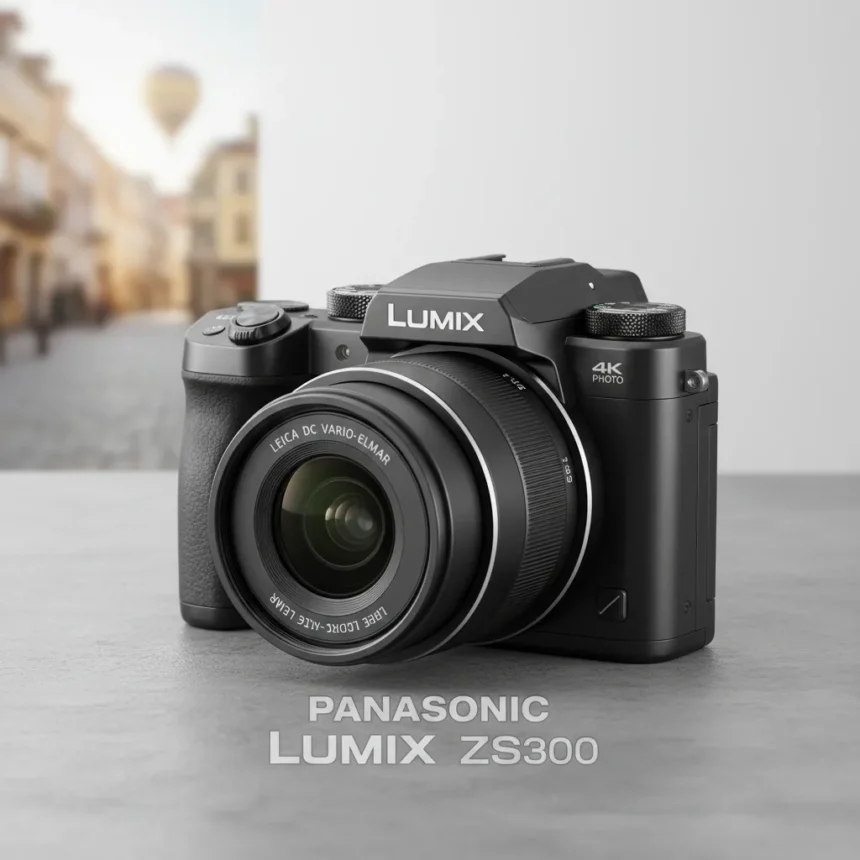
The Panasonic Lumix ZS300 travel zoom camera is a surprise successor to the 2018 Lumix ZS200, arriving after eight years with a sleeker design and refined top controls. Panasonic’s most advanced travel zoom compact is returning to market with a cleaner black finish, no red grip line, and a more streamlined aesthetic that hints at refinement rather than radical reinvention.
Key Takeaways
- Panasonic Lumix ZS300 launches March 24, 2026, at USD 805 with a 20-megapixel 1-inch sensor
- 15x optical zoom Leica lens spans 24-360mm equivalent with 3cm macro focusing distance
- All-new design features cleaner black finish and refined controls compared to 2018 ZS200 predecessor
- Outperforms Canon G7 X Mark III on zoom range and macro; competes directly with Canon SX740 HS on sensor size
- Potential upgrades include USB-C and newer Wi-Fi/Bluetooth, though specs remain largely unchanged from predecessor
Panasonic Lumix ZS300 specs and design
The Panasonic Lumix ZS300 travel zoom camera retains the same 20-megapixel 1-inch sensor as its 2018 predecessor but pairs it with a refined chassis that abandons the red grip accent for a sleeker all-black finish. The Leica DC Vario-Elmarit lens delivers 24-360mm equivalent focal length with 15x optical zoom and f/3.3-6.4 aperture range, making it genuinely pocketable without sacrificing reach. A 3cm minimum focusing distance in macro mode allows close detail work that most travel compacts cannot match.
The design philosophy emphasizes subtlety. Where the ZS200 featured a red grip line and busier top controls, the ZS300 strips away visual clutter and refines the button layout for faster operation. A pop-up flash and electronic viewfinder remain standard, though Panasonic has not officially confirmed whether the flip-out screen or 4K video have been upgraded. Potential additions include USB-C replacing micro USB and refreshed Wi-Fi and Bluetooth connectivity, but these remain unconfirmed until the official March 24 reveal.
How the Panasonic Lumix ZS300 compares to Canon rivals
The Panasonic Lumix ZS300 travel zoom camera occupies a unique middle ground between two Canon competitors, each with different strengths. Against the Canon G7 X Mark III, the ZS300 dominates on zoom reach: 24-360mm (15x) versus Canon’s 24-100mm (4.2x), plus a tighter 3cm macro minimum versus Canon’s 5cm. The Canon excels at vlogging and selfies with its flip-out screen and wider aperture, but for pure travel photography, the Panasonic’s zoom range is substantially more versatile.

The Canon SX740 HS presents a trickier comparison. Its 40x zoom (24-960mm) stretches further than the Panasonic’s 15x reach, making it tempting for extreme telephoto work. However, the SX740 uses a smaller 1/2.3-inch sensor with 20.3 megapixels, sacrificing low-light performance and fine detail compared to the ZS300’s larger 1-inch chip. The SX740 also offers a 1cm macro minimum, beating the Panasonic’s 3cm, but this advantage matters only for extreme close-up specialists. For most travelers, the ZS300’s larger sensor and moderate 15x zoom strike a better balance than either Canon’s extreme zoom or limited reach.
Pricing and launch timing
The Panasonic Lumix ZS300 travel zoom camera launches March 24, 2026, at USD 805, matching the approximate market value of its predecessor when the ZS200 debuted in early 2018 at 799 euros. The timing is notable: Panasonic has waited eight years to refresh this model, suggesting either cautious market demand or a deliberate strategy to let the ZS200 age gracefully before introducing a successor. The new design and refined controls justify the refresh, though the unchanged sensor and lens specs mean this is an evolution, not a revolution.



Panasonic uses regional naming conventions, with TZ300 likely for European markets and ZS300 for North America, following the company’s historical pattern. Availability across other regions remains unconfirmed, though the March 24 embargo date suggests a coordinated global launch is imminent.
Is the Panasonic Lumix ZS300 worth upgrading to?
If you own a ZS200, the ZS300 offers design refinement and possibly improved connectivity, but the core imaging engine remains identical. The cleaner aesthetics and refined controls may appeal to those frustrated by the red grip line or cramped button layout, but sensor and lens performance will feel unchanged. For ZS200 owners, this is a skip.
For users of older Panasonic compacts or rival brands seeking a balanced travel zoom, the ZS300 makes a stronger case. The 15x zoom, 3cm macro, and 1-inch sensor combination is genuinely hard to beat at this price point, especially compared to the Canon SX740’s smaller sensor or the G7 X Mark III’s limited zoom range. The sleeker design is also a practical win for travelers tired of cameras that feel chunky in a bag.
What upgrades might the Panasonic Lumix ZS300 include?
The research brief confirms that USB-C and newer Wi-Fi and Bluetooth are potential upgrades, though Panasonic has not officially announced these changes. Rumors suggest the flip-out screen and 4K video capabilities may have been improved, but these remain unconfirmed speculation. The official reveal on March 24 will clarify which upgrades made the cut and which remain wishful thinking.



How does the Panasonic Lumix ZS300 compare to recent Lumix models?
The ZS300 positions itself as a significant leap from the more modest Lumix DC-ZS99, offering a larger 1-inch sensor, longer zoom range, and more refined controls. The ZS99 serves budget-conscious travelers, while the ZS300 targets enthusiasts willing to spend for superior optics and sensor quality. The eight-year gap between the ZS200 and ZS300 means the new model has no direct predecessor to compare against, making it a clean refresh rather than an incremental update.
The Panasonic Lumix ZS300 travel zoom camera arrives at a moment when compact travel cameras face pressure from smartphone zoom and mirrorless alternatives. Yet for photographers who value optical zoom reach, pocketability, and dedicated controls, this refined successor offers a compelling answer. The sleeker design and March 2026 launch suggest Panasonic is serious about reclaiming mindshare in a shrinking but loyal segment of the market.
Edited by the All Things Geek team.
Source: TechRadar