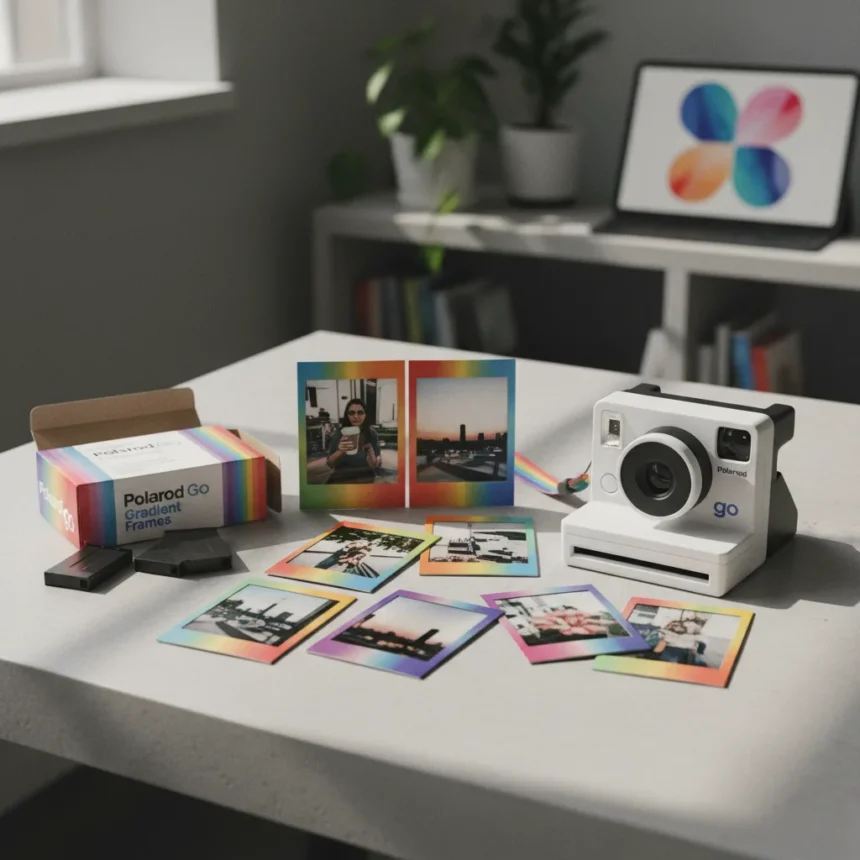
Polaroid Go Gradient Frames film is a new instant color film made by Polaroid featuring unique full-spectrum gradient borders on each frame, manufactured in the Netherlands at Polaroid’s EU film factory and compatible only with the Polaroid Go camera. The film uses 100% Polaroid chemistry with an ASA/ISO of 640 and a development time of 10-15 minutes, delivering 16 photos per pack in a format 4 times smaller than the classic i-Type instant frame.
Key Takeaways
- Polaroid Go Gradient Frames film features unique full-spectrum color gradient borders on every frame
- 16 photos per pack; 4 times smaller than i-Type classic format at 66.6mm x 53.9mm
- Battery-free operation with 10-15 minute development time and ISO 640 sensitivity
- Made in the EU at Polaroid’s last remaining film factory using 100% Polaroid chemistry
- Works exclusively with Polaroid Go cameras; no compatibility with other instant models
What Makes Polaroid Go Gradient Frames Film Different
The gradient borders are the entire draw here. Each frame wraps in a different color spectrum sweep—no two shots look identical in their border treatment. This is a deliberate departure from standard Polaroid Go Color Instant Film, which ships with plain white borders. Polaroid positions Gradient Frames as the answer for photographers chasing visual impact on social media, at festival crowds, or during rooftop sunsets. The novelty is real, but it comes with a hard constraint: these borders are fixed. You cannot adjust saturation, tone, or gradient direction. What Polaroid ships is what you get.
The chemistry itself remains unchanged from standard Go Color film. You are paying for the frame treatment, not for improved color science or better light sensitivity. The 640 ISO rating stays constant, meaning low-light performance has not improved. For photographers accustomed to classic Polaroid’s wider exposure latitude, this is worth knowing upfront.
Polaroid Go Gradient Frames Film vs. Standard Instant Formats
Polaroid Go Gradient Frames film occupies a specific niche: it is 4 times smaller than the i-Type classic format, making it ideal for pocket-sized cameras but less forgiving for large prints or detailed compositions. The image area itself measures 47mm x 46mm, leaving limited real estate for subjects that demand precision. If you are shooting environmental portraits or landscapes, the small frame can feel cramped. For close-ups, casual snapshots, and social media content, the compact size becomes an asset rather than a liability.

The battery-free design is another advantage over some competing instant systems. You do not need to manage battery life or worry about power depletion mid-shoot. The trade-off is that you cannot adjust exposure settings—the camera handles all metering automatically. This simplicity appeals to casual users but frustrates anyone seeking creative control.
Who Should Buy Polaroid Go Gradient Frames Film
This film works best for photographers who already own a Polaroid Go camera and treat instant photography as a social and aesthetic pursuit rather than a technical one. If your workflow involves sharing photos immediately or printing them for physical display where the border becomes part of the visual composition, Gradient Frames delivers novelty. Festival attendees, event photographers, and content creators chasing distinctive aesthetics will find genuine value. The gradient treatment photographs well on Instagram, TikTok, and other platforms where the frame becomes part of the story.



Serious photographers or anyone invested in other instant formats should skip this. The film works only with Polaroid Go cameras, limiting its utility if you own an Instax, Fujifilm, or classic Polaroid SX-70. The small frame size and fixed gradient treatment also mean you sacrifice compositional flexibility for visual gimmick. If you value consistency across a photo series, the randomness of gradient variation might feel chaotic rather than charming.
Does the Gradient Treatment Actually Enhance Photos?
This depends entirely on your aesthetic preferences and subject matter. Rooftop sunsets and vibrant crowd scenes benefit from the color boost the gradients provide. Moody indoor shots or portraits can feel overwhelmed by the border treatment, which competes visually with the subject itself. The gradients are not subtle—they command attention and shape how viewers perceive the entire image.
The 10-15 minute development window means you are waiting for the full color and gradient effect to reveal itself. There is a genuine moment of discovery when the image emerges, and the gradient borders do deliver surprise value. Whether that surprise translates to photos you actually want to keep is another question. Some shots will feel perfectly matched to their gradient; others will feel randomly paired.
Is Polaroid Go Gradient Frames Film Worth Buying?
If you own a Polaroid Go camera and shoot frequently, one pack is worth trying. The novelty factor is legitimate, and the manufacturing quality is solid—Polaroid’s EU production ensures consistency. However, do not expect revolutionary color science or improved film performance. You are buying a visual treatment, not a technical upgrade. For casual users and social media photographers, the gradient borders justify the cost. For anyone else, standard Polaroid Go Color film delivers the same chemistry at a lower price point without the gimmick.



The real question is whether you shoot enough instant film to justify experimenting with specialty stocks. If Polaroid Go is your primary camera and you burn through multiple packs monthly, Gradient Frames becomes a natural rotation option. If you shoot sporadically, standard color film is the smarter choice until you are confident you want the gradient treatment.
What is the development time for Polaroid Go Gradient Frames film?
Polaroid Go Gradient Frames film develops in 10-15 minutes. The full color and gradient effect gradually emerges during this window. You can view the image immediately after ejection, but the final appearance and color saturation stabilize after the full development period.
Can you use Polaroid Go Gradient Frames film with other instant cameras?
No. Polaroid Go Gradient Frames film is compatible exclusively with Polaroid Go cameras. If you own an Instax, Fujifilm, or any other instant camera format, this film will not work. The camera and film are mechanically locked to each other.
How many photos come in a Polaroid Go Gradient Frames film pack?
A single pack contains 16 photos. A double pack provides 32 shots, allowing you to shoot longer before reloading. The frame dimensions are 66.6mm x 53.9mm with an image area of 47mm x 46mm.
Polaroid Go Gradient Frames film succeeds as a niche product for a specific audience: instant photography enthusiasts who prioritize aesthetic impact and social shareability over technical control. The gradient borders are genuinely unique, the manufacturing is solid, and the film performs as promised. But it is not a must-have for everyone. If you shoot Polaroid Go casually, stick with standard color film. If you are obsessed with instant photography and chase visual novelty, Gradient Frames deserves a spot in your rotation.
Where to Buy
Polaroid Go Generation 2£79.99£69.69ViewSee all prices | 387 Amazon customer reviews
Edited by the All Things Geek team.
Source: T3