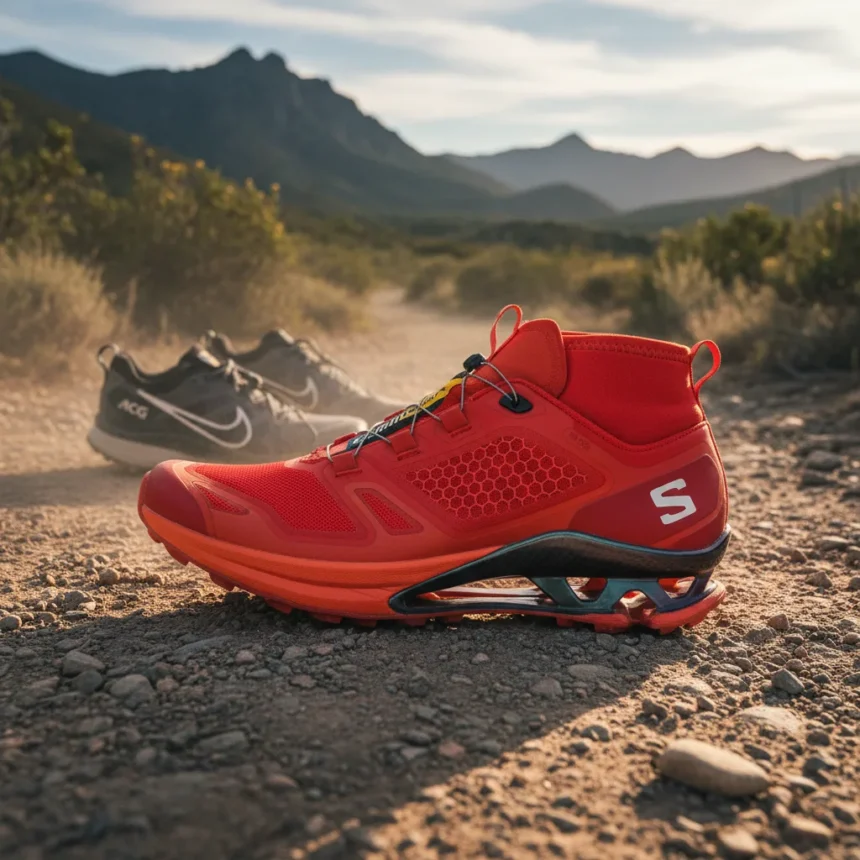
Salomon has entered the gravel-running super shoe category with a design that challenges conventional thinking about what a mixed-terrain shoe should look like. The gravel-running super shoe represents a deliberate fusion of two distinct performance worlds: cycling-inspired aesthetics paired with carbon-plated running technology.
Key Takeaways
- Salomon’s new shoe combines cycling design cues with carbon-plated running performance.
- The gravel-running super shoe targets mixed-terrain adventures beyond traditional road or trail categories.
- The design philosophy directly challenges Nike ACG’s approach to outdoor footwear.
- Carbon plating technology brings responsive energy return to gravel and uneven surfaces.
- Cycling-inspired styling signals versatility across both running and bikepacking use cases.
What Makes This Gravel-Running Super Shoe Different
The gravel-running super shoe category has remained relatively unexplored until now. Most brands default to either road-running geometry with minimal traction or full trail-running bulk. Salomon’s approach splits the difference by importing visual language from gravel cycling—slimmer silhouettes, minimalist branding, performance-forward aesthetics—while retaining the responsive carbon-plated platform that serious runners expect. This hybrid positioning is the real innovation.
The carbon-plated running technology brings propulsive energy return to surfaces where traditional trail shoes feel sluggish. On hardpacked gravel, loose dirt, and mixed terrain, that responsiveness matters. Runners transitioning from road to gravel often complain that trail shoes feel dead underfoot on fast, rolling sections. A gravel-running super shoe addresses that gap directly.
How Cycling Aesthetics Change the Game
Cycling-inspired design is not purely visual. It signals a shoe built for efficiency and minimal weight, two priorities that cycling culture obsesses over. When a running shoe borrows that design language—clean lines, stripped-back branding, purposeful color palettes—it communicates a different philosophy than traditional trail runners. This matters to the audience Salomon is targeting: runners who also ride gravel bikes, who value lightweight gear, and who view their footwear as part of a broader outdoor toolkit rather than a single-sport item.

The aesthetic choice also differentiates the gravel-running super shoe from Nike ACG’s bulkier, more lifestyle-oriented approach to outdoor footwear. Where ACG emphasizes ruggedness and street credibility, Salomon’s cycling-influenced design emphasizes performance and specificity. That positioning will resonate with serious gravel racers and adventure runners who see aesthetics as an extension of function, not a separate concern.
Gravel-Running Super Shoe Performance on Mixed Terrain
The gravel-running super shoe’s true test happens on the surfaces it is designed for: loose gravel, fire roads, technical single-track, and the unpredictable mixture of conditions that define gravel running. Carbon-plated shoes traditionally excel on predictable surfaces where the plate can transfer energy efficiently. Gravel is anything but predictable. Rocks shift, surfaces transition from hard to soft, and lateral forces are constant. A gravel-running super shoe must balance the responsiveness of carbon plating with the compliance needed for uneven ground.



This is where the shoe’s design philosophy becomes critical. By combining cycling-inspired geometry with running-specific cushioning technology, the gravel-running super shoe avoids the trap of being neither fish nor fowl. It is not trying to be a road racer on gravel. It is not trying to be a full trail shoe with unnecessary bulk. It is built for the specific demands of gravel running: rolling speed, traction variety, and the ability to handle rapid terrain changes without sacrificing responsiveness.
Why Nike ACG Should Take Notice
Nike ACG has built a strong reputation in outdoor footwear by emphasizing durability, lifestyle appeal, and mountain-ready aesthetics. But the brand has largely ignored the gravel-running category, treating it as an extension of trail running rather than a distinct discipline. Salomon’s entry with a dedicated gravel-running super shoe exposes that gap. The shoe is not trying to compete on ACG’s turf—street credibility and lifestyle positioning. Instead, it is competing on performance specificity and technical innovation.
The comparison is instructive. ACG shoes prioritize versatility across hiking, running, and everyday wear. A gravel-running super shoe prioritizes excellence in one domain: fast, efficient movement across mixed terrain. That focused approach allows Salomon to make design choices that a more generalist brand cannot justify. The result is a shoe that may feel too specialized for some users but is precisely engineered for runners who know exactly what they need.
The Broader Gravel-Running Trend
Gravel running has exploded over the past five years, transforming from a niche activity into a legitimate category with dedicated races, communities, and gear. The gravel-running super shoe is a natural evolution of that trend. As more runners discover the freedom and variety of gravel courses, demand for purpose-built footwear increases. Salomon’s entry signals that the market is mature enough to support specialized products rather than adaptations of road or trail shoes.



This matters for the industry. When a major brand invests in a dedicated category, it validates the category itself. Other manufacturers will follow. The gravel-running super shoe will become a standard offering within two years, not a novelty. Salomon is simply ahead of the curve.
Is the gravel-running super shoe worth the investment?
The gravel-running super shoe makes sense if you run gravel regularly and value responsive, efficient footwear. If your gravel running is occasional or you are content with trail shoes, a standard option will suffice. The gravel-running super shoe is built for runners who want their footwear to match their discipline.
How does a gravel-running super shoe differ from a trail shoe?
A gravel-running super shoe prioritizes speed and responsiveness with carbon plating, while traditional trail shoes emphasize cushioning and traction for technical terrain. The gravel-running super shoe is lighter and faster but offers less impact protection on rocky descents.
Can you wear a gravel-running super shoe on roads?
Yes, but it is not optimized for road running. The gravel-running super shoe’s tread pattern and geometry are designed for loose surfaces. On pavement, a road-running super shoe will feel more efficient, though the gravel-running super shoe remains capable for mixed-surface runs.
Salomon’s gravel-running super shoe arrives at the right moment. The category exists, the demand is real, and the design philosophy is sound. Whether you are a gravel racer or a runner exploring mixed terrain, this shoe represents a genuine innovation rather than a recycled product with new marketing. That distinction matters in a crowded footwear market.
Edited by the All Things Geek team.
Source: T3