





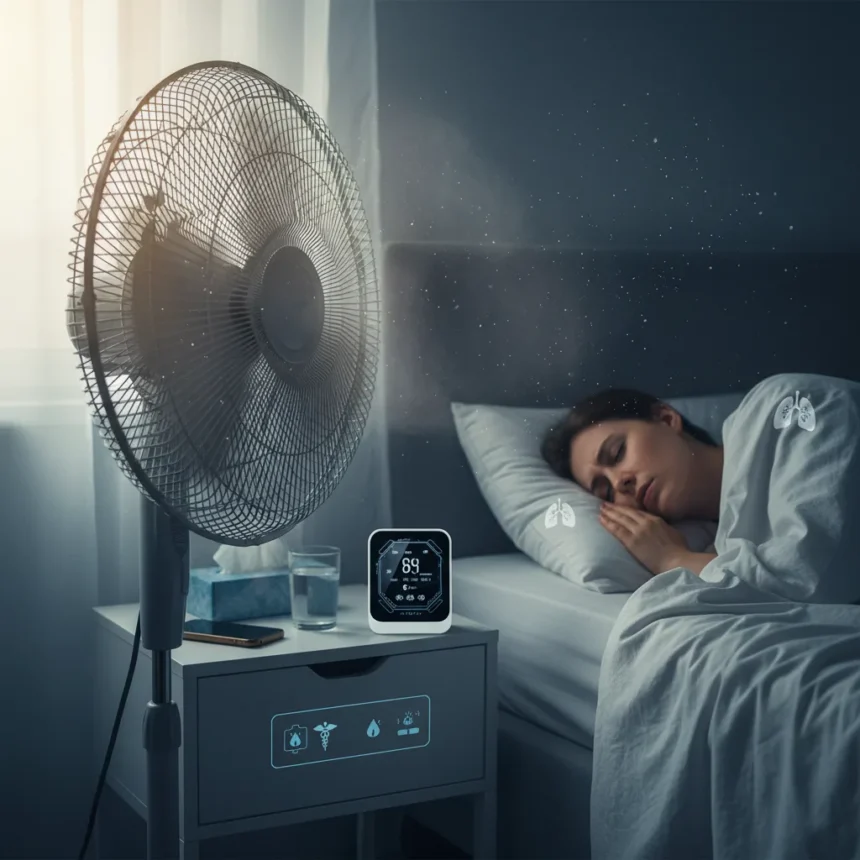
Sleeping with a fan on is generally safe for healthy people, but the practice can circulate dust, pollen, dust mites, and mold spores that worsen allergies and asthma symptoms. The cooling relief fans provide comes with overlooked downsides that affect sleep quality and respiratory health, especially during summer months when fans become essential for temperature regulation.
Key Takeaways
- Fans circulate allergens and dust that trigger or worsen asthma, allergies, and sinus problems
- Fan airflow dries nasal passages, throat, and eyes, causing congestion, sore throat, and nosebleeds
- Direct airflow can cause muscle tension, neck stiffness, and cramps, particularly on the face or body
- Optimal sleep temperature is 60-67°F; fans regulate body temperature through air circulation without cooling the room
- People with asthma, allergies, sleep apnea, or chronic sinusitis face higher risks; regular fan cleaning reduces dust buildup
How Sleeping with a Fan On Affects Your Respiratory System
The primary concern with sleeping with a fan on is how it circulates airborne particles. Fans blow dust, pollen, dust mites, and mold spores directly into your breathing space, which can trigger coughing, congestion, runny nose, itchy eyes, sneezing, and breathing difficulties. For people with asthma, this circulation can cause airway irritation and bronchospasm, making sleep less restorative and potentially disrupting breathing throughout the night.
Beyond allergen circulation, fan airflow actively dehydrates your respiratory system. The moving air dries out nasal passages, mouth, throat, and sinuses, leading to excess mucus production as your body attempts to compensate. This creates a paradoxical effect: your nose feels stuffed even though the air is being blown at you. The result is a stuffy nose, sinus headaches, sore throat, coughing, and in severe cases, nosebleeds. Contact lens wearers and people with dry eye syndrome face additional discomfort as the fan dries their eyes, making sleep uncomfortable and potentially damaging to eye health.
Respiratory experts note that risks escalate for those with existing conditions. People with obstructive sleep apnea, chronic sinusitis, or eczema should avoid direct fan airflow or use fans strategically. Even mild allergies can become problematic overnight when a fan circulates irritants for eight hours straight without interruption.

Physical Side Effects Beyond Allergies
Sleeping with a fan on can cause muscle tension, cramps, stiff neck, and localized soreness, particularly if the airflow is directed at your face or body. Waking with a stiff neck or shoulder tension after sleeping with a fan pointed at you is common but often attributed to pillow quality or mattress firmness rather than the fan itself. The cold, direct airflow constricts muscles and can cause them to tighten overnight, leading to discomfort that persists into the morning.
Additionally, fans do not actually cool your room—they circulate existing air. This distinction matters: a fan creates the sensation of cooling through air movement against your skin, but the room temperature remains unchanged. For genuine temperature reduction, air conditioning is the only effective option, though it carries its own dryness concerns that can be mitigated with a humidifier.



Benefits of Sleeping with a Fan On and Safe Usage
Despite the risks, fans remain valuable for sleep because they help regulate body temperature. Your core temperature naturally drops at night, and optimal sleep occurs between 60-67°F. Fans aid this process by circulating air and creating the sensation of a cooler environment, which can improve sleep quality for people who sleep hot. The key is using fans safely rather than avoiding them entirely.
To minimize risks while sleeping with a fan on, position the fan away from your body and face rather than pointing it directly at you. Using the fan on low speed reduces airflow intensity and allergen circulation. Clean your fan blades and housing regularly to prevent dust and mold buildup, which gets blown into your breathing space every time the fan runs. If you have allergies or asthma, combine fan use with a HEPA air purifier to filter allergens and dust before they circulate. For dryness concerns, use a humidifier alongside the fan to maintain moisture in the air and prevent nasal and throat dehydration.
Some people find that opening windows or using lighter bedding achieves adequate cooling without fan-related dryness and allergen circulation. Experimenting with these alternatives may reveal a sleep setup that avoids fan downsides altogether.
Who Should Avoid Sleeping with a Fan On
Certain groups face elevated risks and should reconsider fan use or modify their approach. People with asthma experience airway irritation and potential bronchospasm from circulating allergens. Those with allergies, chronic sinusitis, obstructive sleep apnea, or eczema should either avoid fans or use them with strict precautions like positioning away from the body and regular cleaning. If you are already ill—dealing with a cold, flu, or respiratory infection—a fan worsens congestion and prolongs recovery by circulating irritants and drying airways.



Fan noise can also disrupt sleep for people sensitive to ambient sounds. For these individuals, white noise machines or air purifiers may provide air circulation and cooling without the mechanical noise that disrupts rest.
Fans vs. Alternatives: Which Is Right for You?
Sleeping with a fan on offers affordable temperature regulation but carries respiratory and physical risks. Humidifiers counter fan-induced dryness by adding moisture to the air, though they require regular cleaning to prevent mold growth. HEPA air purifiers filter allergens and dust before circulation, reducing respiratory irritation, but they do not cool the room like fans do. Air conditioning actually lowers room temperature unlike fans, making it superior for cooling but potentially more expensive and also contributing to dryness if not paired with a humidifier.
The best choice depends on your health status, budget, and sleep priorities. Healthy sleepers without allergies or asthma can use fans safely with proper positioning and maintenance. Those with respiratory conditions should prioritize filtered air circulation via HEPA purifiers or explore air conditioning with humidification. Testing different combinations—fan on low with windows open, or fan plus humidifier—helps identify your optimal sleep environment.
Does sleeping with a fan on cause illness?
No, sleeping with a fan on does not cause illness in healthy people. Fans worsen existing symptoms like allergies, asthma, and sinus problems but do not directly cause these conditions. If you are already ill with a cold or respiratory infection, a fan may prolong recovery by irritating airways and drying mucous membranes.
Can sleeping with a fan on cause a sore throat?
Yes, fan airflow dries your throat and nasal passages, leading to excess mucus production and a sore throat. The drying effect is especially pronounced if the fan runs all night. Using a humidifier alongside the fan or positioning the fan away from your head reduces this risk.
Is it safe to sleep with a fan on if I have asthma?
Sleeping with a fan on poses risks for people with asthma because circulating dust and allergens can trigger airway irritation and bronchospasm. If you have asthma, position the fan away from your body, keep it on low speed, clean it regularly, and consider using a HEPA air purifier instead. Consulting your doctor about fan use is advisable if your asthma is severe.
Sleeping with a fan on remains a popular cooling strategy, but it demands awareness of its downsides. Healthy people can use fans safely with proper positioning and maintenance, while those with respiratory conditions should prioritize alternatives like HEPA purifiers or air conditioning paired with humidification. The goal is balancing temperature comfort with respiratory health—neither should be sacrificed for the other.
Edited by the All Things Geek team.
Source: Tom's Guide




