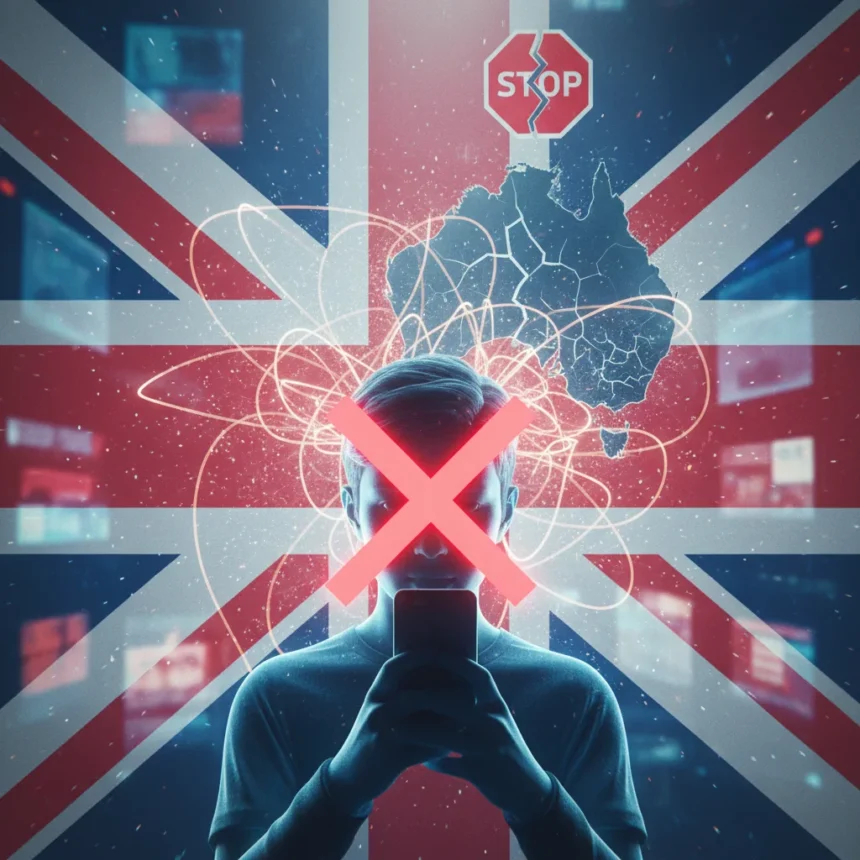
The social media ban teenagers debate just moved from Westminster arguments into real homes across the UK. On March 25, 2026, the government announced a landmark pilot involving 300 teenagers aged 13-17 across all four UK nations, testing whether restricting app access actually improves young people’s lives. But there’s a problem: Australia already tried this, and it’s falling apart.
Key Takeaways
- UK pilots test four intervention types: full app disablement, overnight curfews, one-hour daily caps, and unlimited access control groups.
- Australia’s under-16 social media ban is failing as teenagers bypass it using VPNs, browser versions, and shared parental accounts.
- 42 child protection charities and academics warn that bans risk unintended harm and let tech platforms escape responsibility.
- UK consultation on digital wellbeing closes May 26, 2026, with nearly 30,000 responses received so far.
- Technology Minister Liz Kendall stated the government is “determined to give young people the childhood they deserve.”
Why Australia’s Social Media Ban Teenagers Approach Is Already Crumbling
Australia’s under-16 social media ban, positioned as a landmark ruling, is failing in real time. Teenagers are circumventing it via VPNs, accessing apps through web browsers, and using parental account sharing to maintain their connections. The enforcement gap is widening—what looked like decisive policy on paper collapses when teenagers discover workarounds. This is the cautionary tale the UK cannot ignore.
The Australian precedent matters because it reveals a fundamental flaw in blanket restrictions: they treat the symptom, not the disease. Teenagers don’t stop using social media because legislation says they can’t—they find alternative routes. VPNs mask their location, browser versions bypass app store age gates, and shared family accounts create legal gray zones. The technology exists to circumvent age-based bans, and teenagers have both the motivation and technical literacy to use it.
The UK’s Four-Part Pilot: What’s Actually Being Tested
The UK government is taking a more granular approach than Australia’s blanket ban. The 300 teenagers are divided into four groups, each experiencing a different intervention over six weeks. This is methodical, but it’s also a tacit admission that the government doesn’t yet know which approach works.

Group one faces full disablement of apps including Instagram, TikTok, and Snapchat—essentially mimicking an Australia-style ban within individual homes. Group two experiences overnight curfews, blocking access during sleeping hours. Group three operates under a one-hour daily cap on popular apps. The fourth group has unlimited access, serving as the control. The pilots measure impacts on schoolwork, sleep, and family life, comparing intervention groups against the unrestricted baseline.
This design is more honest than Australia’s approach: it acknowledges that different restrictions produce different outcomes. But it also raises a question the government hasn’t fully answered—if the pilots show that curfews work better than bans, will policy follow the evidence, or follow the political appetite for bold action?



Why Child Safety Groups Are Rejecting the Social Media Ban Teenagers Debate
The government’s consultation on digital wellbeing closes May 26, 2026, and it’s generating serious pushback. Forty-two child protection charities, academics, and families issued a joint statement opposing an under-16 ban, arguing it risks unintended consequences and lets tech platforms escape accountability.
Ian Russell, Chair of the Molly Rose Foundation, framed the objection clearly: “Bans are the wrong answer to a vital question. They risk unintended consequences that could leave children at greater risk of harm by treating the symptoms, not the problem. They let social media platforms off the hook by weakening the requirement for them to offer safe and high-quality experiences as a precondition for operating in the UK”. This is the core argument—bans shift responsibility from the platforms that designed addictive features onto families and teenagers, while the companies continue unchanged.
Chris Sherwood, CEO at the NSPCC, added a second dimension: “We stand alongside organisations that understand how essential online spaces can be for young people. Yes, there are serious risks that demand urgent action. But for countless children, especially those who feel shut out or unheard offline, social media isn’t a luxury. It’s a lifeline—a source of community, identity, and vital support”. For vulnerable teenagers—those experiencing isolation, bullying, or mental health struggles—social media bans can eliminate a crucial support network without replacing it.
The Alternative: Regulation Over Restriction
Critics argue the UK should strengthen the Online Safety Act instead of pursuing bans. One proposal focuses on banning personalized services for under-13s—meaning no algorithmic feeds, no infinite scroll, no engagement-maximizing tricks—while allowing older teenagers supervised access. This targets the addictive mechanics rather than the platforms themselves.



Another approach gaining traction is platform accountability through taxation and design mandates. Some argue for a 4% “misery tax” on tech corporations, using revenue to fund digital literacy and mental health services. This shifts the burden from teenagers and families to the companies profiting from engagement.
The philosophical difference is stark: bans assume teenagers cannot be trusted with social media, so remove the choice. Regulation assumes platforms cannot be trusted with teenager data and attention, so constrain their design. One treats the user as the problem. The other treats the product.
What the Consultation Reveals About Public Pressure
Nearly 30,000 responses to the UK consultation show this is not a fringe debate. Public concern about social media’s impact on young people’s mental health, sleep, and schoolwork is genuine and widespread. Labour PM Keir Starmer has not ruled out a ban, and Technology Minister Liz Kendall’s statement—”We are determined to give young people the childhood they deserve and to prepare them for the future”—signals the government is willing to act decisively.
But “willing to act” and “acting wisely” are different things. The pilots exist precisely because the government recognizes the evidence gap. If Australia’s ban had worked, there would be no need for testing. The fact that the UK is running controlled trials suggests policymakers understand that ideology and evidence can diverge.
Will the UK Learn What Australia Didn’t?
The real test isn’t whether the pilots produce measurable changes in schoolwork or sleep—controlled environments often do. The test is whether the government will acknowledge that bans don’t prevent access, and that regulation of platform design matters more than age gates. Australia didn’t learn this lesson. The UK has a chance.
Can teenagers really bypass social media bans with VPNs?
Yes. VPNs mask a user’s location, making it appear they are in a different country where age restrictions don’t apply. Browser versions of apps bypass app store age verification entirely. Parental account sharing, where teenagers use a parent’s login, creates a legal and technical loophole. These aren’t obscure techniques—they’re widely known among teenagers.
What is the UK consultation on digital wellbeing asking?
The consultation seeks public input on children’s digital wellbeing, including potential age restrictions, bans on addictive features like infinite scrolling, and whether an Australia-style under-16 ban is appropriate for the UK. It closes May 26, 2026, and responses will inform whether the government pursues legislation.
Why do child safety groups oppose a social media ban teenagers policy?
They argue bans treat symptoms rather than causes, let tech platforms avoid responsibility for addictive design, and eliminate a vital support network for isolated or vulnerable young people. They advocate instead for stronger regulation of platform features and design accountability.
The UK’s pilot will produce data. Whether that data translates into policy depends on whether the government prioritizes evidence over the political appeal of a decisive ban. Australia didn’t. The next six weeks will reveal if the UK is willing to be smarter.
Edited by the All Things Geek team.
Source: TechRadar