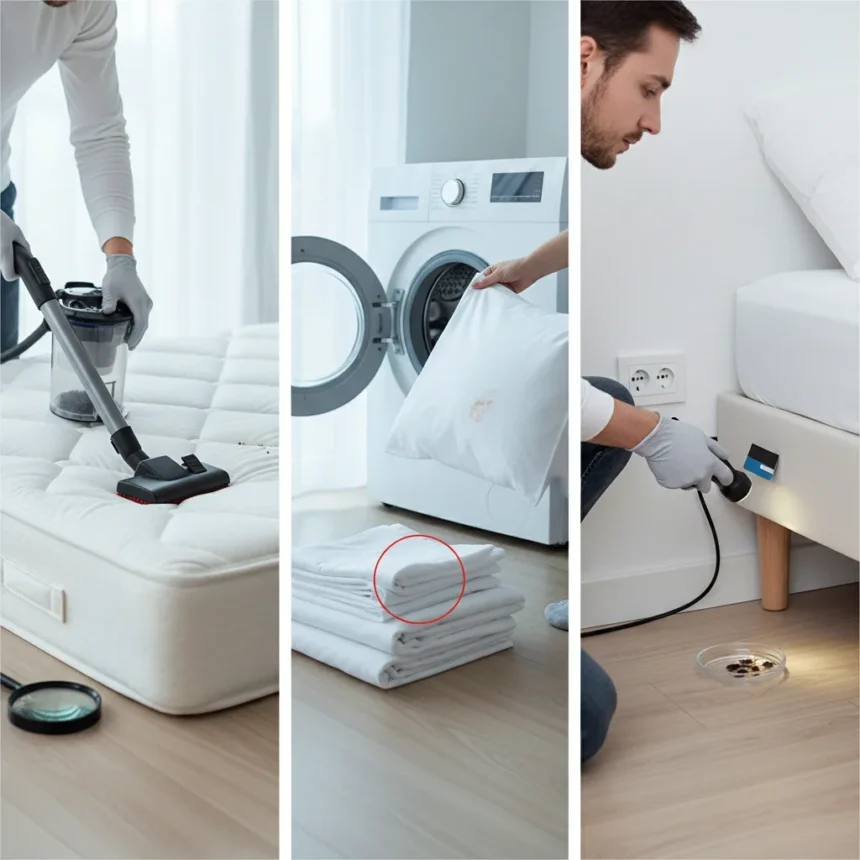
Weekly bed bug cleaning is the most effective way to catch an infestation before it explodes into a full-blown nightmare. Bed bugs multiply fast and are attracted to human odor, warmth, and clutter—the exact conditions most bedrooms provide. A simple routine of three weekly cleaning tasks can eliminate hiding spots, remove existing bugs and eggs, and spot early warning signs that most people miss until it’s too late.
Key Takeaways
- Strip and wash bedding on hot water weekly to kill bed bugs and eggs before they spread.
- Vacuum your mattress thoroughly every week, targeting seams and corners where bugs hide.
- Declutter your bedroom to eliminate hiding spots and make inspections easier.
- Light-colored sheets (green, yellow, pale) make spotting bed bugs easier than red or black.
- Early signs include rusty stains, dark specs of fecal matter, and a musty iron smell from blood feeding.
Strip and Wash Bedding on the Hottest Cycle
Start by removing every piece of fabric from your bed: sheets, mattress protector, pillowcases, and duvet covers. Wash them all on the hottest water cycle your washing machine allows. Heat is the enemy of bed bugs—it kills both the bugs themselves and their eggs at any life stage. This single step, done weekly, removes a massive population of pests before they can reproduce. Cold or warm water will not kill them reliably.
The reason this works is simple: bed bugs cannot survive prolonged exposure to high temperatures. A weekly hot wash cycle is not a cure for an active infestation, but it is a powerful preventive measure that stops early populations from exploding. After washing, dry everything on high heat as well. Do not skip this step or assume warm water is good enough.
Vacuum Your Mattress Weekly to Catch Hidden Bugs
Once you have stripped the bed, vacuum the entire mattress surface with a powerful vacuum equipped with strong suction. Do not rush this. Target every seam, corner, underside, and dark area where bed bugs hide during the day. Use a flashlight to inspect dark crevices as you vacuum—you might spot live bugs or dark reddish-brown fecal specs that indicate an early infestation.

Vacuuming alone is unlikely to kill a full infestation, but it is essential for prevention, hygiene, and early detection. The moment you finish vacuuming, empty the vacuum bag or canister outside your home—do not leave the debris sitting in a trash can indoors where bugs can escape and resettle. This weekly habit removes dust mites, allergens, and existing bed bugs before populations spiral out of control.
After vacuuming, allow your mattress to air dry for a few hours. This drying period, combined with the vacuum disturbance, further disrupts the comfortable environment bed bugs need to thrive.



Declutter Your Bedroom to Remove Hiding Spots
Bed bugs love clutter. Piles of clothes on the floor, socks scattered under the bed, and general rubbish create the perfect hiding spots for bugs to multiply undisturbed. Weekly decluttering removes these refuges and makes it harder for an infestation to take hold. Put away all clothes, make your bed properly, and remove any trash from the bedroom.
Incorporate decluttering into your nighttime routine—it takes minutes and transforms your bedroom from a bed bug paradise into an inhospitable space. The fewer hiding spots available, the easier it is to spot early signs of infestation during your weekly inspection.
Inspect During Cleaning and Know What to Look For
As you clean, inspect your mattress seams, corners, and underside carefully. Early bed bug signs include rusty color stains from crushed bugs (caused by their red pigment), clusters of dark reddish-brown specs (fecal matter), and a musty or iron smell from their blood feeding. You might also notice small red or lumpy bites arranged in clusters or lines on your skin—these often appear on arms, legs, or torso where skin is exposed at night.
Use a flashlight to examine dark areas where your eye alone might miss tiny bugs or stains. Bed bugs are small and hide in nooks and crannies, but they leave visible evidence if you know where to look. If you spot any of these signs, act immediately—early detection makes a massive difference in how quickly an infestation can be controlled.



One practical tip: switch to lighter-colored bed sheets in green, yellow, or pale tones rather than red or black. Light colors make bed bugs and their fecal specs far easier to spot during weekly washing and inspection.
Why Weekly Cleaning Beats Waiting for Problems
Bed bugs thrive during summer and holiday seasons when travel increases the risk of bringing them home. By the time most people realize they have an infestation, the population has already grown exponentially. Weekly cleaning catches the problem in its earliest stages, when a few bugs are far easier to eliminate than hundreds.
This routine is not a replacement for professional pest control if you already have an active infestation, but it is the gold standard for prevention. Combined with a mattress encasement (which fully seals the mattress and blocks access) and heat-washing your bedding, weekly cleaning creates multiple layers of defense.
Can vacuuming alone prevent bed bugs?
Vacuuming is an essential part of prevention but not sufficient on its own. You must combine it with hot-water washing of bedding and decluttering to create an environment where bed bugs cannot thrive. Vacuuming removes existing bugs and eggs, but washing on high heat kills them reliably.
What is the fastest way to spot bed bugs early?
Use a flashlight to inspect mattress seams and corners weekly during your cleaning routine. Look for rusty stains, dark specs, or the bugs themselves. Light-colored sheets make spotting much easier than dark colors. Do not rely solely on smell to detect early infestations—low populations may not produce a noticeable odor.
How often should I change my mattress if I have had bed bugs?
If your infestation is caught early through weekly cleaning and inspection, you may not need to replace your mattress at all. Professional treatment combined with a mattress encasement can protect your existing mattress. However, if the infestation has spread extensively, replacement may be necessary—this is a decision best made with a pest control professional.
The key takeaway is this: bed bugs thrive in neglected, cluttered bedrooms. A 15-minute weekly cleaning routine—stripping bedding, vacuuming thoroughly, and decluttering—costs nothing and catches infestations before they become a financial and emotional nightmare. Start this week, and you will likely never face a bed bug problem at all.
Where to Buy
15% OFFLinenspaMattress Encasement (twin)$21.24$24.99shop now | SimpleNature3% Hydrogen Peroxide$18.95shop now | 40% OFFFEPPOMattress Vacuum$66.47$109.99shop now
Edited by the All Things Geek team.
Source: Tom's Guide