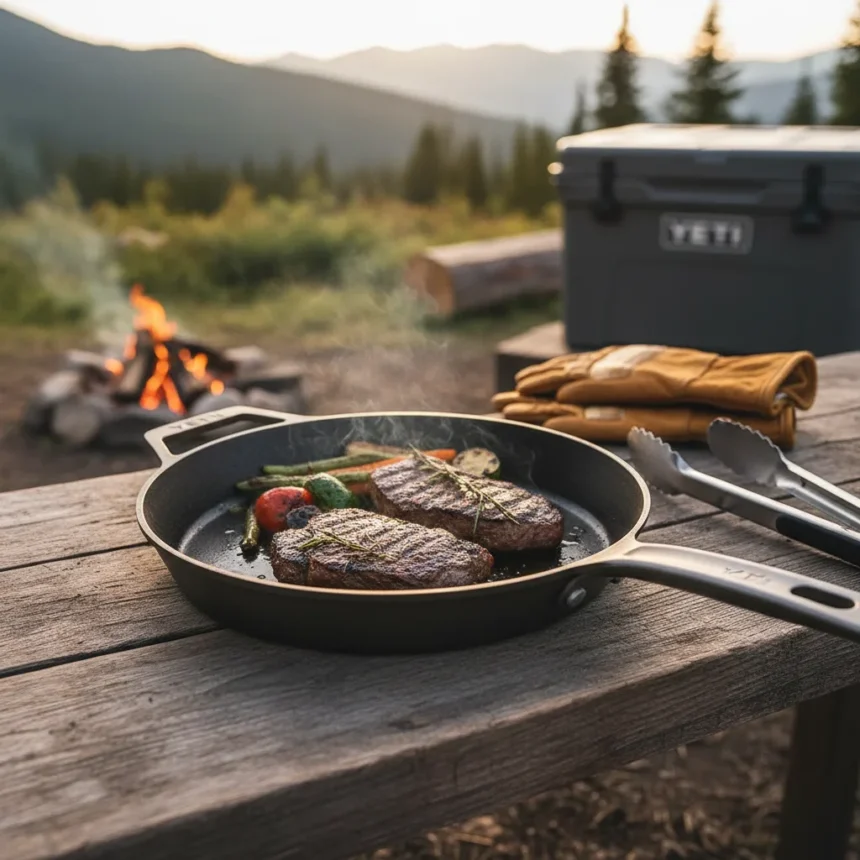
The YETI carbon steel pan is a 12-inch skillet that signals the cooler company’s serious pivot into lifestyle cookware. Made from 1.8mm carbon steel and pre-seasoned with flaxseed oil, this $200 pan arrives as YETI’s first standalone cookware offering, stepping beyond the bundled sets that preceded it. Available now, the pan reflects a broader outdoor cooking boom that has transformed premium cookware from niche to status symbol.
Key Takeaways
- YETI carbon steel pan weighs 4.9 lbs with a 10-inch cooking surface and stays cool stainless steel handle.
- Pre-seasoned with flaxseed oil but requires ongoing maintenance like traditional carbon steel.
- Oven-safe to 900°F and compatible with all cooktops including induction, campfire, and grill.
- At $200, it competes directly with Made In and undercuts premium alternatives like Smithey Ironware.
- Lighter than Lodge’s comparable 12-inch skillet, which weighs over 6 lbs.
Why YETI is betting big on cookware
YETI built its empire on insulated coolers. Now it is betting that outdoor enthusiasts want the entire ecosystem—from storage to cooking. The YETI carbon steel pan represents the company’s clearest signal yet that it views cookware as an extension of its lifestyle brand, not a side project. Post-pandemic outdoor cooking has matured from backyard novelty to serious hobby, and YETI is positioning itself as the premium choice across the entire journey, from transport to table.
This is not YETI’s first cookware venture. The company previously released a Hard Cooler Cook Set, but that was bundled with existing products. A standalone pan is different. It says YETI believes people will buy cookware on its name alone, regardless of whether they own a YETI cooler. That confidence either reflects genuine market research or an aggressive bet that brand loyalty trumps category expertise. The $200 price tag suggests the latter.
YETI carbon steel pan specs and handling
The pan itself is straightforward. One hundred percent carbon steel construction, 1.8mm thick, 12 inches in diameter with a 10-inch cooking surface. Weight is 4.9 lbs, which matters for camping and hiking. A helper handle on the opposite side aids two-handed movement when the main stainless steel handle gets hot. The pan is oven-safe to 900°F, compatible with induction, campfire, grill, and conventional ovens. Pre-seasoning with flaxseed oil saves you the first step, but do not mistake this for a non-stick guarantee. Carbon steel requires maintenance.

Compared to Lodge’s 12-inch carbon steel skillet, YETI’s pan is lighter by over a pound. Lodge pans typically weigh 6 or more pounds, making YETI’s offering genuinely useful for backpackers and car campers who count ounces. The handle design also matters. YETI’s ergonomic stainless steel handle beats Lodge’s traditional cast iron loop, especially if you plan to use this on a campfire where heat travels up the handle faster than in a home kitchen. Whether that justifies the $200 price over Lodge’s $40-60 alternative depends entirely on your priorities.
Seasoning and maintenance for the YETI carbon steel pan
Before using your YETI carbon steel pan, you must season it properly. Start by cleaning the pan with hot water and mild soap, then dry it thoroughly. Apply a thin layer of high-smoke-point oil—flaxseed, grapeseed, or similar—to the entire surface. Heat your oven to 450-500°F and place the pan upside down on the middle rack with foil below to catch drips. Bake for 1 hour, turn off the oven, and let the pan cool inside. Repeat this process 2-3 times for best results. This is not a 15-minute task. Budget a full evening if you want a properly seasoned pan.



After each use, scrape food while the pan is still hot using a metal utensil. Wipe with a paper towel and avoid soap if possible. If you must clean with water, use hot water only and dry immediately over low heat. Apply a thin oil layer before storage. This maintenance routine is identical to any carbon steel pan on the market. YETI did not invent seasoning or storage protocols. What you are paying for is lighter weight, better handle design, and the YETI name. Whether that justifies $200 versus $50 for an equivalent Lodge pan is a personal calculation.
How does the YETI carbon steel pan compare to alternatives?
Lodge makes heavier carbon steel skillets that cost a fraction of the price. Made In offers carbon steel pans at similar price points with comparable quality. Smithey Ironware sits above YETI in both weight and cost, targeting collectors more than campers. The YETI pan occupies the middle ground: lighter than Lodge, better finished than budget alternatives, and backed by a brand that outdoor enthusiasts already trust for coolers. But trust in coolers does not automatically translate to trust in cookware. YETI has no track record in this category, while Lodge has decades.
The real competitor is not another pan—it is the question of whether you need a $200 skillet at all. If you camp occasionally and cook simple meals, a $50 Lodge pan works fine. If you cook regularly over open flames and value every ounce in your pack, YETI’s lighter weight and better handle justify the premium. If you are buying this primarily because it says YETI on the handle, you are paying a lifestyle tax that has nothing to do with cooking performance.
Is the YETI carbon steel pan worth $200?
The pan itself is well-made. The 1.8mm carbon steel is thick enough to resist warping on high heat, the handle design is thoughtful, and the oven rating to 900°F gives you flexibility. But $200 is a lot for cookware, especially when you are buying into a brand with no established reputation in this space. YETI’s coolers are worth the premium because they genuinely outperform cheaper alternatives. This pan is good, but it is not obviously better than a Lodge skillet that costs one-quarter the price. You are paying for weight savings and brand recognition, not revolutionary cooking performance.



Does the YETI carbon steel pan come pre-seasoned?
Yes, the pan arrives pre-seasoned with flaxseed oil. However, pre-seasoning is not the same as ready-to-use. You should still perform the full seasoning process—heating it in the oven multiple times—to build a durable non-stick layer. Think of the factory seasoning as a head start, not a finished product.
Can you use the YETI carbon steel pan on a campfire?
Yes. The pan is compatible with all cooktops, including campfire and grill. The stainless steel handle will get hot over open flame, so use the helper handle or heat-resistant gloves. This versatility is one of the pan’s genuine strengths compared to non-stick cookware that cannot handle direct flame.
What is the weight and size of the YETI carbon steel pan?
The YETI carbon steel pan is 12 inches in diameter with a 10-inch cooking surface and weighs 4.9 lbs (2.2 kg). This makes it significantly lighter than comparable cast iron or heavier carbon steel alternatives, which is a genuine advantage if you are packing it for camping or backpacking trips.
YETI’s entry into standalone cookware is a calculated bet that brand loyalty and lifestyle positioning matter more than category expertise. The YETI carbon steel pan is a solid piece of equipment, but solid equipment at a premium price is only worth buying if you value what YETI brings beyond the steel itself. For casual cooks, a Lodge pan is the smarter choice. For YETI devotees who want their entire outdoor setup to match, this pan delivers on quality and weight. The real test will be whether YETI can build a cookware reputation as strong as its cooler legacy.
Edited by the All Things Geek team.
Source: T3