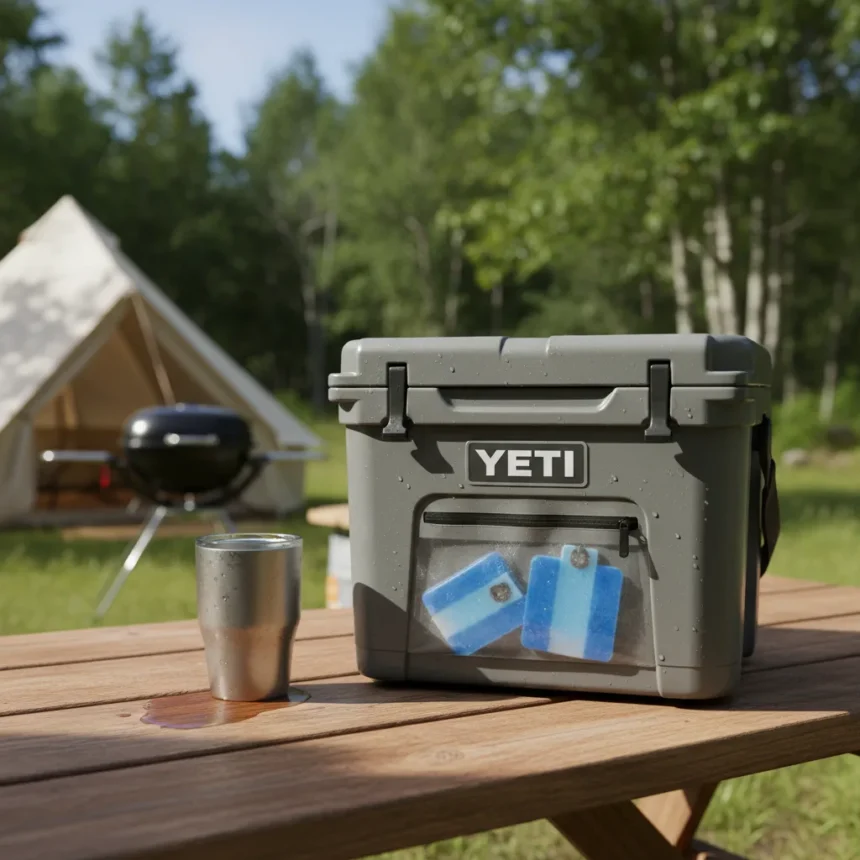
The YETI Roadie 8 hard cooler is a smaller iteration of YETI’s legendary hard cooler line, engineered to deliver serious ice retention in a highly portable design that fits everyday use. By shrinking the form factor without sacrificing cooling performance, YETI has created a product that challenges the assumption that smaller coolers must compromise on capability.
Key Takeaways
- The YETI Roadie 8 brings serious ice retention to a compact, portable format
- Size reduction makes the cooler practical for everyday carry without performance loss
- YETI’s hard cooler reputation extends to this smaller model
- The design targets users who want cooler performance without bulk
- Portability and cooling power are both prioritized in this release
Why YETI Downsized Its Hard Cooler Line
YETI’s core strength has always been building coolers that hold ice longer than competitors. The company’s famous hard cooler has earned its reputation through rigorous insulation and construction. Now, YETI recognized a gap in its lineup: users who wanted that same performance in a package small enough for daily adventures. The YETI Roadie 8 hard cooler fills that space by taking everything that makes YETI coolers reliable and condensing it into a form factor that doesn’t require a truck bed to transport.
Smaller coolers typically trade ice retention for portability. The market is flooded with compact options that keep drinks cold for a few hours before warming up. YETI’s challenge was different—maintain the brand’s ice-holding standards while reducing size. That’s a harder engineering problem than simply shrinking a mold, and it’s why this release matters beyond just being a new SKU.
YETI Roadie 8 Hard Cooler vs. Larger YETI Models
The original YETI hard coolers are designed for serious expeditions and weekend trips where volume and durability matter more than weight. They’re built for people who plan to fill them completely and leave them sitting in the sun all day. The YETI Roadie 8 hard cooler reframes the use case entirely. Instead of competing on capacity, it competes on practicality for shorter outings, single-day trips, and situations where a full-size cooler would be overkill.

This positioning doesn’t diminish YETI’s larger models—it complements them. A buyer choosing between a massive hard cooler and this compact option is likely making a decision based on trip length and vehicle space, not performance expectations. YETI’s bet is that enough people need something between a soft-sided lunch cooler and a 65-quart beast to justify a dedicated product line.
What Makes the YETI Roadie 8 Hard Cooler Stand Out
Portability without performance sacrifice is the core pitch. The YETI Roadie 8 hard cooler maintains the insulation standards and build quality YETI is known for, but in a size that doesn’t require two hands and serious commitment to carry. For buyers tired of choosing between coolers that are easy to move but warm up quickly, or coolers that keep ice for days but weigh a ton, this product offers a third option.



The hard cooler market is competitive, but YETI’s brand equity and proven track record give it an advantage. Competitors have smaller options, but none carry the same reputation for ice retention that YETI has built over years of testing and real-world use. That reputation is what allows YETI to charge a premium and have buyers trust it actually works.
Who Should Buy the YETI Roadie 8 Hard Cooler?
This cooler is designed for people who value ice retention but don’t need industrial capacity. Picnickers, beach-goers, day hikers, and tailgaters are the obvious audience. Less obvious: outdoor enthusiasts who already own a massive YETI and want something easier to grab for quick trips. The YETI Roadie 8 hard cooler fills the gap between impulse-purchase coolers and expedition-grade equipment.
If you’re someone who buys cheap coolers repeatedly because they fail, or you’ve been considering a YETI but thought it was too large for your typical use, this is the product YETI made for you. The question isn’t whether it works—YETI’s reputation answers that. The question is whether the price justifies the premium over cheaper alternatives. That’s a personal decision based on how often you need reliable cooling and how much you value durability.
Is the YETI Roadie 8 hard cooler worth the premium price?
YETI products cost more than generic coolers because they actually hold ice longer and last longer. If you use a cooler regularly and want something that won’t fail after a season or two, the premium makes sense. If you use a cooler once a year, a cheaper option might be rational. The YETI Roadie 8 hard cooler targets people in the middle—frequent users who want reliability without overkill.



How does the YETI Roadie 8 hard cooler compare to soft-sided lunch coolers?
Hard coolers outperform soft-sided options on ice retention by a significant margin. Soft coolers are lighter and more flexible, making them easier to pack into tight spaces. The YETI Roadie 8 hard cooler sacrifices some portability compared to soft options but gains the ice-holding performance that defines YETI’s brand. Choose based on whether you prioritize cooling power or convenience.
Can the YETI Roadie 8 hard cooler fit in a car trunk?
That depends on your vehicle and what else you’re carrying. YETI designed this cooler to be portable, which means it’s smaller than the brand’s flagship models. Exact dimensions aren’t specified in available information, so checking those specs against your trunk space is necessary before committing to a purchase.
YETI’s move to downsize its hard cooler line without sacrificing ice retention is a smart recognition that not every cooling need requires a 65-quart beast. The YETI Roadie 8 hard cooler proves that sometimes the best innovation isn’t inventing something new—it’s making something proven smaller and more practical. For buyers tired of choosing between performance and portability, this cooler finally offers both.
Where to Buy
YETI Tundra 35 Cooler | YETI Tundra 45 Cooler | Yeti Hopper Flip 18 | Yeti Hopper M15 Cool Bag | YETI Camino 35 Carryall
Edited by the All Things Geek team.
Source: T3