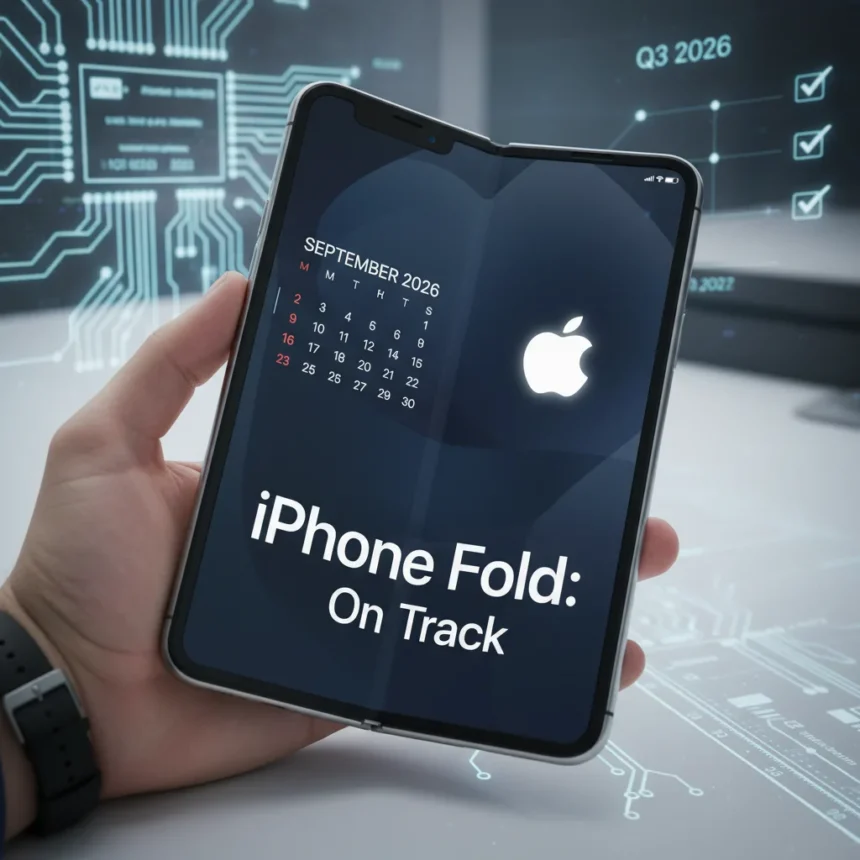
Apple’s iPhone Fold is on track to arrive in September 2026 alongside the iPhone 18 Pro and iPhone 18 Pro Max, according to Bloomberg’s Mark Gurman, who has rebutted recent claims of manufacturing delays. The foldable device will mark Apple’s long-awaited entry into a market Samsung and Chinese manufacturers have dominated for years. After more than a decade of speculation, Apple’s first foldable iPhone is finally becoming reality—and it appears to be arriving on schedule.
Key Takeaways
- Apple’s iPhone Fold will launch in September 2026 alongside non-foldable iPhone 18 Pro models.
- Bloomberg’s Mark Gurman debunked Nikkei Asia’s April 2026 report claiming major manufacturing delays.
- Device features a 5.5-inch folded display, 7.8-inch unfolded screen, and 4:3 aspect ratio similar to iPad.
- Expected price exceeds $2,000, potentially boosting Apple’s average selling price.
- Initial supply will be limited due to complex display technology and materials.
Why Nikkei’s Delay Claims Don’t Hold Up
Nikkei Asia reported on April 7, 2026, that Apple faced major engineering and manufacturing snags that could push the iPhone Fold launch to December or beyond. The story spooked investors and sent Apple’s stock sliding. But according to sources speaking with Gurman, those claims are inaccurate. Development is progressing smoothly with no major production issues blocking a September debut. Gurman stated directly: Apple’s foldable is on track to arrive during the company’s normal iPhone launch period, rebutting concerns about manufacturing problems.
This isn’t the first conflicting rumor. Earlier reports from Barclays and Ming-Chi Kuo suggested the iPhone Fold might arrive later than the iPhone 18 Pro, or that supply constraints could limit availability. But Gurman’s latest sourcing—as of the week of April 7, 2026—indicates the foldable will actually go on sale at the same time as the non-foldable Pro models, or within days of their release. That’s a significant shift from prior speculation and suggests Apple has solved the technical hurdles that typically plague foldable manufacturing.
iPhone Fold Design and Specifications
The iPhone Fold will feature a book-style design with a nearly invisible crease and a liquid metal hinge, according to leaked specs. When folded, the device measures approximately 5.5 inches diagonally. Unfold it, and you get a 7.8-inch display—nearly iPad-sized. The 4:3 aspect ratio is unusual for a phone but makes sense for a foldable, since it mirrors the proportions of Apple’s tablet when fully open.


Thickness is a critical metric for foldables, and Apple is aiming for around 4.5mm when closed. That’s thinner than most competing foldables and signals that Apple has invested heavily in miniaturization. Apple is also planning an iOS update that will make iPhone apps resemble iPad software on the larger foldable display, ensuring the expanded screen real estate feels intentional rather than stretched.
Pricing and Availability for iPhone Fold
The iPhone Fold is expected to carry a price tag well above $2,000, making it one of Apple’s most expensive products ever. Some unverified leaks suggest a price approaching $2,900, though that figure comes from YouTube sources and should be treated cautiously. Even at the conservative $2,000-plus estimate, the device will significantly boost Apple’s average selling price per unit—a key metric for investor confidence.



Availability will follow Apple’s typical playbook: the device should hit store shelves roughly one week after the September unveiling, assuming the current timeline holds. However, initial supply will be severely constrained due to the complexity of the display technology and specialized materials required for the hinge mechanism. Early adopters may face months-long wait lists, similar to the launch conditions for previous flagship iPhones.
How iPhone Fold Compares to Samsung Galaxy Fold
Samsung has sold foldable phones for years, and the Galaxy Fold is the market leader. Apple’s entry into the category is late but potentially transformative. The iPhone Fold’s 4:3 aspect ratio and iPad-like proportions differentiate it from Samsung’s more phone-like 21:9 ratio when unfolded. Apple’s focus on a thinner profile and liquid metal hinge engineering suggests a different design philosophy—one that prioritizes elegance over maximum screen real estate. Whether that approach resonates with consumers remains to be seen, but Apple’s ecosystem integration and iOS optimization for foldables could be a significant competitive advantage.
Is the iPhone Fold definitely launching in September 2026?
Production has not yet ramped up, and Apple’s release timeline—six months away as of April 2026—is not final. Plans could change if manufacturing issues emerge or if Apple decides to stagger the launch. However, Gurman’s latest reporting, sourced from people with direct knowledge of the matter, indicates strong confidence in the September window.
Will the iPhone Fold go on sale immediately after announcement?
According to Gurman, there is a very strong likelihood the foldable will go on sale at the same time as the iPhone 18 Pro and Pro Max, or within a week of their launch. This would be faster than some earlier rumors suggested, though initial availability will be extremely limited due to supply constraints.



What makes the iPhone Fold different from other foldables?
The 4:3 aspect ratio, liquid metal hinge, nearly invisible crease, and iPad-like proportions set it apart from competitors like the Samsung Galaxy Fold. Apple is also customizing iOS to make apps display more like iPad software on the larger screen, rather than simply scaling up iPhone apps.
Apple’s iPhone Fold represents a watershed moment for the foldable market. After years of skepticism and delays, the company is finally committing to the form factor—and doing so with its characteristic attention to design and engineering. If Gurman’s sources are accurate, the September 2026 launch is locked in, and the delay rumors can be put to rest. For consumers and investors alike, that’s welcome news.
Edited by the All Things Geek team.
Source: Tom's Guide