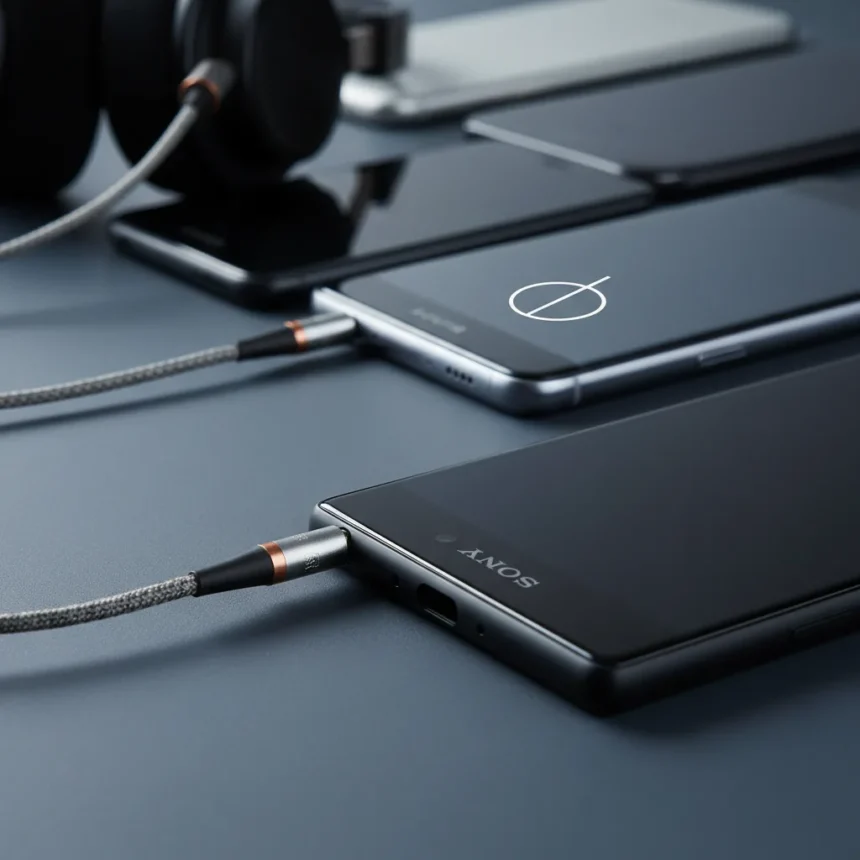
Sony’s new Xperia phone retains a feature that has become increasingly rare in flagship smartphones: the 3.5mm headphone jack. While most premium Android and iPhone competitors have eliminated this audio connector entirely, Sony continues to back wired audio connectivity as a core part of its Xperia lineup.
Key Takeaways
- Sony’s latest Xperia model keeps the 3.5mm headphone jack, a feature most flagships have abandoned.
- The headphone jack represents Sony’s commitment to audio enthusiasts and AV-focused users.
- Competing flagship phones from Samsung, Apple, and Google no longer include wired audio ports.
- Sony’s Xperia line emphasizes OLED displays and Dolby Atmos audio alongside traditional connectivity.
- This retention signals Sony’s differentiation strategy in a crowded smartphone market.
Why the Sony Xperia Headphone Jack Still Matters
The presence of a 3.5mm headphone jack on Sony’s new Xperia phone addresses a genuine frustration among audio professionals, music producers, and casual listeners who prefer wired audio. Wireless earbuds require charging, introduce latency for certain applications, and can disconnect unexpectedly. A dedicated audio jack eliminates these pain points entirely. For content creators and musicians who rely on their phones for field recording, mixing, or real-time audio monitoring, this feature is not a luxury—it is a necessity.
Sony’s decision to retain the headphone jack also reflects the company’s broader positioning as an audio-first technology company. Unlike competitors who view the jack as obsolete, Sony recognizes that eliminating it alienates a segment of users who have invested in quality wired headphones and earbuds. The Xperia line has historically catered to AV enthusiasts, and this latest model continues that tradition by prioritizing practical audio connectivity alongside modern display and processing technology.
How Sony Xperia Compares to Flagship Competitors
The smartphone landscape has shifted dramatically. Apple removed the headphone jack from the iPhone 7 in 2016, forcing users toward Lightning-connected audio or Bluetooth wireless solutions. Samsung’s Galaxy S series abandoned the jack years ago, as did Google’s Pixel lineup. Today, finding a 3.5mm port on a flagship phone outside of Sony’s ecosystem is nearly impossible. This makes the Sony Xperia headphone jack a genuine differentiator—not because it is a new technology, but because it represents a refusal to abandon a connectivity standard that remains useful.


Sony’s Xperia phones also emphasize OLED displays with HDR support and Dolby Atmos audio processing, creating a cohesive AV experience. Where competitors prioritize wireless-only ecosystems and thinner designs, Sony balances modern features with practical connectivity. This approach appeals to users who reject the false choice between latest technology and practical functionality.
What This Says About Sony’s Market Strategy
Retaining the 3.5mm headphone jack on the new Xperia phone is a calculated editorial choice. In a market dominated by wireless-first design philosophies, Sony is betting that a meaningful segment of users—audio professionals, portable musicians, wired audio enthusiasts—will value this feature enough to choose Xperia over competitors. It is a niche play, but a deliberate one. Rather than chasing the thinnest phone or the most aggressive wireless transition, Sony is carving out space for users who refuse to compromise on audio connectivity.



This strategy also signals confidence in Sony’s broader technology ecosystem. The company manufactures headphones, audio equipment, and recording devices. By maintaining headphone jack compatibility, Sony creates seamless integration opportunities for users who own Sony audio gear. A musician with Sony studio headphones can plug directly into their Xperia phone without adapters or wireless complications.
Is the Sony Xperia Headphone Jack Worth It?
For audio professionals, content creators, and users with extensive wired audio investments, the Sony Xperia headphone jack is a significant advantage. If you regularly use quality wired headphones, record audio on your phone, or simply prefer the reliability of wired connections, this feature justifies choosing Xperia over competitors. The jack works smoothly with the phone’s Dolby Atmos audio processing, delivering high-quality sound without wireless latency or battery drain concerns.
For casual smartphone users who rely entirely on wireless earbuds and streaming services, the headphone jack may feel irrelevant. However, even these users benefit from its presence as a backup audio option. A wired connection never fails due to Bluetooth interference or dead battery—it simply works.
Does the Sony Xperia have a headphone jack?
Yes, Sony’s new Xperia phone retains the 3.5mm headphone jack, making it one of the few flagship smartphones still offering this feature. This allows direct connection to wired headphones, earbuds, and professional audio equipment without adapters or wireless intermediaries.



Why did other phone makers remove the headphone jack?
Competitors removed the 3.5mm jack to achieve thinner designs, reduce component count, and push users toward wireless audio ecosystems where they could sell Bluetooth accessories. Apple’s elimination of the jack from the iPhone 7 set a precedent that other manufacturers followed, treating the port as an obstacle to minimalist industrial design rather than a useful feature.
What audio features does the Sony Xperia offer?
Beyond the headphone jack, Sony’s Xperia line features OLED displays with HDR support and Dolby Atmos audio processing. These technologies work together to deliver immersive AV experiences, whether you are watching video content or listening to music through wired or wireless connections.
Sony’s decision to keep the 3.5mm headphone jack on its new Xperia phone represents more than nostalgia—it reflects a genuine understanding of user needs that competitors have overlooked. In an era of wireless-first design, Sony is betting that practicality and audio quality still matter. For anyone who has ever struggled with a dead Bluetooth earbud or fumbled with an adapter, that bet feels like a smart one.
Edited by the All Things Geek team.
Source: What Hi-Fi?