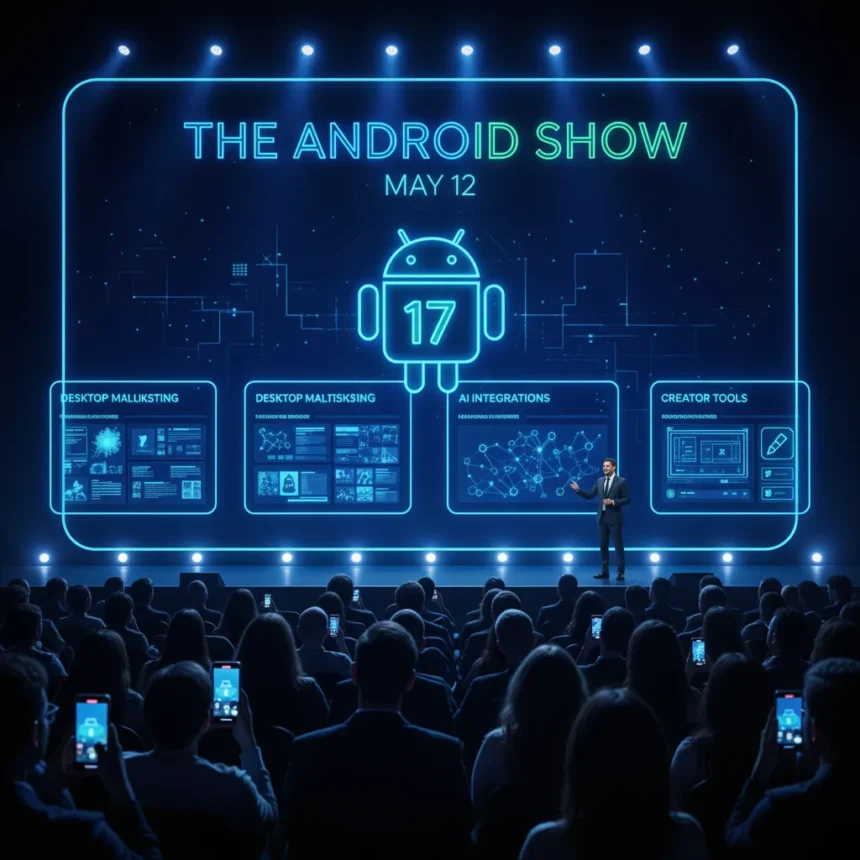
Android 17 upgrades are rolling out this year after Google previewed the major features at The Android Show on May 12, 2026, one week before Google I/O 2026 begins on May 19. The event showcased creator tools, security improvements, and AI integrations that Google plans to release throughout 2026, signaling a shift toward tools that professionals and content creators have long demanded from the platform.
Key Takeaways
- The Android Show on May 12, 2026, previewed Android 17 upgrades including desktop multitasking and Gemini Intelligence integrations.
- Android 17 beta 3 is currently available for testing, with full rollout expected later in 2026.
- Samsung One UI 9 beta launches this week for Galaxy S26 owners, bringing Android 17 upgrades with enhanced security and customization.
- Creator-focused features include better Instagram uploads, Adobe Premiere integration, and Screen Reactions support.
- Android 17 upgrades address iPhone ecosystem advantages through separate Wi-Fi and mobile data toggles and improved app bubbles.
Android 17 upgrades bring desktop multitasking to the forefront
Desktop multitasking represents one of the most significant Android 17 upgrades, enabling users to run multiple apps side-by-side on larger screens and connected displays. This capability has been absent from Android’s feature set, making it a notable addition for productivity-focused users and professionals who depend on parallel workflows. The feature works with improved desktop cursor support, addressing a gap that has kept Android behind competing platforms in desktop-class productivity scenarios.
Google’s approach to desktop multitasking in Android 17 upgrades extends beyond simple window splitting. The system now supports more granular control over app layouts and transitions, making the experience closer to what users expect from traditional desktop operating systems. This addresses a long-standing complaint from Android power users who have had to choose between smartphone convenience and desktop-level multitasking.
Android 17 upgrades include creator-focused tools and AI features
Google is treating Android creators seriously with Android 17 upgrades that directly address content production workflows. The new features include better Instagram upload functionality, Adobe Premiere integration for video editing, and a new Screen Reactions feature that lets creators capture viewer responses during livestreams or recorded content. These tools close gaps that have made iOS feel like the default choice for creators managing complex production pipelines.


Gemini Intelligence integrations represent another major angle for Android 17 upgrades, automating tasks and providing AI-assisted features across the system. While specific implementation details remain limited ahead of the full rollout, Google teased that Gemini automation will expand throughout 2026, suggesting deeper integration with productivity apps and system functions. This positions Android 17 upgrades as a platform that bridges smartphone convenience with AI-assisted professional workflows.
Security and privacy improvements in Android 17 upgrades
Android 17 upgrades include substantial security enhancements that address both system-level vulnerabilities and user privacy concerns. Google announced improvements across encryption, app permissions, and data handling, though the event did not disclose granular technical details about each enhancement. The upgrades reflect growing pressure from users and regulators to improve platform security across Android’s fragmented ecosystem.



One practical improvement in Android 17 upgrades is separate Wi-Fi and mobile data toggles, allowing users finer control over which networks their apps can access. This addresses a common frustration where users must disable all connectivity to prevent background data usage, rather than choosing which connection type to restrict. Combined with enhanced app bubbles support, these UI refinements make Android 17 upgrades feel more intentional about respecting user preferences.
Samsung One UI 9 beta brings Android 17 upgrades to Galaxy S26
Samsung’s customized implementation of Android 17 upgrades arrives this week in the form of One UI 9 beta for Galaxy S26 owners. Samsung’s version adds smarter security features and customization options on top of the stock Android 17 upgrades, giving early adopters a chance to test the platform on current flagship hardware. This staggered rollout strategy allows Samsung to optimize Android 17 upgrades for its hardware before the full public release later in 2026.
The gap between Samsung’s One UI 9 and stock Android 17 upgrades reflects the broader Android ecosystem challenge: manufacturers add valuable customization but also delay security updates and feature releases. Users on stock Android devices will see the full Android 17 upgrades rollout through over-the-air updates, while Samsung users benefit from One UI’s interface refinements but wait for Samsung’s optimization cycle.
How do Android 17 upgrades compare to iOS 26.5?
Apple is preparing iOS 26.5 with RCS encryption interoperability, allowing better messaging compatibility with Android devices. This represents Apple’s response to Android’s growing ecosystem strength, but it does not match the scope of Android 17 upgrades in terms of desktop features, creator tools, or AI integration. iOS remains stronger in video editing and content creation apps, but Android 17 upgrades narrow that gap significantly through native Adobe integration and Screen Reactions.



What Android 17 upgrades should you expect in the full rollout?
The full Android 17 upgrades rollout is scheduled for later in 2026, following the pattern of previous Android releases. Beta 3 is currently available for eligible devices, primarily Google Pixel phones, allowing early testers to explore desktop multitasking, creator tools, and security improvements before the public release. Eligible devices will receive Android 17 upgrades through automatic over-the-air updates once Google declares the version stable.
Will my phone get Android 17 upgrades?
Most Android phones released in the past three years will receive Android 17 upgrades, though the timeline depends on your manufacturer. Google Pixel devices typically receive updates first, followed by Samsung Galaxy phones through One UI, then other manufacturers. Older devices may not support certain Android 17 upgrades features like desktop multitasking, which requires compatible hardware.
Does Android 17 upgrades include RCS messaging improvements?
Android 17 upgrades focus on creator tools, multitasking, and security rather than messaging overhauls. Apple’s iOS 26.5 is adding RCS encryption interoperability, but Google’s Android 17 upgrades announcement did not highlight new RCS features. Messaging improvements may arrive through Google Messages updates rather than core Android 17 upgrades.
Android 17 upgrades represent Google’s most ambitious attempt to make Android competitive with iOS for creators and professionals. The combination of desktop multitasking, native creative tools, and Gemini AI integration addresses real gaps that have pushed content creators toward Apple’s ecosystem. The question now is execution—whether Samsung’s One UI 9 and other manufacturer implementations can deliver on these promises without fragmentation delays that undermine the core platform’s advantage. The full rollout later in 2026 will reveal whether these Android 17 upgrades actually shift creator preference or remain niche features for early adopters.
Edited by the All Things Geek team.
Source: Android Central