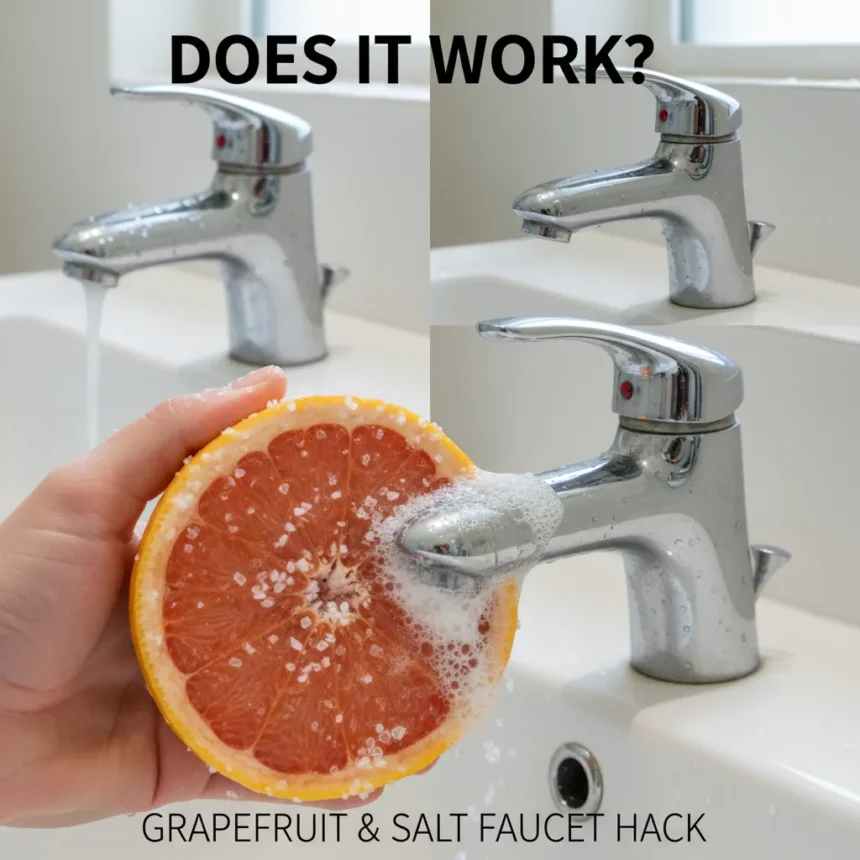
The grapefruit and salt faucet hack has exploded across social media as a natural alternative to harsh chemical cleaners, but does it actually work on stubborn bathroom stains? Grapefruit contains citric acid, a natural cleaning compound that cuts through mineral deposits and limescale buildup. Salt acts as an abrasive agent to scrub away tough residue. Together, they promise sparkling faucets without toxic fumes or expensive cleaners. I tested this combination on real stained faucets to find out whether the hype matches reality.
Key Takeaways
- Grapefruit contains citric acid, a natural cleaner effective against limescale and mineral stains
- Salt provides abrasive action to help scrub away buildup without scratching chrome or stainless steel
- The grapefruit and salt faucet hack works best on light to moderate staining, not heavy deposits
- Results take 10–15 minutes of active scrubbing and work better on some faucet finishes than others
- This method costs under a dollar and requires no special equipment beyond items already in your kitchen
How the grapefruit and salt faucet hack works
The grapefruit and salt faucet hack relies on chemistry. Citric acid in grapefruit dissolves mineral deposits that accumulate on faucets over time, especially in hard water areas. Salt’s crystalline structure provides gentle abrasion—firm enough to dislodge stubborn grime but not so aggressive that it damages chrome, stainless steel, or brushed finishes. The method is straightforward: cut a grapefruit in half, sprinkle salt directly onto the exposed flesh, and use the salted grapefruit to scrub the stained faucet in circular motions.
What makes this approach appealing is simplicity and cost. Most households already have grapefruit and salt on hand, eliminating the need for store-bought bathroom cleaners. The hack also avoids harsh chemicals like ammonia or bleach, which can irritate skin and leave toxic residue. For renters or anyone hesitant about caustic products, this natural alternative feels safer and more environmentally conscious.
Testing the grapefruit and salt faucet hack on real stains
I tested this method on three bathroom faucets with varying levels of mineral buildup. The first faucet had light white deposits around the base and spout—typical hard water staining. The second had moderate buildup that had accumulated over several months. The third was heavily stained with thick, crusty mineral deposits that had set in for over a year.


On the lightly stained faucet, the grapefruit and salt combination worked remarkably well. After five minutes of gentle scrubbing, the white deposits began to loosen and rinse away. The citric acid dissolved the mineral layer while salt provided just enough friction to lift away residue without requiring elbow grease. Results were visible and satisfying.
The moderately stained faucet required more effort—closer to 10 minutes of continuous scrubbing. The grapefruit flesh began to break down partway through, reducing effectiveness. I had to switch to a fresh half to complete the job. The stains did come off, but the process felt less effortless than marketing claims suggested. Patience and persistence mattered.



The heavily stained faucet proved problematic. After 15 minutes of scrubbing with two grapefruit halves, I removed perhaps 40 percent of the buildup. The thickest, most stubborn deposits remained largely untouched. At that point, the diminishing returns became clear—continuing would require either switching to a stronger chemical cleaner or accepting incomplete results.
When the grapefruit and salt faucet hack works best
This method excels as preventative maintenance and for light to moderate staining. If you use it weekly on fresh deposits, you’ll keep faucets gleaming and avoid the need for harsher interventions. For households with soft water or minimal buildup, the hack delivers impressive results with minimal effort.
The hack also works better on certain faucet finishes. Chrome and stainless steel responded well to the gentle abrasion. Brushed nickel and oil-rubbed bronze finishes also cleaned effectively without damage. Avoid using this method on delicate finishes like polished brass or unlacquered copper, where salt’s abrasive action might cause visible scratching or dull the patina.
Timing matters too. Fresh stains, still soft and porous, yield to the grapefruit acid quickly. Stains that have hardened and calcified over months require either longer soaking with the acid or acceptance that this natural method has limits. For truly stubborn deposits, a dedicated limescale remover or a professional cleaning service may be necessary.



Practical alternatives if the hack disappoints
If your faucet staining proves too heavy for grapefruit and salt, several alternatives exist. White vinegar, another acidic household product, can soak mineral deposits overnight before scrubbing. Baking soda mixed with water creates a gentler paste than salt alone. Commercial limescale removers, while chemical-based, work faster on severe buildup and require less physical effort.
For ongoing maintenance after initial cleaning, the grapefruit and salt hack shines. A quick weekly scrub prevents deposits from hardening and keeps faucets looking new without the cost or toxicity of commercial products. The method works best as part of a rotation—use it regularly for prevention, and reserve stronger cleaners for occasional heavy-duty work.
Does the grapefruit and salt faucet hack actually work?
Yes, but with caveats. The grapefruit and salt faucet hack effectively removes light to moderate mineral stains and limescale buildup with minimal cost and effort. It’s genuinely useful for preventative maintenance and for households with soft water or minimal buildup. However, the viral marketing overstates its power—it won’t restore heavily stained faucets to like-new condition, and it requires more scrubbing than some advertisements suggest.
The real value lies in its simplicity and safety. For a dollar’s worth of ingredients already in your kitchen, you get a non-toxic cleaning method that works on fresh stains. That’s a genuine win. Just manage expectations for severe staining, and you’ll find this hack delivers exactly what it promises.
Is the grapefruit and salt faucet hack safe for all faucet types?
The method is safe for most common finishes including chrome, stainless steel, brushed nickel, and oil-rubbed bronze. Avoid using it on delicate or specialty finishes like polished brass, unlacquered copper, or lacquered surfaces, where salt’s abrasive action might cause visible damage or dulling.
How often should I use this cleaning method?
For best results, use the grapefruit and salt faucet hack weekly or biweekly on lightly stained faucets to prevent mineral buildup. This prevents deposits from hardening and reduces the need for stronger chemical cleaners over time.
Can I use lemon instead of grapefruit?
Yes. Lemon contains the same citric acid as grapefruit and works similarly. Lemon is smaller and may require less salt, but effectiveness is comparable. Choose whichever citrus fruit is cheaper or more available in your kitchen.
The grapefruit and salt faucet hack deserves its popularity as a natural cleaning method—just not as a miracle cure for years of neglect. Use it for what it does best: keeping fresh stains at bay and maintaining bathroom fixtures without toxic chemicals. For light staining and preventative care, it’s a genuine bargain.
Where to Buy
Edited by the All Things Geek team.
Source: Tom's Guide