





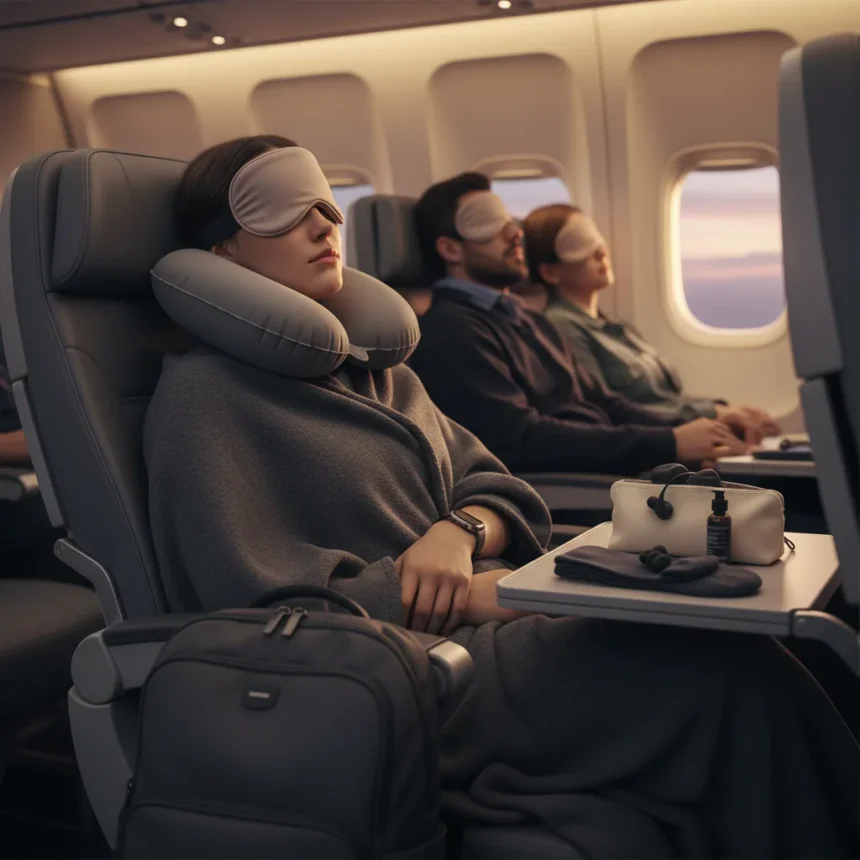
How to sleep on a plane is a question every frequent flyer eventually asks. The answer isn’t complicated—it’s about choosing the right seat, timing your rest, moving before boarding, and packing a focused sleep kit that addresses the three main obstacles: noise, light, and physical discomfort.
Key Takeaways
- Seats above the engine or in the wing row use engine hum as white noise to aid sleep.
- Window seats let you rest your head and control light exposure with the blind.
- Flight socks can halve the number of times you wake during a flight.
- A 30-minute walk before boarding prepares your body for rest.
- A travel pillow, eye mask, and earplugs form the core of an effective sleep kit.
Choose the Right Seat for How to Sleep on a Plane
The first lever you control is where you sit. A seat above the engine or in the same row as the wing isn’t a random choice—the engine hum acts like white noise, masking other disruptive sounds and creating a consistent acoustic environment that helps you drift off. Window seats win on two counts: they give you something to lean your head against and let you close the blind to block external light. Avoid seats near toilets and flight attendant refreshment stations; the traffic and noise there will interrupt any sleep cycle you manage to build.
The front of the plane also has advantages if you’re flying long-haul. Passengers seated forward are served meals first and disstart first, reducing the total time you’re waiting for service or queuing to leave—both sources of disruption.
Move for 30 Minutes Before You Board
Your body doesn’t switch from airport alertness to flight sleep on command. Spend about 30 minutes walking around the airport—duty free, lounge, or terminal—before boarding. Light physical activity primes your system for rest, making it easier to fall asleep once you’re airborne. This isn’t a workout; it’s a signal to your body that activity time is ending and rest time is coming.


Time Your Sleep to Match the Flight Schedule
Don’t sleep the moment you sit down. Instead, ask flight attendants when food service will be delivered and time your sleep around that interruption. Staying awake during the early part of the flight—using light exposure and activity to stay alert—lets you sleep later when the cabin settles and service is complete. For long-haul flights crossing time zones, you can also align your in-flight sleep with your destination’s night time, reducing jet lag on arrival.
Pack a Focused Sleep Kit
Your sleep kit has four essential items: flight socks, a travel pillow, an eye mask, and earplugs. Each solves a specific problem.



Flight socks (compression socks) address a hidden culprit. Cabin pressure and immobility cause fluid to build up in your legs, triggering discomfort and frequent waking. Studies have confirmed that flight socks can halve the number of times you’re woken up on a plane. Wearing them during the day before your flight also prevents fluid buildup before you even board.
A travel pillow supports your neck and head during upright sleep. The best ones are made of soft memory foam because they mold around your neck’s shape. If you don’t have a dedicated travel pillow, wrap a blanket or scarf around your neck for similar support.
An eye mask blocks external light—reading lights, TV screens, and cabin illumination from other passengers. Earplugs drown out noise, from passenger conversations to the constant hum of cabin systems. Together, these two items eliminate the two sensory interruptions that derail light sleepers.
Why Hydration and Cabin Conditions Matter
Water intake affects both sleep quality and jet lag recovery. Dry cabin air makes it harder to sleep, so stay hydrated throughout the flight. Avoid excessive alcohol and stimulants like tea and coffee, which disrupt rest and compound dehydration. The cabin environment is against you—cold, dry, and noisy—so your sleep kit and seat choice are your only defenses.



Does flight socks really help you sleep on a plane?
Yes. Flight socks prevent fluid buildup in your legs, which is a primary cause of discomfort and waking during flights. Studies have shown they can halve the number of times you wake, making them one of the highest-ROI items in your sleep kit.
What’s the best seat for sleeping on a plane?
A window seat above the engine or in the wing row. The window gives you a surface to lean against and control over the blind, while the engine noise masks other sounds and acts as white noise. Avoid seats near toilets and refreshment stations.
How long should you walk before a flight to sleep better?
About 30 minutes of walking around the airport before boarding prepares your body for rest. Light physical activity signals to your system that activity time is ending, making it easier to fall asleep once airborne.
How to sleep on a plane is solved not by one magic product but by a combination of seat strategy, pre-flight movement, timing, and a compact kit. Most travelers overlook seat selection and pre-boarding activity, focusing only on gear—but those two factors often matter more than the pillow you bring. Combine all five strategies and you’ll sleep better on your next flight than you have in years.
Where to Buy
£69 | £44.95 | £88 | £27.95 | 1 Amazon customer review
Edited by the All Things Geek team.
Source: T3




