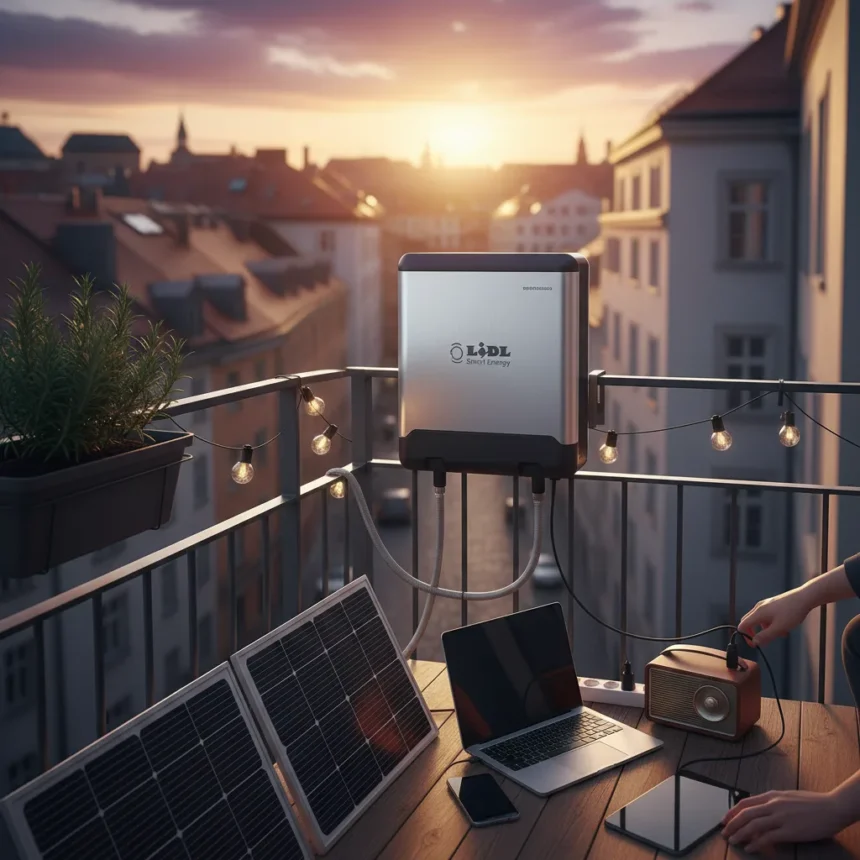
A solar balcony battery is a compact energy storage unit designed to capture and store solar energy for later use or emergency backup power, increasingly sold by mainstream retailers like Lidl at competitive prices. As energy costs spike across Europe and grid reliability becomes uncertain, home backup systems have shifted from a niche luxury to a practical household essential. Lidl’s entry into the solar balcony battery market signals that affordable energy independence is no longer confined to early adopters—it is becoming mainstream.
Key Takeaways
- Lidl has launched a low-cost solar balcony battery targeting households seeking affordable backup power.
- Home energy storage is transitioning from optional accessory to essential utility during energy crises.
- Mainstream retailers entering the solar battery market are driving down costs and expanding consumer access.
- Solar balcony batteries appeal to renters and apartment dwellers who cannot install rooftop systems.
- Energy insecurity across Europe is reshaping consumer priorities toward grid independence.
Why Home Backup Power Is No Longer Optional
Energy crises and grid instability have transformed how households think about power. When rolling blackouts threaten or electricity prices surge during peak hours, a home battery system becomes practical insurance rather than a tech enthusiast’s toy. Lidl’s decision to stock a solar balcony battery reflects this shift in consumer demand—retailers follow where customers are spending money, and energy independence is where European households are looking right now.
The appeal is straightforward: capture solar energy during the day, store it in a battery, and use it when the grid is expensive or unavailable. For apartment dwellers and renters who cannot install rooftop panels, a balcony-mounted system offers a realistic path to energy autonomy. Lidl’s positioning of this product at a competitive price point acknowledges that backup power should not require a luxury budget.
Solar Balcony Batteries vs. Traditional Home Energy Systems
Traditional home energy systems—large rooftop installations paired with expensive battery banks—demand significant capital investment and permanent structural modifications. A solar balcony battery takes a different approach: smaller scale, modular, and portable enough for apartment living. This distinction matters because it democratizes access. Where a full rooftop system might cost thousands and require professional installation, a balcony battery is affordable and requires minimal setup.


The trade-off is capacity. A balcony-mounted system will not power an entire home through a multi-day outage the way a larger installation might. Instead, it targets essential loads—keeping a refrigerator running, charging devices, powering lights—during short-term disruptions or high-price periods. For most urban households, that is sufficient. The real competitive advantage is not raw power but affordability and accessibility.
The Broader Energy Independence Trend
Lidl is not alone in recognizing this market shift. Across Europe, energy retailers, hardware stores, and online marketplaces are expanding solar and battery product lines. What was once a specialized niche is becoming a standard home product category. This trend reflects genuine anxiety: energy prices remain volatile, grid resilience is questioned, and consumers are taking action to reduce dependence on centralized power systems.



The psychological shift is significant too. A household that buys a solar balcony battery is no longer passively accepting whatever the grid delivers. It is actively investing in independence, even if that independence is partial. Retailers like Lidl understand this sentiment and are stocking products that align with it. The mass-market availability of affordable solar batteries validates a once-fringe concern: home backup power is becoming normal.
Who Benefits Most From a Solar Balcony Battery
Apartment dwellers and renters represent the primary audience for balcony-mounted systems. They face the harshest constraints: no roof access, landlord restrictions, and temporary tenure that rules out major renovations. A solar balcony battery bypasses these obstacles. It can be installed on a balcony railing, removed when moving, and requires no structural permission beyond reasonable use of outdoor space.
Secondary audiences include homeowners with modest energy needs, households in regions with frequent outages, and anyone uncomfortable with rising grid electricity costs. A balcony battery does not replace a full home system, but it provides tangible resilience at a fraction of the cost. For these use cases, Lidl’s product positioning—affordable, accessible, practical—hits the target directly.
Is a solar balcony battery worth buying?
A solar balcony battery makes sense if you live in an apartment, experience frequent power disruptions, or want to reduce reliance on expensive grid electricity during peak hours. The low cost of Lidl’s offering removes the barrier to entry that has kept most households from exploring home energy storage. Start small, test the system, and expand later if needed.



What can a solar balcony battery actually power?
A balcony-mounted battery typically handles essential loads: phone and laptop charging, LED lighting, small appliances like fans or coffee makers, and refrigerator operation during short outages. It will not run an air conditioner, electric heater, or multiple high-power devices simultaneously. Capacity varies by model, but realistic expectations are a few kilowatt-hours of storage—enough for essential needs over several hours, not days.
How does a solar balcony battery compare to a home generator?
Generators are loud, require fuel, and produce emissions. A solar balcony battery is silent, fuel-free, and environmentally neutral once installed. Generators excel during extended outages when you need consistent power output. Balcony batteries excel at daily cost reduction and short-term backup. Many households benefit from both: solar batteries for routine efficiency and a generator as backup for extended crises.
Lidl’s solar balcony battery entry signals that energy independence is no longer a fringe movement. It is becoming a standard household consideration, driven by real concerns about grid stability and energy costs. Whether you are a renter seeking any form of backup power or a homeowner exploring energy autonomy, affordable solar storage is now within reach. The question is no longer whether home batteries make sense—it is which one fits your space and budget.
Where to Buy
Jackery Explorer 1000 v2 | Bluetti AC180T
Edited by the All Things Geek team.
Source: TechRadar