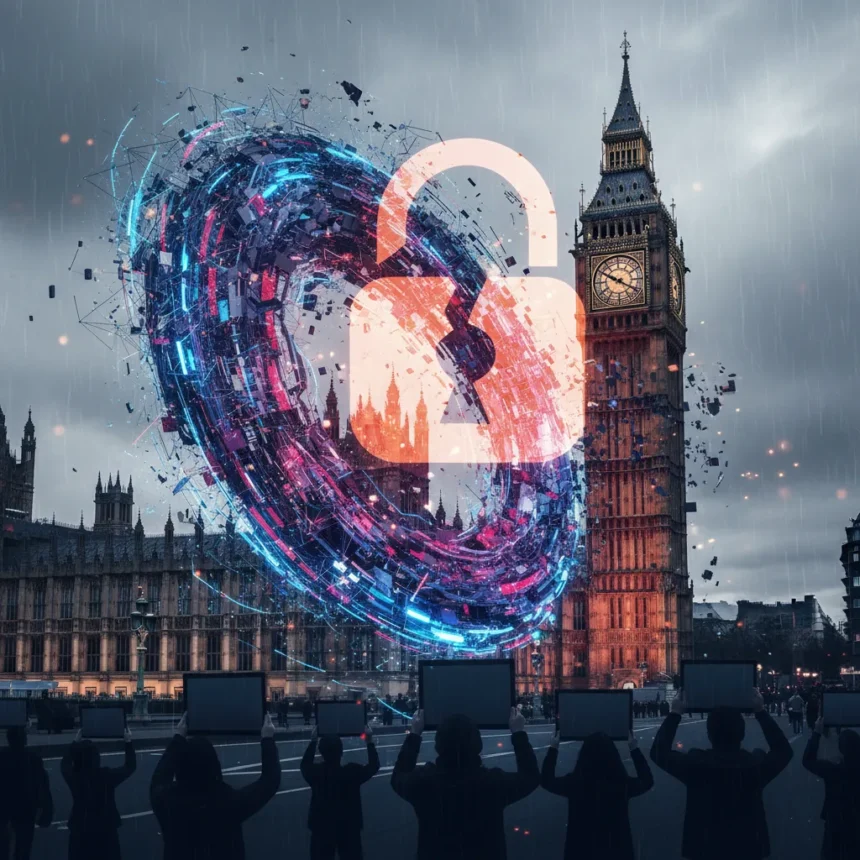
Hacktivist attacks at scale represent a new and uniquely destructive threat to the UK, according to a stark warning from the National Cyber Security Centre. Richard Horne, chief executive of the NCSC, cautioned that in a conflict situation, the country would likely face coordinated hacktivist campaigns causing disruption comparable to the costliest ransomware attacks in history—except with one critical difference: no option to pay and recover.
Key Takeaways
- Hacktivist attacks at scale could cause disruption matching major ransomware incidents but without ransom recovery options.
- The NCSC handles approximately four nationally significant cyber incidents per week on average.
- State-backed attacks now dominate the UK’s most serious incidents, surpassing criminal ransomware threats.
- The UK government is pledging £90 million for AI-powered cyber defenses.
- 43% of UK businesses experienced a cyber breach or attack in the last 12 months.
Why Hacktivist Attacks at Scale Are Different From Ransomware
The distinction matters enormously. Ransomware attacks encrypt data and demand payment for decryption keys—a criminal transaction with a potential exit. Hacktivist attacks, by contrast, aim purely to destroy. They function like wiper attacks, which permanently overwrite systems and data with no recovery mechanism, no negotiation, and no path back online. The 2012 Shamoon wiper attack on Saudi Aramco destroyed 30,000 computers. The 2017 NotPetya attack on shipping giant Maersk overwrote master boot records across thousands of machines, crippling operations for weeks. Now imagine such attacks coordinated at national scale, targeting critical infrastructure, with political motivation rather than financial gain.
Horne warned that the UK would face hacktivist attacks at scale in or near a conflict situation, describing the current geopolitical environment as the most seismic shift in modern history. The threat is not theoretical. The NCSC already handles about four nationally significant cyber incidents per week, with state actors—China, Russia, Iran—responsible for an increasing share of the most damaging attacks.
State Actors Now Dominate UK’s Cyber Threat Landscape
For years, the dominant cyber threat to UK organizations came from criminal ransomware gangs seeking profit. That calculus has shifted. State-linked cyberattacks now constitute the majority of the UK’s most serious incidents, fundamentally changing the nature of the risk. Criminal threats like ransomware remain the most common risk to organizations, but they no longer represent the highest-impact threat.


This shift explains the government’s response. The UK is pledging £90 million for AI-powered cyber defenses and urging technology firms to build them into their systems. The investment reflects a recognition that traditional defense—firewalls, antivirus, incident response teams—may not scale to meet state-level threats coordinated at the national level. Yet the government has not detailed implementation timelines or effectiveness metrics for the AI defense initiative.
What The Data Shows About UK Cyber Risk Today
The current threat landscape is already severe. The UK Cyber Security Breaches Survey 2025 found that 43% of UK businesses—roughly 612,000 organizations—experienced a cyber breach or attack in the last 12 months. Among charities, the figure is 30%, affecting approximately 61,000 organizations. Both figures represent a slight improvement from 2024, when 50% of businesses reported breaches, but they remain alarmingly high. Phishing remains the dominant attack vector, with 85% of breached businesses and 86% of breached charities targeted by phishing campaigns.



Ransomware specifically affects a smaller but growing slice of the business population. In 2024, fewer than 0.5% of UK businesses reported ransomware attacks. In 2025, that figure rose to 1%, equating to approximately 19,000 businesses. The average cost of a cyber crime incident (excluding phishing) is £990 per organization, or £1,970 when excluding zero-cost responses.
The Upcoming Ransomware Payment Ban and Its Implications
The UK government is moving to ban ransomware payments by public bodies and critical infrastructure operators under the forthcoming Cybersecurity and Resilience Bill. This policy shift aligns with the NCSC’s warnings about hacktivist attacks at scale. If organizations cannot pay ransoms to recover from criminal attacks, they will be forced to invest in resilience—redundant systems, offline backups, faster detection and response. Those same capabilities are essential to surviving state-level hacktivist campaigns, which offer no ransom option whatsoever.
The payment ban is controversial. Some security researchers argue that allowing payments to criminal gangs is morally indefensible and funds further attacks. Others contend that bans simply shift the burden of recovery onto already-stretched IT teams and may drive some organizations toward inadequate black-market recovery services. The NCSC’s warning about hacktivist attacks at scale sidesteps this debate: in a conflict scenario, ransom payment is not an option. Resilience is the only option.
What Organizations Should Do Now
The NCSC’s warning is not a prediction of imminent conflict but a call to prepare for plausible scenarios. Organizations should prioritize offline backups of critical data, segmentation of networks to limit lateral movement, and rapid detection capabilities. Smaller organizations often lack resources for comprehensive cyber programs; the government’s £90 million AI defense pledge may eventually help, but implementation details remain unclear.



Is the UK currently under attack from state-backed hacktivists?
The NCSC handles four nationally significant cyber incidents per week, many linked to state actors, but Horne’s warning about hacktivist attacks at scale was framed as a future risk in or near conflict situations, not an active campaign. State-backed attacks are already a dominant threat, but coordinated hacktivist campaigns at the scale Horne described would represent a significant escalation.
What is the difference between hacktivist attacks and ransomware?
Ransomware encrypts data and demands payment for decryption, offering a potential recovery path. Hacktivist attacks aim to permanently destroy systems and data with no recovery option, functioning like wiper attacks that overwrite critical files and boot records.
How much is the UK spending on cyber defenses?
The UK government is pledging £90 million for AI-powered cyber defenses, though specific timelines and implementation details have not been disclosed.
The NCSC’s warning about hacktivist attacks at scale reflects a hard truth: in a world where state actors can coordinate destructive campaigns with no financial incentive to negotiate, traditional cyber insurance and incident response playbooks offer limited protection. The only defense is resilience built before the attack arrives.
Edited by the All Things Geek team.
Source: TechRadar