







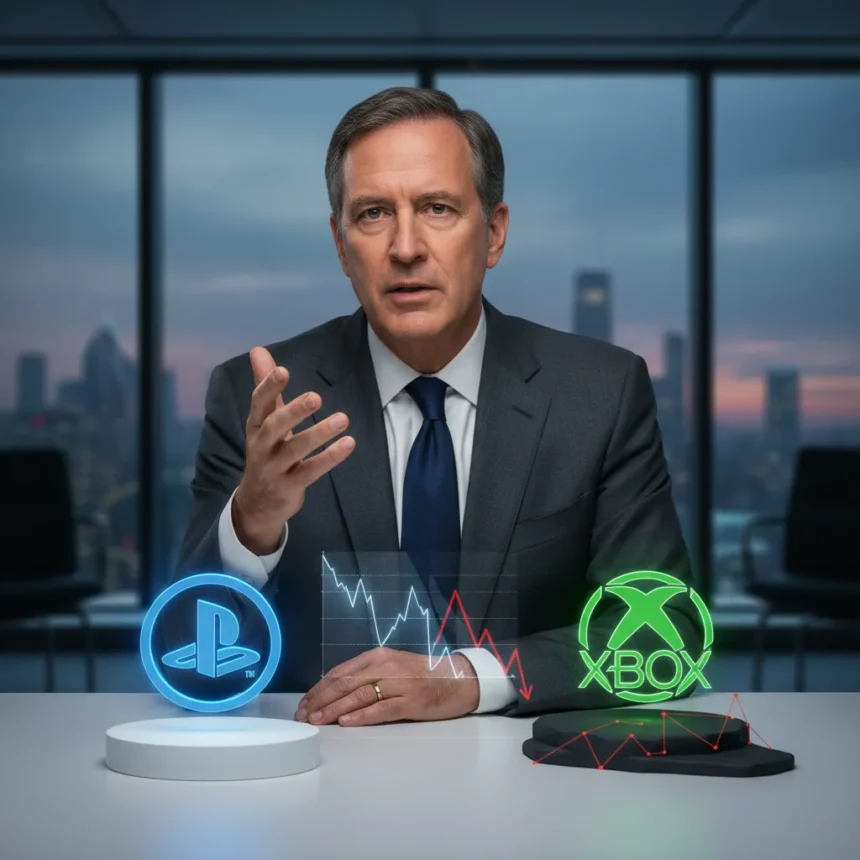
Shawn Layden, former chairman of PlayStation Worldwide Studios and president of Sony Interactive Entertainment America who steered most of the PS4 generation, has launched a scathing critique of Xbox Game Pass profitability, arguing that Microsoft is desperately trying to make the subscription service viable and suggesting the industry needs public clarity on whether it actually works.
Key Takeaways
- Shawn Layden questions whether Xbox Game Pass is actually profitable despite Microsoft’s reported $5 billion annual revenue.
- Game Pass has over 35 million subscribers but faces declining growth, raising questions about long-term viability.
- Developers face wage pressure under subscription models, according to former industry executives.
- Live service games like Fortnite pose a bigger threat to new releases than subscriptions, analysts say.
- Layden calls for a public post-mortem analysis to clarify the subscription model’s impact on the industry.
The Profitability Question Nobody Can Answer
Layden’s core argument is deceptively simple: nobody knows if Game Pass actually makes money. While Microsoft reported that Xbox Game Pass annual revenue reached nearly $5 billion for the first time since launch, Layden points out that revenue and profitability are not the same thing. “Is Game Pass profitable? Is Game Pass not profitable? What does that mean?” he asked in an interview with GamesIndustry.biz. His skepticism cuts deeper: “You can do all kinds of financial jiggery-pokery for any sort of corporate service to make it look profitable if you wanted to”. This matters because Microsoft’s massive 2024 layoffs—cutting over 9,000 employees and canceling several game projects—suggest the company is struggling with the economics of its subscription bet.
Layden is not alone in questioning the model. Former Xbox VP Shannon Loftis acknowledged that Game Pass “comes at the expense of retail revenue,” a brutal admission that subscriptions cannibalize the traditional game sales that fund development. When a player gets a $70 game on day one through a $17-per-month subscription, the developer loses that full sale. The math does not work unless the subscription service pays developers enough to fill the gap—and Layden argues it does not.
Why Developers Become Wage Slaves Under Game Pass
The subscription model does not just hurt profitability; it warps how games get made and who benefits. Layden contends that developers fitting into the Game Pass ecosystem become “wage slaves,” trapped in a system where they receive a flat fee from Microsoft rather than revenue share based on player engagement or sales. The incentive structure is backwards: developers are not rewarded for making games people love; they are rewarded only if Microsoft decides their game is worth promoting or if it somehow explodes in popularity on the platform.


Former Bethesda executive Pete Hines reinforced this critique, saying Game Pass creates “weird inner tensions” and is detrimental to developers because it fails to adequately value their work unless games are designed for post-release monetization—battle passes, cosmetics, live service mechanics. Developers sacrifice creative control and long-term revenue for the promise of “exposure.” This dynamic has already warped industry expectations. Layden notes that once a major publisher puts a game on Game Pass day one, consumers stop expecting to pay full price for new releases. “You can’t unring the bell, right?” he said, pointing to why Grand Theft Auto 6 will almost certainly never launch on the service.
Not every developer agrees with this assessment. Tomas Sala, creator of The Falconeer, defended Game Pass as “generally a positive thing” for indie developers, crediting Microsoft with being “more than fair in compensation” and providing access to a massive audience. This divide reveals the real fracture: indie studios with limited marketing budgets benefit from Game Pass exposure, while established studios and executives see it as a threat to sustainable business models.



The Netflix Comparison That Haunts Gaming
Layden explicitly rejects the “Netflix of gaming” comparison that Microsoft has leaned on for years. “I think it is a danger,” he said. The analogy breaks down because music and film are consumption experiences—you watch a movie once, then move on. Games are different. A player might spend 100 hours in a single title, and Game Pass does not scale payment with that engagement.
The subscription model also erodes consumer willingness to pay premium prices. When Spotify launched, it killed music sales. When Netflix exploded, it killed DVD rentals. Layden argues Game Pass is doing the same to game purchases, creating a race to the bottom where consumers expect all games to be included in a monthly fee. This expectation is now baked into the market. Younger players expect new AAA games to be included eventually, which means developers and publishers cannot rely on day-one sales the way they once did.
What the Industry Actually Needs
Rather than continuing to argue in circles, Layden calls for transparency. “A clarifying post mortem would do the entire industry some good,” he said. He wants Microsoft to publicly explain Game Pass economics—how much it pays developers, what the actual subscriber acquisition cost is, and whether the service generates profit or simply transfers wealth from one Microsoft division to another.
This transparency matters because the entire industry is watching. Publishers are making long-term content decisions based on Game Pass viability. Developers are choosing between traditional sales models and subscription contracts. If Game Pass is not actually profitable, the industry is optimizing for a mirage. Layden’s call for clarity is not just criticism; it is a plea for honest business conversation.



Industry analyst Mat Piscatella offered a counterpoint: live service games like Fortnite and Call of Duty are a “far bigger threat” to new releases than subscriptions. This suggests the real problem may not be Game Pass specifically, but the entire shift toward engagement-driven monetization over traditional sales. Game Pass is one symptom of a deeper industry transformation.
Is Xbox Game Pass actually profitable for Microsoft?
Microsoft has not disclosed Game Pass profitability, only that annual revenue reached nearly $5 billion. Layden and other executives argue that revenue figures obscure whether the service actually generates profit after paying developers, marketing costs, and infrastructure. The company’s recent massive layoffs suggest internal pressure on the subscription model’s economics.
Why do developers criticize Game Pass if it offers exposure?
Developers like Pete Hines argue that Game Pass compensation does not match the value of day-one access to millions of players, and the subscription model discourages players from buying games at full price. Indie developers like Tomas Sala have had different experiences, citing fair compensation and audience reach as genuine benefits.
Could Game Pass become profitable if Microsoft changes its strategy?
Layden suggests the current model is fundamentally broken because subscriptions that rely on content cannot work without properly valuing and rewarding the creators. For Game Pass to be sustainable, Microsoft would need to either raise prices significantly, reduce the game library, or restructure how it compensates developers—all moves that would undermine the service’s appeal.
Layden’s critique exposes a hard truth: Game Pass may be the most visible gaming subscription service, but it is also a cautionary tale about the danger of building a business model on unsustainable unit economics. Until Microsoft opens its books and the industry demands transparency, players and developers will continue operating under uncertainty. That uncertainty is the real crisis—not Game Pass itself, but the refusal to acknowledge whether it actually works.
Edited by the All Things Geek team.
Source: TechRadar




