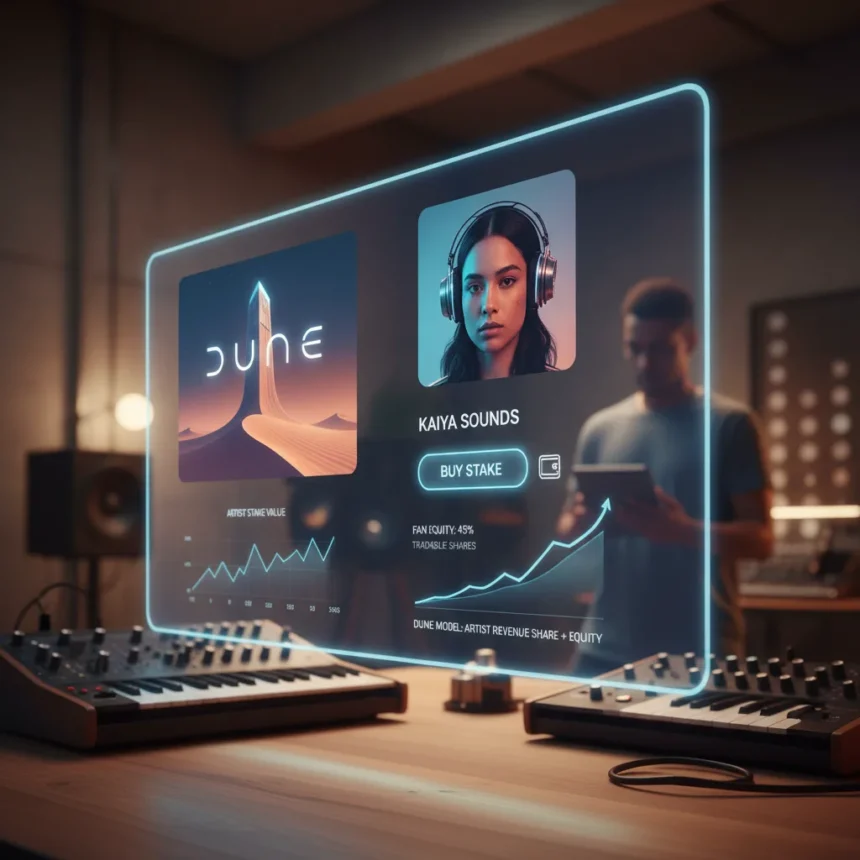
Dune music streaming platform represents a fundamentally different approach to how artists earn from their work. Founded by Paul Knowles and Paul Bowe in Manchester, Dune allows fans to buy tradable stakes in artists based on streaming performance, creating a direct financial connection between listener support and artist revenue. The platform launched following a £2 million Series A funding round, with early commitments from artists including The Hunna and BC Camplight.
Key Takeaways
- Dune music streaming platform lets fans purchase tradable stakes in artists tied to streaming metrics.
- 99.9% of artists face a funding gap from streaming income alone, the problem Dune targets.
- Manchester-based founders Paul Knowles and Paul Bowe raised £2 million Series A funding ahead of launch.
- Early artist partners include The Hunna and BC Camplight.
- The model creates direct fan investment in artist success rather than passive listening.
Why Dune music streaming platform exists
Spotify’s payout structure leaves most musicians unable to sustain themselves through streaming alone. The brutal reality: 99.9% of artists face a funding gap from streaming income. A typical Spotify stream pays fractions of a cent, meaning even moderately successful independent artists need alternative revenue streams—touring, merchandise, sync licensing—just to survive. Dune addresses this by flipping the model entirely. Instead of artists receiving micro-payments per stream, fans can invest directly in artists they believe in, purchasing tradable stakes that appreciate if the artist’s streams grow. This transforms listeners from passive consumers into stakeholders.
The distinction from Spotify matters. On Spotify, you hear music and the artist receives a check months later. On Dune music streaming platform, you own a piece of the artist’s future success. If an artist you backed gains momentum, your stake becomes more valuable. This creates genuine alignment between fan interest and artist prosperity—something traditional streaming never achieved.
How Dune music streaming platform differs from traditional streaming
Conventional platforms like Spotify operate as intermediaries. They collect subscription fees, take a cut, and distribute the remainder to rights holders based on algorithmic share calculations. Artists have no control over their payout rate and compete for algorithmic placement rather than direct fan support. Dune music streaming platform inverts this dynamic entirely. Fans directly purchase stakes in artists, creating a transparent ownership model where success is measurable and rewarding for both parties.



The tradable nature adds another layer. Your stake in an artist can appreciate or be sold to other fans, creating a secondary market. This is fundamentally different from Spotify’s model, where listening generates no asset for the listener. You cannot trade your listening history or profit from an artist’s growth on Spotify. On Dune music streaming platform, you can. Early partners like The Hunna and BC Camplight represent the kind of emerging and mid-tier artists who suffer most under traditional streaming economics.
The funding and launch context
Dune’s £2 million Series A funding round signals investor confidence in the model. That capital funded product development, artist onboarding, and infrastructure to support a tradable asset platform. Unlike bootstrapped startups, Dune entered launch with institutional backing, suggesting the founders convinced experienced investors that the artist funding gap was a real market opportunity. The timing matters too—streaming fatigue among both artists and listeners is at an all-time high. Artists openly criticize Spotify’s payouts, and fans increasingly want to support creators directly rather than funnel money through corporate platforms.



The November launch date positioned Dune music streaming platform to capture momentum from that frustration. By the time major artists began publicly discussing streaming income problems, Dune already had product, funding, and early artist commitments ready to demonstrate an alternative existed.
Will Dune music streaming platform succeed?
The platform faces real obstacles. Spotify has 500+ million users and entrenched habits. Building a competitor requires not just a better model but critical mass—enough artists worth investing in, enough fans willing to try something new. Dune music streaming platform’s early focus on emerging artists is strategic but also limiting. Casual listeners seek established acts, not discovery. However, the target audience is different: fans who already support artists through Patreon, Bandcamp, or direct tips. Those users are primed for a platform that monetizes their fandom more directly.
The tradable stake model is genuinely novel and addresses a real problem that Spotify refuses to solve. Whether Dune music streaming platform becomes a Spotify alternative or remains a niche platform for hardcore supporters depends entirely on whether it can scale beyond early adopters. The funding and artist partnerships suggest the founders believe they can.
Is Dune music streaming platform replacing Spotify?
No. Dune music streaming platform is not designed to replace Spotify—it exists alongside it. Most users will continue streaming on Spotify, Apple Music, or YouTube Music for discovery and casual listening. Dune targets the subset of listeners who want deeper engagement and are willing to invest financially in artists they love. Think of it as Patreon meets Spotify rather than a direct Spotify competitor.



How does Dune music streaming platform help independent artists?
By allowing fans to purchase tradable stakes in artists based on streaming performance, Dune music streaming platform creates a direct revenue stream independent of playlist algorithms or corporate payout formulas. An artist with 10,000 invested fans generates immediate capital, not a monthly pittance from streams. The model rewards growth and fan loyalty rather than algorithmic luck.
Who should use Dune music streaming platform?
Fans of emerging and mid-tier artists who want to support creators directly should explore it. If you already back artists on Patreon or Bandcamp, Dune music streaming platform offers a new mechanism—one where your investment potentially appreciates. Artists frustrated with Spotify’s payouts should consider onboarding early to build a supporter base. The platform is not for casual listeners seeking algorithmic playlists; it is for people who view music fandom as an investment in the artists’ futures.
Dune music streaming platform represents a real alternative to Spotify’s extractive model, not because it will replace streaming but because it acknowledges what Spotify refuses to: most artists cannot survive on streams alone. By making fans stakeholders rather than consumers, Dune creates alignment between listener support and artist sustainability. Whether it scales beyond early adopters depends on execution, but the problem it solves is undeniably real.
Edited by the All Things Geek team.
Source: TechRadar