





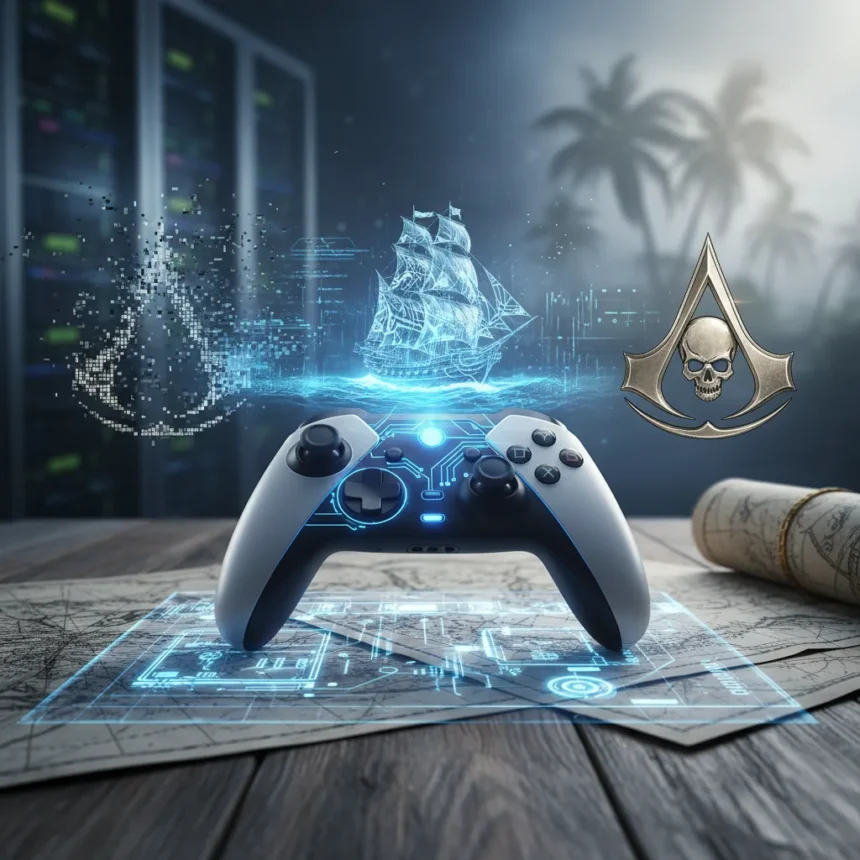
Assassin’s Creed Black Flag Resynced is not a remaster. It is a full-scale remake of the 2013 pirate adventure, rebuilt from the ground up using modern technology and new game design. Ubisoft revealed the project in April 2026, confirming that developers had to reconstruct nearly every element of the original—a massive undertaking that raises both excitement and legitimate concern about whether the remake will honor what made Black Flag beloved in the first place.
Key Takeaways
- Assassin’s Creed Black Flag Resynced launches July 9, 2026 on PC via Ubisoft Connect
- Full remake with rebuilt lighting, weather, water physics, and all environmental systems
- Adds RPG mechanics: dialogue choices, gear stat rolls, leveled enemies, branching skill trees
- No multiplayer; no Freedom Cry DLC; new characters and mission chains added
- Story focuses entirely on Edward Kenway with no Animus interruptions
What Assassin’s Creed Black Flag Resynced Actually Is
Assassin’s Creed Black Flag Resynced is a complete reimagining of the 2013 original, not a graphical polish. Ubisoft rebuilt the lighting engine, weather simulation, water physics, and every environment from scratch. Developers stated that “every single small moment of the game had to be rebuilt and crafted,” signaling a commitment to modernization that goes far beyond texture upgrades. The remake launches July 9, 2026, exclusively on PC through Ubisoft Connect.
The original Black Flag was a naval sandbox set in the Caribbean during the Golden Age of piracy, starting in 1715. It defined a generation of Assassin’s Creed by balancing ship combat, exploration, and land-based stealth. The Resynced version keeps that pirate fantasy as its core but wraps it in systems borrowed from Ubisoft’s newer titles—a gamble that could either revitalize the franchise or alienate players who loved the original’s simpler design.
RPG Mechanics Transform the Combat and Progression
The most significant change in Assassin’s Creed Black Flag Resynced is the addition of RPG systems absent from the 2013 version. Combat now uses a dynamic style closer to Assassin’s Creed Valhalla and Shadows, with dialogue choices, leveled enemies, gear stat rolls, and branching skill trees. This shift means no two playthroughs will feel identical, but it also means the tight, pattern-based swordplay of the original is gone.
Ship handling and sea encounters have expanded significantly. Weather systems are more reactive, boarding mechanics feel more involved, and naval combat scales with enemy levels. Seamless transitions between sailing and land exploration remain, but the underlying systems are fundamentally different. For fans of the original’s more linear progression and fixed stats, this modernization may feel bloated. For players expecting Valhalla-style depth, it might feel like the natural evolution of the series.
What Ubisoft Cut—And What It Added
Assassin’s Creed Black Flag Resynced removes multiplayer entirely, a feature the original offered but few played. The Freedom Cry DLC, which told Adewale’s story, is also absent; Ubisoft chose to focus all resources on expanding Edward Kenway’s main narrative instead. This decision streamlines the experience but erases a beloved side story that explored themes the main game only hinted at.
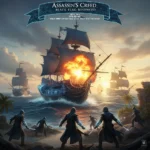

In its place, the remake adds new characters, multiple new story chains, and the ability to keep a monkey or cat as a ship pet. The entire narrative removes Animus interruptions—the present-day framing device that plagued the original—meaning players stay immersed in Edward’s Caribbean adventure without breaking into futuristic lab sequences. This is arguably the smartest change Ubisoft made, as it lets the pirate story breathe.
The Risk: Does a Remake Improve or Dilute a Classic?
Assassin’s Creed Black Flag Resynced faces the eternal remake problem: it must justify its existence by improving on the original while respecting why people loved it in the first place. Adding RPG mechanics and new stories satisfies the “modernization” mandate, but it also introduces complexity the original avoided. The 2013 Black Flag succeeded partly because it was straightforward—sail, fight, explore, repeat. Assassin’s Creed Black Flag Resynced layers dialogue trees, stat systems, and branching progression on top of that formula.
Ubisoft is betting that players want more depth. But the original’s strength was accessibility wrapped in a pirate fantasy so compelling that it transcended the series’ usual narrative bloat. Whether the Resynced version preserves that magic while adding genuine value is the question no trailer can answer until players actually sail the Caribbean in July 2026.
How Does Assassin’s Creed Black Flag Resynced Compare to the Original?
The original 2013 Black Flag featured linear skill progression, fixed weapon stats, and a simpler combat system that prioritized pattern-based encounters. Assassin’s Creed Black Flag Resynced replaces this with dynamic combat, leveled enemies, and gear rolls that add randomness and replayability. Naval gameplay expands significantly; the remake’s weather systems and water physics are orders of magnitude more advanced than the 2013 version’s simpler sea simulation.


Story-wise, the original was framed within the Animus, constantly breaking immersion with present-day sequences. Assassin’s Creed Black Flag Resynced strips that away entirely, letting Edward’s story stand alone. This is a significant tonal shift—the remake is a pirate adventure first, an Assassin’s Creed game second. Whether that prioritization strengthens or weakens the narrative depends on whether the new characters and mission chains Ubisoft added actually enhance Edward’s arc or just pad the runtime.
Is Assassin’s Creed Black Flag Resynced Worth the Wait?
If you loved the original’s naval focus and straightforward gameplay, Assassin’s Creed Black Flag Resynced is a gamble. The remake modernizes systems that worked fine and adds complexity that may feel unnecessary. If you want a deeper, more RPG-like pirate experience with dialogue choices and branching progression, the Resynced version is built for you. The removal of multiplayer and Freedom Cry simplifies scope, but it also erases content some players valued.
The real test arrives July 9, 2026. A remake lives or dies on execution, and Ubisoft’s track record with recent Assassin’s Creed titles is mixed. Valhalla and Shadows prove the studio can deliver ambitious RPG-focused entries, but they also show how easy it is to bloat a franchise with systems that distract from core appeal. Assassin’s Creed Black Flag Resynced has the potential to be both a love letter to a classic and a cautionary tale about why some games should stay untouched.
When Does Assassin’s Creed Black Flag Resynced Launch?
Assassin’s Creed Black Flag Resynced launches July 9, 2026, exclusively on PC via Ubisoft Connect. The official reveal showcase took place April 23, 2026, at 4 PM UTC (6 PM CEST, 9 AM PDT), where Ubisoft described the project as “the iconic solo pirate adventure returns”. No console versions or pricing details have been confirmed.
Does Assassin’s Creed Black Flag Resynced Have Multiplayer?
No. Assassin’s Creed Black Flag Resynced removes multiplayer entirely, unlike the 2013 original. Ubisoft chose to focus all development resources on expanding Edward Kenway’s single-player campaign instead, meaning the remake is a purely story-driven experience.
What Happened to Freedom Cry in the Remake?
Freedom Cry, the original’s DLC expansion starring Adewale, is not included in Assassin’s Creed Black Flag Resynced. Ubisoft prioritized expanding Edward’s main narrative over recreating the side story, a decision that streamlines the remake but removes a piece of content some players cherished.
Assassin’s Creed Black Flag Resynced is a remake that asks players to trust Ubisoft’s vision of what the 2013 classic should have been. Whether that trust is earned depends on execution. The bones are sound—a pirate adventure in the Caribbean with expanded systems and new stories. But modernization always risks losing the ineffable quality that made the original special. July 2026 will tell whether this rebuild honors or betrays its source material.
This article was written with AI assistance and editorially reviewed.
Source: TechRadar