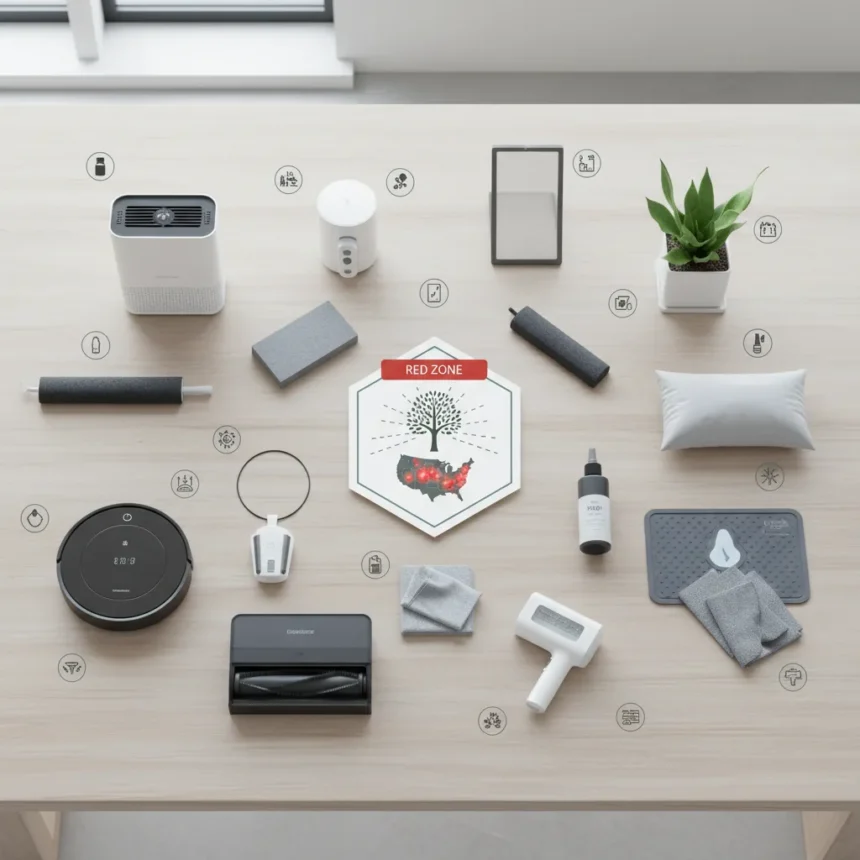
Pollen peak home defense is no longer optional—tree pollen is hitting red-zone levels across much of the US this week in 2026, and it is the worst allergy week so far. If you suffer from seasonal allergies, waiting it out indoors is not enough. Allergens slip through cracks, ride in on clothing, and accumulate on surfaces faster than you can clean them. The solution is tactical: seal entry points, filter the air you breathe, and neutralize allergens before they settle into your home.
Key Takeaways
- Tree pollen levels are at red-zone (highest severity) across much of the US during this week in 2026.
- Effective pollen peak home defense requires blocking allergens at multiple entry points simultaneously.
- Twelve specific product categories address doors, windows, air filtration, and surface contamination.
- Immediate action during peak pollen week prevents allergen accumulation and reduces indoor air quality degradation.
- Strategic home sealing and air management are more effective than reactive cleaning alone.
Why Pollen Peak Home Defense Matters This Week
Red-zone pollen levels mean outdoor allergen concentrations have reached their highest severity threshold. Unlike moderate pollen weeks where you might manage symptoms with antihistamines, peak conditions overwhelm standard allergy medication. Every door opening, window crack, and HVAC intake becomes an allergen highway. The difference between a home with weak defenses and one with pollen peak home defense measures is measurable: some households report symptom relief within hours of sealing and filtering, while others struggle all week.
This particular week in 2026 is already the worst for allergies so far this year, meaning conditions are unlikely to improve without intervention. Waiting for pollen levels to drop naturally could mean days of congestion, itchy eyes, and disrupted sleep. Strategic product deployment now prevents the compounding effect of allergens accumulating on furniture, bedding, and clothing throughout the week.
The Twelve-Product Strategy for Pollen Peak Home Defense
Effective pollen peak home defense operates on a layered principle: stop allergens at entry points, remove them from the air, and prevent them from settling on surfaces. The 12 essential products recommended target each of these zones simultaneously. Entry-point products seal doors and windows where the largest allergen influx occurs. Air-handling products include HEPA filters, portable air purifiers, and HVAC upgrades that trap particles before they circulate through living spaces. Surface-management products reduce the places where pollen can accumulate and be re-aerosolized by foot traffic.

The exact product names and specifications for each of the 12 items are not universally available, but the categories are consistent: weatherstripping, door sweeps, window seals, air purifiers with HEPA filters, furnace filters rated for allergen capture, electrostatic surface sprays, microfiber cleaning cloths, air intake filters, bedroom air purifiers, bedding allergen barriers, clothing change stations, and shoe storage solutions. Each addresses a specific vulnerability in your home’s defense against pollen infiltration.
Comparison: Reactive vs. Proactive Allergy Management
Most allergy sufferers rely on medication and cleaning—a reactive approach that addresses symptoms after allergens have already entered and settled. Pollen peak home defense is proactive: it prevents the allergen load from building up in the first place. Reactive strategies mean you are always playing catch-up, cleaning surfaces that are re-contaminating as fast as you wipe them. Proactive strategies mean you are reducing the source of contamination, so cleaning is maintenance rather than crisis management.



The cost difference is minimal when you consider the time saved and the symptom reduction gained. A week of high-dose allergy medication, lost sleep, and reduced productivity often costs more than a strategic set of home defense products that you can reuse or repurpose year after year. During pollen peak home defense season, the investment pays for itself within days.
How to Deploy Pollen Peak Home Defense Products Effectively
Timing is critical during red-zone pollen weeks. Install weatherstripping and door sweeps immediately—these are the fastest wins and can be deployed in under an hour. Upgrade or replace HVAC filters the same day, as a clogged filter becomes a liability once pollen season peaks. Position portable air purifiers in the bedroom first, since sleep quality matters most during allergy season, then in living spaces where you spend the most time.
Establish a clothing change station near your entry door. Pollen clings to fabric, and bringing contaminated clothes into sleeping areas defeats your entire defense strategy. Use microfiber cloths for dusting, as they trap allergens rather than dispersing them like traditional cloths. Change bedding more frequently during peak weeks—pollen accumulates on pillows and sheets faster than during moderate pollen periods.
Is pollen peak home defense really necessary for one week?
Yes. Red-zone pollen levels mean allergen concentrations are at their highest. A single week of poor sleep, congestion, and reduced productivity can take days to recover from. The products you buy now will be useful during future pollen seasons, making the investment cumulative rather than one-time. Spending a few hours and modest money on pollen peak home defense now prevents a week of misery.



Can I manage red-zone pollen without buying new products?
Partially. Closing windows, running existing HVAC systems, and frequent cleaning help but are insufficient during red-zone weeks. Allergen levels are too high for passive measures alone. At minimum, upgrading your furnace filter and adding a portable HEPA air purifier will significantly reduce indoor pollen load. Full pollen peak home defense requires multiple interventions working together.
When should I install these products?
Now. This week is already the worst for allergies so far in 2026, meaning pollen levels are unlikely to improve without waiting for natural seasonal decline. Installing products mid-week is better than waiting for next week, as you will still benefit from reduced allergen accumulation for the remainder of peak season. Consider this your action window before conditions potentially worsen further.
Pollen peak home defense is not about perfection—it is about reducing your allergen exposure enough to reclaim your week. The 12-product strategy addresses every realistic entry point and allergen pathway in a typical home. Deploy them now, and you will notice the difference within hours. Next year, you will already have most of the infrastructure in place, making peak pollen season manageable rather than debilitating.
Where to Buy
20% OFFGoveeLifeGoveeLife Smart Air Quality Monitor$36.78$45.99shop now | 25% OFFLEVOITLevoit Top Fill Humidifier$29.99$39.99shop now | 20% OFFSharkShark Air Purifier HP152$199$249.99shop now | 15% OFFDysonDyson Hushjet Compact Purifier$297.48$349.99shop now | 25% OFFToLifeToLife Dehumidifier$59.98$79.99shop now
Edited by the All Things Geek team.
Source: Tom's Guide