Samsung Galaxy Z Fold 8 Qi2 magnetic charging remains unconfirmed, but the pressure on Samsung to deliver full Qi2 support with built-in magnets is mounting as competitors like Google pull ahead. The Z Fold 8 is rumored to launch in summer 2026 at a price north of $2,000, yet Samsung’s track record with its current foldables suggests the company may repeat its cautious approach to Qi2 adoption.
Key Takeaways
- Samsung Galaxy Z Fold 8 rumors do not confirm full Qi2 with magnets; likely remains Qi2-ready only.
- Google Pixel 10 Pro Fold already offers full Qi2 compatibility with integrated magnets, no thickness penalty.
- Galaxy Z Fold 7 supports 15W Qi2 wireless charging but requires a magnetic case for alignment.
- Samsung surveyed users on adding Qi2 magnets to future devices, citing design thickness concerns.
- At $2,000+, the Z Fold 8 faces credibility pressure to match or exceed competitor charging standards.
Why Qi2 Magnets Matter for the Z Fold 8
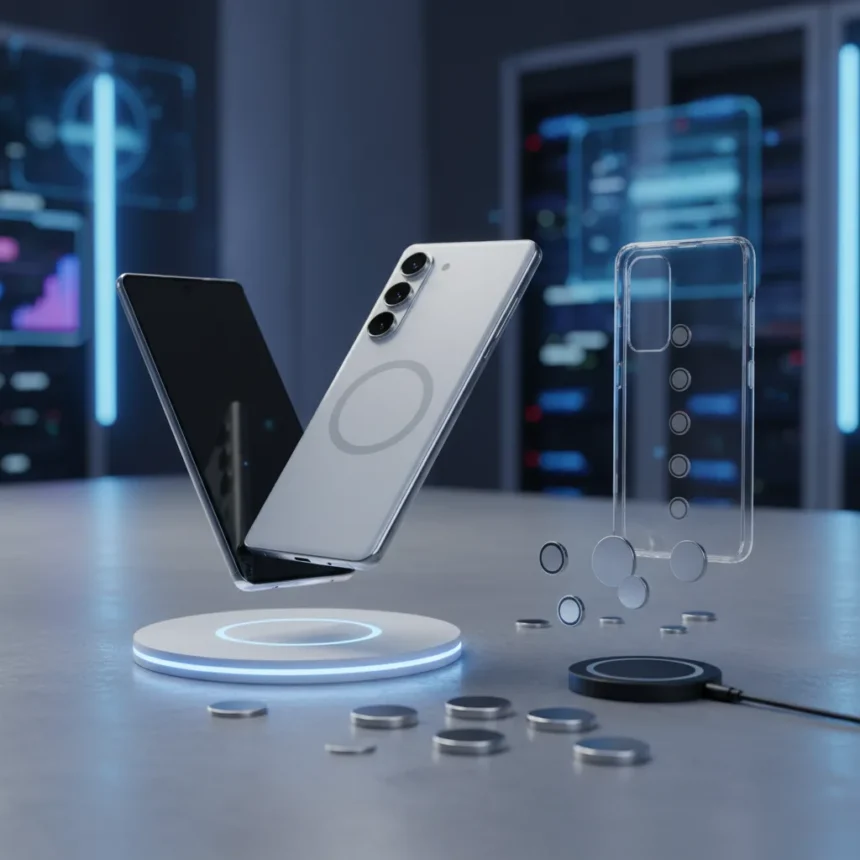
Qi2 is the next-generation wireless charging standard that uses integrated magnets for secure alignment and faster, more efficient power delivery. Without built-in magnets, a phone is labeled Qi2-ready but cannot deliver the full magnetic experience—users must buy a separate magnetic case to achieve proper alignment and MagSafe-like functionality. This distinction matters because the Galaxy Z Fold 7 launched as Qi2-ready at 15W but requires a compatible magnetic case for the full experience, leaving owners to spend extra on accessories.
The problem is compounded by Samsung’s own Qi2 chargers. The company released a Single Wireless Charging station for $34.99 and a Car Wireless Charger for $84.99, but both require a Qi2-certified magnetic case to function properly on Galaxy phones. In other words, Samsung is selling Qi2 chargers that only work at their full potential with a case—an awkward position that undercuts the seamless experience competitors now offer.
Google Pixel 10 Pro Fold Sets the New Standard
Google’s Pixel 10 Pro Fold arrived as the first foldable with full Qi2 compatibility and integrated magnets, eliminating the need for a separate case. Critically, Google achieved this without adding weight or meaningful thickness—only a 0.1mm difference compared to devices without magnets. This proves the engineering hurdle Samsung cited is surmountable. The Pixel 10 Pro Fold also enables Pixelsnap accessories and boasts a 30+ hour battery with 50% charge in 30 minutes, raising the bar for what a $2,000+ foldable should deliver.


For Samsung, the Pixel 10 Pro Fold is a wake-up call. At this point, leaving Qi2 magnets out of the Z Fold 8 would feel like a step backward, especially for a device priced north of $2,000. Yet Samsung’s own internal surveys suggest the company is still weighing the decision. According to reports, Samsung surveyed users on integrating Qi2 magnets in future devices but flagged potential design thickness increases, though no confirmation exists that the Z Fold 8 will suffer from this concern.
What Samsung’s Track Record Suggests
Samsung’s current flagship lineup—the Galaxy S25 series, Z Fold 7, and Z Flip 7—are all Qi2-ready but lack built-in magnets. This pattern suggests Samsung may repeat the same approach with the Z Fold 8 unless user feedback or competitive pressure forces a change. Early rumors hint that the Galaxy S26, expected in early 2026, might finally include full Qi2 with a magnetic ring despite being 0.3mm thinner, but this remains speculation. If the S26 ships with full Qi2, the Z Fold 8 launching later that summer would face immediate criticism for not matching its sibling’s charging capabilities.



The cost-benefit analysis for Samsung is straightforward: adding Qi2 magnets likely adds minimal thickness and cost, yet the company appears reluctant to commit. This hesitation may stem from ecosystem lock-in—Samsung benefits from users purchasing its proprietary chargers and cases. Full Qi2 with magnets would reduce that friction, making the charging experience more universal and less dependent on Samsung-branded accessories.
The Qi2 Charging Landscape in 2026
By the time the Z Fold 8 launches in summer 2026, Qi2 adoption will be widespread. iPhone 17 is expected to include full Qi2 support with magnets, and the Pixel 10 Pro Fold already sets the standard. Samsung will be the outlier if it ships another Qi2-ready-only device. Users upgrading from older phones will expect magnetic alignment as standard, not as an optional add-on purchased separately.
The Z Fold 7’s wired charging tops at 25W, with reverse wireless charging at 4.5W. These specs are competitive but not exceptional. If the Z Fold 8 retains the same wired charging speed while still lacking full Qi2, it will feel like a missed opportunity in a market where Samsung’s own competition has already solved the problem.
Will the Samsung Galaxy Z Fold 8 support full Qi2 with magnets?
No confirmation exists yet. Current rumors suggest the Z Fold 8 will likely remain Qi2-ready without built-in magnets, following Samsung’s pattern with the Z Fold 7 and S25 series. However, if the earlier Galaxy S26 includes full Qi2, Samsung would face significant backlash for not including the same feature in its flagship foldable.



What is the difference between Qi2-ready and full Qi2?
Qi2-ready means a device can charge wirelessly at Qi2 speeds but lacks built-in magnets for automatic alignment. Full Qi2 includes integrated magnets that snap accessories into place and enable the MagSafe-like experience. Qi2-ready devices require a separate magnetic case to achieve the same alignment and accessory compatibility.
Should I wait for the Samsung Galaxy Z Fold 8 or buy the Z Fold 7 now?
If Qi2 magnetic charging is a priority, waiting for the Z Fold 8 is safer—Samsung’s track record suggests it may finally add full Qi2 support, but betting on that is risky. If you need a foldable now, the Z Fold 7 is solid but plan to buy a Qi2-certified magnetic case to unlock the full wireless charging experience. The $34.99 Samsung charger works well once paired with a compatible case.
Samsung faces a credibility test with the Z Fold 8. At $2,000+, users will expect the device to match or exceed what competitors offer—and Google has already proven that full Qi2 with integrated magnets is standard, not premium. If Samsung ships another Qi2-ready-only device, it will be a choice, not a limitation, and reviewers will call it out accordingly.
Where to Buy
Edited by the All Things Geek team.
Source: Android Central