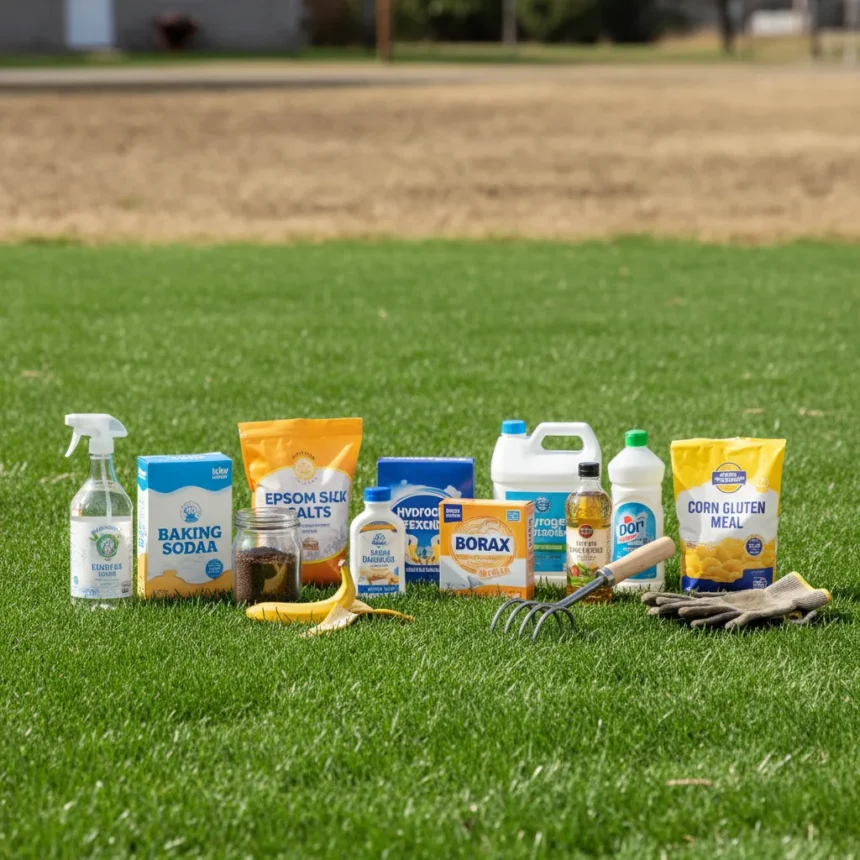
The 11 secrets to a lawn that’s greener than your neighbor’s aren’t hidden in expensive fertilizers or professional treatments—they’re hiding in your bathroom cabinet and kitchen compost. Most lawn problems stem from simple mistakes: dull mower blades that tear grass instead of cutting it cleanly, watering at the wrong time of day, and skipping basic maintenance like aeration. The good news? You can fix all of this without breaking the bank.
Key Takeaways
- Sharpen mower blades before each use to prevent grass tearing and browning
- Water deeply and infrequently in early mornings to reduce disease and evaporation loss
- Adjust mowing height seasonally—higher in summer to shade soil and retain moisture
- Apply Epsom salts ($3 for 3 lbs) as a natural magnesium boost for greener grass
- Use free coffee grounds as slow-release fertilizer after winter dormancy
- Aerate lawns annually to improve drainage and nutrient access
The blade sharpening secret that stops browning
A dull mower blade is the fastest way to wreck a lawn. When you cut grass with a dull blade, you don’t get a clean cut—you get a tear. That torn grass turns brown at the edges, making your lawn look dead even when it’s alive. Sharpen your lawnmower blades before cutting using a metal file or by taking the mower to a professional service at a garden center or lawnmower shop. This single step prevents tearing, ensures clean cuts, and maintains grass health year-round. It costs almost nothing if you do it yourself, or a small fee if you use a professional service.
The difference between a sharp blade and a dull one is immediately visible. Clean cuts heal faster and the grass stays green. Torn grass, by contrast, exposes the plant to disease and pest damage. Follow your mower’s safety guidelines when handling blades—unplug the machine before touching any moving parts.
Watering mistakes that kill grass in summer heat
Most people water their lawns wrong. Frequent shallow watering creates weak root systems and invites disease. Instead, water deeply and infrequently, allowing the soil to dry between sessions. Timing matters just as much as volume. Water in the early morning before the sun heats up. Afternoon watering can lose up to 30% of water to evaporation, wasting both water and money. Never leave your lawn damp overnight—moisture trapped on grass overnight increases disease risk significantly.


The goal is to water deeply enough that moisture reaches the root zone, typically 6 to 8 inches down. This encourages deep root growth, which makes grass more drought-resistant and able to access nutrients deeper in the soil. If you’re watering every day, you’re doing it wrong. Most lawns need water only 2 to 3 times per week, depending on heat and rainfall.
The $3 bathroom item that boosts green color
Epsom salts are a magnesium sulfate compound that costs about $3 for a 3-pound pack and is available in any drugstore or grocery store. Spread them across your lawn to boost sunlight absorption, improve seed germination, enhance nutrient uptake, and intensify green color. This is one of the cheapest fertilizer hacks available and works as a natural alternative to expensive chemical treatments. Many people already own Epsom salts for soaking baths, so you might not need to buy anything at all.



The magnesium in Epsom salts is essential for chlorophyll production—the compound that makes grass green. When grass lacks magnesium, it yellows even if other nutrients are present. Apply Epsom salts in spring to kick-start growth after winter dormancy and again in mid-summer when heat stress peaks.
Coffee grounds: free fertilizer from your kitchen
Don’t throw away used coffee grounds. Spread them directly on your lawn as a slow-release fertilizer packed with essential nutrients. Since coffee grounds are free kitchen waste, this costs nothing. They break down slowly, feeding your grass over weeks and months, especially helpful after winter when lawns emerge from dormancy and need nutrient boosts. Coffee grounds also improve soil structure and water retention, which is a bonus benefit beyond just adding nutrients.
This is one of the few lawn hacks that truly costs zero dollars. If you drink coffee daily, you have a steady supply of natural fertilizer. Simply scatter the grounds across your lawn and let rain work them into the soil.
Seasonal mowing height adjustments for growth
Most people mow at the same height year-round. That’s a mistake. Alter your mower cutting height throughout the seasons to promote healthy growth. In summer and during heat waves, raise the blade higher. Taller grass shades the soil, retains more moisture, and reduces heat stress on the plant. Never cut grass too short—this damages the root system and stresses the plant. In cooler seasons, you can lower the blade slightly, but always leave enough growth to protect the crown of the plant.



The exact height depends on your grass species and climate, but a general rule is to never remove more than one-third of the blade in a single mowing. If your grass is 3 inches tall, cut it to 2 inches, not to 1 inch. This approach maintains plant health and prevents the brown, stressed appearance that comes from scalping.
Aeration: the hidden key to nutrient access
Aeration uses a specialist aerator or manual tool to create small holes in the soil, improving drainage, creating space for root expansion, and allowing nutrients to penetrate deeper. This prevents disease, compaction, and poor growth. Aeration is especially important if your lawn shows signs of struggle—thin patches, poor drainage, or weak growth despite fertilizing. Check for the nine signs that your lawn needs aeration, and avoid over-aerating or aerating weakened lawns that are already stressed.
Aeration is best done in spring or fall when soil is moist but not waterlogged. The small holes heal quickly, and roots expand into the newly loosened soil. This single maintenance step transforms a struggling lawn into a thriving one.
Lawn edging and winter preparation
Lawn edging is a quick and easy method to make sure the area looks tidy and well-managed. Trim edges in wet autumn and winter for neat borders. Install gutters around garden beds and pots to prevent water pooling, which damages grass and creates soggy patches. These small touches signal a well-maintained lawn and prevent the slow creep of weeds and disease that comes from poor drainage and messy borders.
Selecting the right grass for your conditions
Not all grass grows equally in all conditions. Before seeding, understand your garden conditions—soil type, light exposure, and drought vulnerability—to select grass varieties adapted to your specific environment. Prepare fertile soil and maintain it long-term. Planting the wrong grass species in poor soil is a guaranteed path to failure. Spend time on the front end choosing the right grass and preparing the soil, and you’ll spend far less time fighting problems later.
Why budget hacks beat expensive chemicals
The lawn care industry wants you to buy expensive treatments. But Epsom salts at $3, free coffee grounds, and blade sharpening with a basic metal file accomplish what costly chemicals promise—without the price tag or environmental impact. Skip the power washing and commercial fertilizers. These budget backyard hacks deliver results.
Frequently asked questions
How often should I sharpen my mower blades?
Sharpen mower blades before each use or at least once per season, depending on lawn size and mowing frequency. A sharp blade prevents grass tearing and browning, which is why this step is so critical for a healthy lawn.
Can I use coffee grounds on any type of lawn?
Coffee grounds work on most lawns as a slow-release fertilizer. They improve soil structure and add essential nutrients, making them safe for nearly all grass types. Simply scatter them across your lawn and let rain work them in.
What’s the best time to aerate my lawn?
Aerate in spring or fall when soil is moist but not waterlogged. Avoid aerating struggling or weakened lawns that are already stressed. Check for signs your lawn needs aeration before proceeding.
The 11 secrets to a lawn that’s greener than your neighbor’s all boil down to one principle: consistent, simple maintenance beats expensive shortcuts. A sharp blade, proper watering, seasonal mowing adjustments, natural fertilizers like Epsom salts and coffee grounds, and basic aeration transform brown, patchy grass into a lush green yard that rivals any professional treatment—without the cost or chemicals.
Where to Buy
Amazing Stuff for You! Garden Gloves (2-pack):
Edited by the All Things Geek team.
Source: Tom's Guide