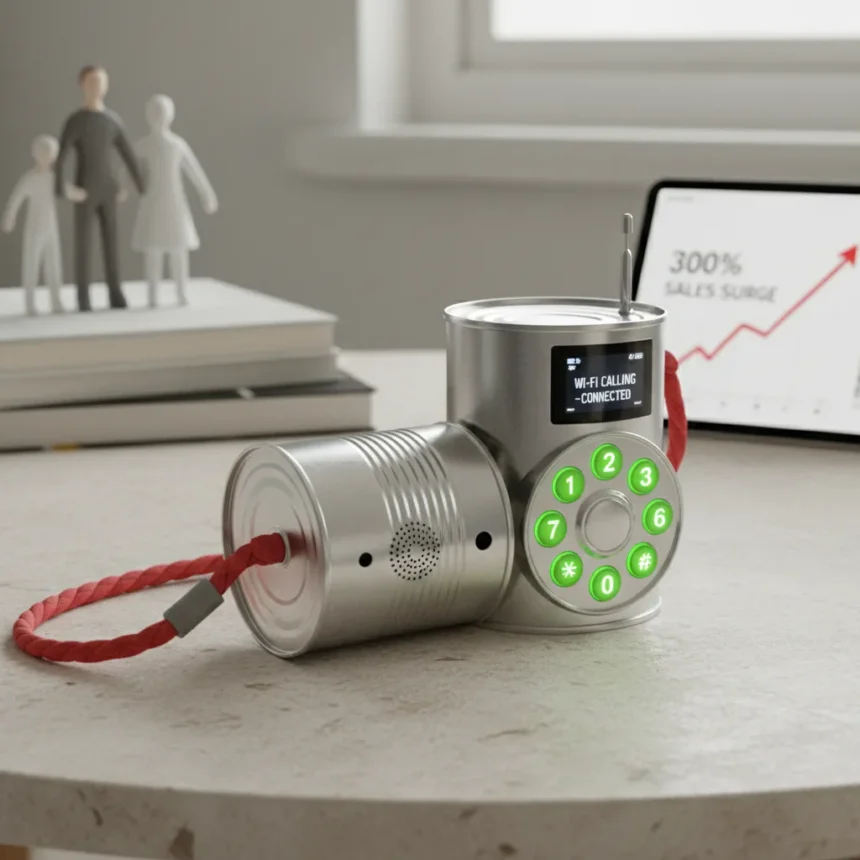
Tin Can screen-free phone for kids is a WiFi-enabled, landline-inspired wired phone designed to give children safe communication without the distraction of apps, games, or social media. Launched in late 2024 with full U.S. availability since early 2025, the device has become a viral sensation, with sales jumping 300% in Q1 2025 as parents desperately seek alternatives to smartphone addiction.
Key Takeaways
- Tin Can is a screen-free, WiFi-connected phone for kids with no apps, browsers, or cameras.
- Available in five bright colors; single unit costs $69.99, 2-pack bundle $129.99.
- Setup requires a parent app for contact approval and usage monitoring.
- Battery lasts up to 8 hours of talk time on a single charge.
- Viral TikTok and Instagram trends show millions of views of kids unboxing the device.
What Makes Tin Can Different From Smartphones
The Tin Can screen-free phone for kids strips away everything that makes modern smartphones addictive. No screen means no scrolling, no notifications, no algorithmic feeds pulling attention in a thousand directions. Instead, it’s a simple handset connected to a base station via a curly cord—the kind of tactile, intentional device that feels like a blast from the childhood era of landlines.
The device connects to WiFi rather than cellular networks, allowing calls only between paired devices or approved contacts. Parents control the entire contact list through a dedicated app, deciding exactly who their child can call and who can reach them. This architectural difference matters: a smartphone gives kids access to the entire internet and millions of apps. Tin Can gives them one function—calling people their parents have approved. It’s not a limitation; it’s the entire point.
Unlike refurbished Nokia 3210 feature phones that still carry games like Snake, Tin Can eliminates every distraction entirely. The device is available in red, blue, green, yellow, and pink, making it visually appealing to kids without relying on a glowing screen to hold their attention.


Setup, Battery Life, and Physical Design
Getting Tin Can running takes about five minutes. Parents download the Tin Can parent app from the App Store or Google Play, create an account, and pair the base station by scanning a QR code. From there, they approve contacts from their phone book, assign nicknames and avatars, and connect the child’s handset to the base via the curly cord. The base plugs into power and WiFi; the handset itself is cordless but tethered to the base by a physical cord.
The device weighs about 0.4 pounds and measures approximately 5.5 by 2.5 by 1.5 inches—compact enough for a child’s hand but substantial enough to feel real, not like a toy. Battery life reaches up to 8 hours of continuous talk time, which is solid for a device aimed at kids who are unlikely to spend entire days on calls. The base station’s LED indicator shows incoming calls and low battery warnings, giving parents and children simple visual feedback without a screen.



Using Tin Can is straightforward: pick up the handset, listen for a dial tone, and either dial a contact number or select from a pre-approved list via voice prompt. Press the call button, and the recipient’s Tin Can rings. Hang up when done. There’s no learning curve, no settings to tweak, no app to navigate.
Why Tin Can Went Viral
The timing of Tin Can’s release tapped directly into a growing parental panic about child mental health and smartphone addiction. TikTok and Instagram videos showing kids unboxing the device have amassed millions of views, with the retro aesthetic and screen-free promise striking a chord with both kids and parents tired of the smartphone wars. The device is not just functional; it’s a statement—a deliberate rejection of the default assumption that children need smartphones.
Parents are exhausted. They watch their kids disappear into Instagram, TikTok, and Discord. They see the research linking heavy social media use to anxiety, depression, and sleep disruption. Tin Can offers a visible, tangible alternative: a phone that does one thing well and refuses to do anything else. That simplicity is the product’s greatest marketing asset.
Pricing and Where to Buy Tin Can
A single Tin Can phone retails for $69.99 USD. The 2-pack bundle, which lets siblings or friends pair devices together, costs $129.99 USD. The device is available through the official Tin Can website (tincanphone.com), Amazon, and retailers like Target. International shipping extends to the UK, Canada, and Australia, though availability and pricing may vary by region.



Parental Controls and Monitoring
The parent app is where Tin Can’s safety architecture lives. Parents can approve and manage all contacts, meaning their child cannot call or receive calls from anyone not explicitly allowed. Optional features include call recording and location sharing, giving parents visibility into their child’s communication without invading privacy through constant tracking. This strikes a different balance than smartphone parental control apps, which attempt to monitor an ocean of digital activity. Tin Can’s parental controls are simpler because there’s simply less to monitor.
Comparing Tin Can to Other Screen-Free Options
The landscape of screen-free devices for kids is growing. Camp Snap is a screen-free digital camera that captures photos without internet connectivity, addressing the same parental desire for device-free childhood experiences but through photography rather than communication. Tin Can’s advantage is its focus on calling—a primary need for parents who want to stay in touch with their children without handing them a smartphone.
Future competitors may emerge. OpenAI and designer Jony Ive have teased a screenless AI device emphasizing simplicity and calm, though no release timeline or kid-specific focus has been announced. For now, Tin Can operates in a relatively uncrowded space: the screen-free calling phone for children.
Is Tin Can Right for Your Family?
Tin Can works best for families with clear communication needs and realistic expectations. If your goal is to give your child a way to call home from school, a friend’s house, or an activity without handing them a smartphone, Tin Can delivers. If you expect it to work as a full replacement for a phone—with messaging, maps, or emergency services integration—you’ll be disappointed. Tin Can is intentionally limited.
The device also requires WiFi on both ends of a call, which means it cannot work as a true emergency phone for a child out in the world without internet access. For that use case, a basic feature phone or a smartphone with strict app restrictions remains necessary. Tin Can is best thought of as a home or indoor communication device, not a mobile emergency lifeline.
FAQ: Common Questions About Tin Can
How does Tin Can actually work without cellular service?
Tin Can connects to WiFi rather than cellular networks, allowing calls between two paired Tin Can devices or to approved contacts on the parent’s phone via the Tin Can app. Both devices must be connected to the internet for calls to work. It’s VoIP calling, not traditional cellular.
Can my child use Tin Can to call anyone they want?
No. Parents control the entire contact list through the parent app. Your child can only call people you have explicitly approved and assigned to their device. This is Tin Can’s core safety feature.
What happens if my child loses a Tin Can phone?
Since Tin Can devices are WiFi-only and require a parent app to manage contacts, a lost device is essentially useless to anyone without access to your parent account. The device cannot make calls to random numbers or access the internet. You can also remove the device from your parent app, disabling it immediately.
Tin Can screen-free phone for kids succeeds because it refuses to do what modern phones do. In a landscape where every device is designed to maximize engagement and extract attention, Tin Can’s simplicity feels radical. It’s not a perfect solution for every family, and it cannot replace a smartphone for older kids who genuinely need mobile connectivity. But for parents seeking a way to give their children communication without handing them a dopamine-dispensing rectangle, Tin Can delivers exactly what it promises: a phone that calls, nothing more.
Edited by the All Things Geek team.
Source: Tom's Guide