





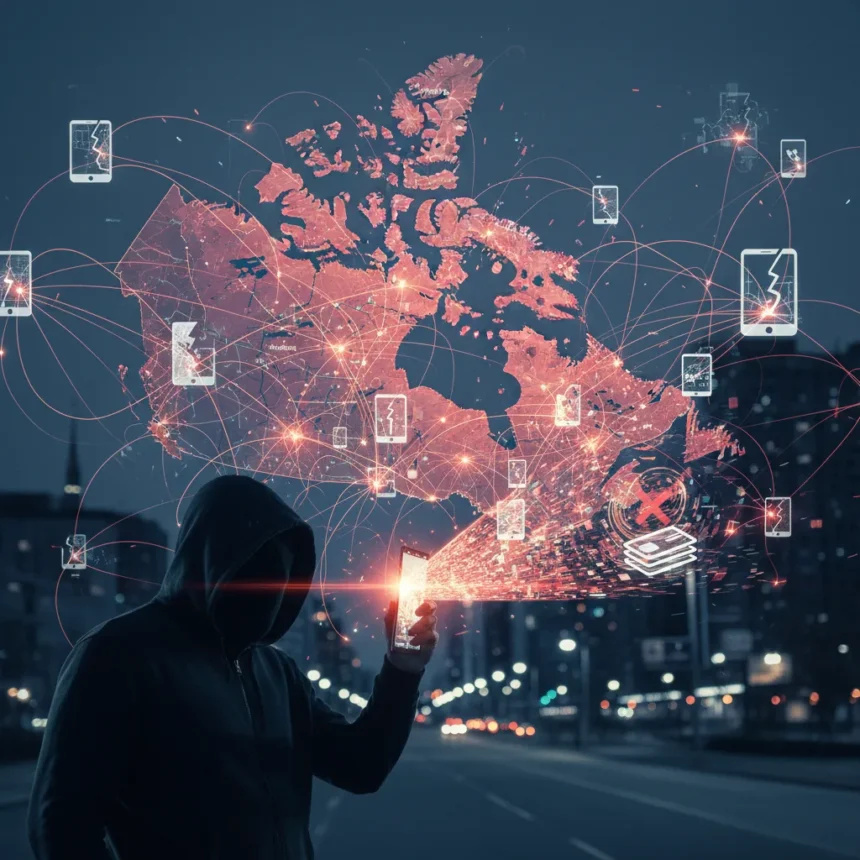
Mobile SMS blasters used by three Canadian men caused more than 13 million network disruptions across the Greater Toronto Area, blocking potential 911 emergency calls and infiltrating tens of thousands of devices in what Toronto Police describe as the first detection of this attack method in Canada. The investigation, dubbed Project Lighthouse, represents an unprecedented cybercrime operation that went undetected until November 2025, when a cybersecurity partner alerted authorities to the scheme.
Key Takeaways
- Mobile SMS blasters mimic legitimate cell towers, forcing nearby phones to connect to fake networks instead of real ones.
- Three men arrested in March and April 2026 face 44 total charges including fraud and mischief across multiple jurisdictions.
- Tens of thousands of devices connected to the blaster over several months while it operated across the GTA.
- The attack caused 13 million network disruptions, potentially blocking emergency 911 access during peak operation periods.
- First known mobile SMS blasters ever seized in Canada, marking a new threat vector for Canadian cybersecurity.
How Mobile SMS Blasters Work and Why They’re Dangerous
Mobile SMS blasters are sophisticated devices that impersonate legitimate cell phone towers, tricking nearby smartphones into connecting to the fake network instead of their actual carrier. Once connected, the blaster can intercept data, send fraudulent text messages, and prevent legitimate network access. Police stated that this particular operation “had the ability to reach thousands of devices at once” and was not targeting a single individual or business but rather casting a wide net across the Toronto region. The device was deployed from vehicles driving through downtown Toronto and across the Greater Toronto Area over several months, allowing the attackers to victimize a massive geographic footprint without maintaining a fixed location.
The threat posed by mobile SMS blasters extends beyond data theft. When devices are unable to connect to legitimate towers due to the blaster’s interference, they lose access to critical services. “We identified more than 13 million network disruptions where devices were unable to properly connect to legitimate cell towers. That’s significant because during those moments, access to services like 911 could be impacted,” Toronto Police explained in their investigation summary. This means that during the operation, residents across the GTA faced periods where their phones could not reach emergency services—a public safety crisis of enormous proportions that went largely unnoticed until the arrests.
The Smishing Campaign and Data Theft Operation
Beyond network disruption, the blaster was used to execute smishing attacks—fraudulent SMS campaigns designed to trick users into clicking malicious links. One example message suggested an overdue parking ticket, with a link that would expose the victim’s personal information once clicked. This dual-threat approach allowed the attackers to both disrupt networks and harvest sensitive data from compromised devices. The operation ran for several months before detection, meaning the attackers had ample time to collect data from tens of thousands of victims across the Toronto region.


The sophistication of this attack marks a significant departure from typical cybercrime operations. Rather than targeting specific individuals or businesses, the mobile SMS blaster approach allowed for mass-scale attacks with minimal infrastructure beyond a vehicle and the device itself. This mobility gave the attackers a tactical advantage: they could move through different neighborhoods, targeting new populations of devices while evading detection by law enforcement.
Arrests and Criminal Charges in Project Lighthouse
Toronto Police arrested three men in connection with the operation between March and April 2026. Two men were arrested from Markham, while one man from Hamilton turned himself in. Collectively, they face 44 offenses including fraud and mischief charges. The arrests followed a cybersecurity alert in November 2025 that first alerted authorities to the unusual network disruptions occurring across the GTA. The seizure of the mobile SMS blasters represents the first known confiscation of such devices in Canada, underscoring how novel this threat vector was to Canadian law enforcement.



The scale of the investigation reflects the seriousness with which authorities treated the operation. The fact that three separate men were charged across two different jurisdictions (Toronto/Markham and Hamilton) suggests a coordinated effort rather than isolated incidents. The 44 total charges indicate that prosecutors built a comprehensive case documenting the full scope of the criminal activity.
Why Mobile SMS Blasters Represent a New Cybersecurity Frontier
Prior to this case, mobile SMS blasters had not been detected or used in Canada, making Project Lighthouse a watershed moment for Canadian cybersecurity. The attack method is more sophisticated than traditional phishing or smishing because it operates at the network infrastructure level rather than relying on user error alone. Even security-conscious users cannot avoid connecting to a fake tower if their phone automatically searches for the strongest signal—the blaster exploits fundamental smartphone behavior.
The comparison to traditional cybercrime is instructive: most fraud relies on tricking individual users or compromising specific accounts. Mobile SMS blasters bypass user awareness entirely by intercepting at the network layer. This architectural difference makes the threat significantly harder to defend against without carrier-level intervention or regulatory changes. No antivirus software, password manager, or user education campaign can prevent a phone from connecting to a spoofed tower.
Public Safety Implications and 911 Vulnerability
The most alarming aspect of the mobile SMS blaster operation is its potential impact on emergency services. When 13 million network disruptions occurred across the GTA, residents during those moments could not access 911. Toronto Police emphasized this risk in their public statements, noting that emergency access was among the most critical concerns. This vulnerability raises questions about carrier redundancy, emergency network prioritization, and whether current infrastructure can withstand coordinated network spoofing attacks.



The fact that the operation went undetected for several months before a cybersecurity partner flagged it suggests that carriers and law enforcement lack real-time detection mechanisms for this class of attack. Future mobile SMS blaster deployments could potentially run longer before discovery, meaning the scale of disruption and data theft could exceed what occurred in the GTA operation.
What This Means for Canadian Cellular Networks Going Forward
The seizure of the first known mobile SMS blasters in Canada marks the beginning of a new era in Canadian cybersecurity threats. Carriers will need to invest in detection systems capable of identifying spoofed towers, and law enforcement will require specialized training to investigate network-layer attacks. The fact that Project Lighthouse succeeded in arresting the perpetrators demonstrates that investigation is possible, but it required a cybersecurity partner’s alert to get the process started.
Consumers should remain vigilant against unsolicited text messages, particularly those requesting clicks or personal information. However, the broader lesson is that individual user awareness cannot fully protect against mobile SMS blaster attacks—the threat requires systemic carrier and regulatory responses. The 13 million disruptions and tens of thousands of compromised devices represent a watershed moment for Canadian cybersecurity policy.
Were the three men charged in the SMS blaster case working independently or as part of a larger criminal network?
The research brief does not specify whether the three men were independent operators or part of a larger organization. The charges were filed against the three individuals arrested between March and April 2026, but the nature of their relationship and whether they were coordinating with others remains unclear from available information.
How did Toronto Police detect the mobile SMS blaster operation?
A cybersecurity partner alerted Toronto Police to the operation in November 2025, which prompted the investigation dubbed Project Lighthouse. The alert triggered the investigation that eventually led to the arrests of the three men between March and April 2026.
Could mobile SMS blasters be used in other Canadian cities beyond Toronto?
The operation described in Project Lighthouse was specifically tracked across the Greater Toronto Area, with initial activity detected in downtown Toronto. There is no indication from the investigation whether similar devices have been deployed in other Canadian cities, though the seizure of the first known mobile SMS blasters in Canada suggests this threat could potentially emerge elsewhere.
The mobile SMS blaster operation across Canadian streets exposed a critical vulnerability in cellular networks that authorities and carriers had never encountered before. With 13 million disruptions, tens of thousands of compromised devices, and the potential to block emergency 911 access, the case demonstrates that cybercrime threats continue to evolve beyond traditional phishing and malware. The arrests and seizure of the devices represent a victory for Project Lighthouse investigators, but the underlying vulnerability—the ability of spoofed cell towers to operate undetected across major urban areas—remains a systemic concern for Canadian cybersecurity going forward.
Edited by the All Things Geek team.
Source: Tom's Hardware




