Marathon kit essentials go far beyond a single pair of shoes. While conventional wisdom suggests that good footwear is all you need to start running, the reality is more nuanced—a fitness editor’s curated list of 10 essential bits of running kit reveals what truly separates a comfortable first race from a painful slog.
Key Takeaways
- Running shoes are non-negotiable; invest in proper footwear matched to your gait and terrain.
- Marathon kit essentials include socks, layers, hydration, and a GPS watch for tracking progress.
- Affordable ‘pocket rocket’ running watches deliver GPS tracking without premium price tags.
- Weather protection through hats, jackets, and sunglasses prevents discomfort during long runs.
- A structured kit prevents blisters, chafing, and the mental fatigue of inadequate gear.
Why Marathon Kit Essentials Start With Shoes
Running shoes are the foundation of marathon kit essentials, and this is non-negotiable. Every runner needs footwear engineered for impact absorption and arch support, not casual sneakers. The shoe market divides into categories based on pronation—neutral, overpronation, and underpronation—and matching your gait to the right shoe prevents injury before training even begins. A fitness editor’s recommendation prioritizes fit over brand hype; visit a specialty running retailer where staff can analyze your gait on a treadmill or track. Once you have shoes, everything else builds outward.
The temptation to skimp on footwear is real, especially for first-timers unsure of commitment. Resist it. Poor shoes cause blisters, shin splints, and knee pain that derail training weeks before race day. Quality running shoes typically cost between $100 and $200, a one-time investment that pays dividends across dozens of training runs and the race itself.
Marathon Kit Essentials Beyond Footwear
Socks designed for running are the second critical layer, yet many beginners grab whatever cotton pairs sit in their drawer. Running socks use moisture-wicking synthetic blends or merino wool to keep feet dry and prevent blisters—the leading cause of race-day misery. A fitness editor stresses this overlooked detail: blister prevention starts with proper socks, not willpower. Pair running shoes with running socks specifically, as generic options trap sweat and friction.

Clothing layers form the next tier of marathon kit essentials. A moisture-wicking running shirt, whether short or long-sleeve depending on season, keeps sweat off your skin rather than trapping it. Running shorts or tights should also use technical fabrics; cotton absorbs moisture and creates chafing hot spots after an hour of movement. For cooler climates, a lightweight running jacket provides wind and rain protection without bulk. The goal is temperature regulation, not fashion—dress as if it’s 15 degrees warmer than the actual forecast, since body heat rises during sustained effort.
Marathon Kit Essentials for Hydration and Tracking
Hydration strategy matters enormously on race day. For marathons lasting three to five hours, carrying water is essential. Options range from handheld bottles—lightweight and simple for shorter efforts—to hydration vests and belts that distribute weight across your torso. A fitness editor recommends starting with a handheld bottle or soft flask for training runs under 90 minutes, then upgrading to a vest or belt as distances grow. This prevents overcomplicating early training while building toward race-day readiness.



A GPS watch rounds out marathon kit essentials by tracking distance, pace, and heart rate—data that guides training intensity and prevents overtraining. The rise of affordable ‘pocket rocket’ running watches makes GPS tracking accessible without five-figure price tags. These compact, budget-friendly models deliver core metrics: distance, time, and pace. They lack the ecosystem features of premium sports watches but excel at the fundamental job of logging miles. For first-timers, a pocket rocket watch removes guesswork and builds confidence through visible progress.
Accessories That Prevent Race-Day Suffering
A hat or headband addresses two problems: sun protection and sweat management. Sweat dripping into your eyes during mile 18 is a genuine distraction; a hat keeps your forehead dry and shields your face from UV exposure. Running-specific hats are lightweight and breathable, unlike regular baseball caps that trap heat. Similarly, sunglasses designed for running—with secure fit and impact-resistant lenses—protect your eyes from glare and debris kicked up from the road.
Headphones are optional but popular for long training runs. Wireless, sweatproof models let you listen to music or podcasts, making repetitive miles psychologically easier. Some runners prefer silence and the rhythm of their breathing; neither choice is wrong. If you go the headphone route, test them during training to ensure they stay put and do not cause ear discomfort over hours of movement.
A running belt or armband holds essentials—phone, keys, energy gels—without bouncing. Models like the SPIbelt or Ronhill Phone Armband distribute weight minimally while keeping your hands free. For night training, a headlamp or clip-on light increases visibility and safety on dark roads. These accessories seem minor until you realize you forgot them; then they become critical.



Building Your Marathon Kit Essentials Checklist
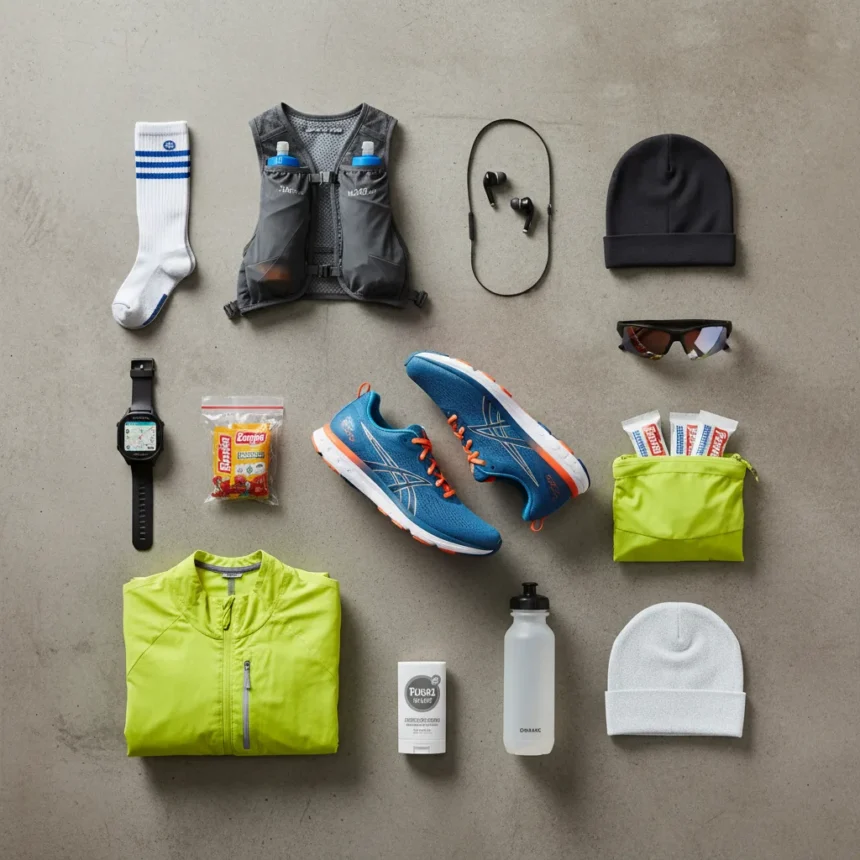
A fitness editor’s 10-item list creates a complete foundation: shoes, socks, shirt, shorts or tights, jacket, hat, hydration carrier, GPS watch, headphones, and one additional item—whether a belt, headlamp, or sunglasses depending on your training environment. The exact 10th item varies by individual, but the first nine form a universal baseline.
Start with these essentials before adding luxury items. Many runners accumulate gear over time, discovering through trial and error what works for their body and climate. A first-time marathoner does not need a $500 watch or a $200 hydration vest. Solid fundamentals—proper shoes, moisture-wicking clothing, and a way to carry water—suffice for training and race day. Once you complete your first marathon, you’ll know exactly which upgrades matter for your next one.
Should I buy all marathon kit essentials before training starts?
No. Start with shoes, socks, and basic moisture-wicking clothes. Test these during training runs before adding a watch, hydration system, or other accessories. This approach saves money and lets you discover what actually works for your body and running style before committing to specialized gear.
What’s the difference between handheld bottles and hydration vests for marathon kit essentials?
Handheld bottles are lighter and simpler for short runs but require gripping one hand. Hydration vests or belts distribute weight across your torso and free both hands, making them better for long training runs and race day. Start with a handheld bottle and upgrade to a vest if your training distances exceed 90 minutes.
Can I use regular athletic gear for marathon kit essentials?
Cotton athletic wear absorbs sweat and causes chafing; running-specific technical fabrics wick moisture and prevent blisters. Likewise, regular socks lack the blister-prevention properties of running socks. Invest in purpose-built running gear—the difference between comfort and suffering over 26.2 miles is substantial.
Marathon kit essentials are not about status or brand names. They’re about preventing unnecessary suffering and building confidence through proper preparation. A fitness editor’s curated list of 10 items covers every category that matters: protection, tracking, hydration, and comfort. Start there, train consistently, and you’ll cross the finish line far happier than runners who ignored these fundamentals.
Where to Buy
15% OFFGarmin Vivoactive 6 running watch£192.75£226.77shop now | Coros Pace 4 running watch£229shop now | Apple Watch SE 3 (40mm)£219shop now | Salomon Active Skin 4 hydration vest£79.99shop now | 50% OFFSauconySaucony Ride 18$72.95$145shop now
Edited by the All Things Geek team.
Source: TechRadar