






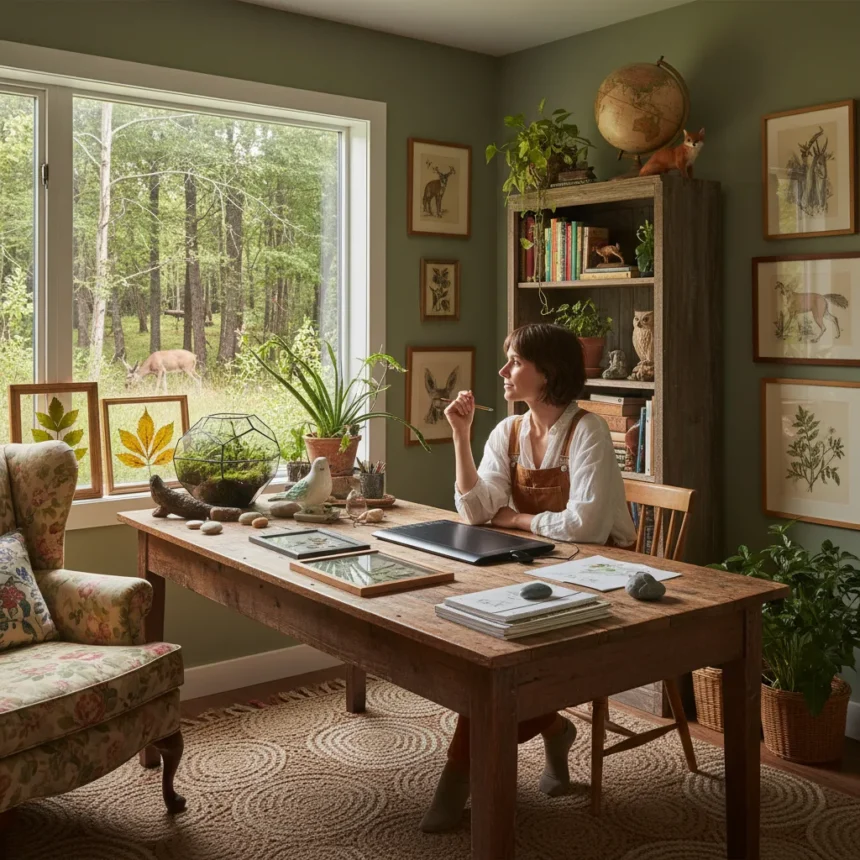
Marie-Alice Harel, a freelance illustrator known for her work on Peruvian folk tales, adaptations of Howl’s Moving Castle, and Neil Gaiman stories, has built a nature-inspired home office that challenges conventional workspace design. Rather than sterile minimalism or corporate functionality, her studio brings the outside in through deliberate choices about materials, layout, and the deliberate invitation of wildlife into her creative environment.
Key Takeaways
- Marie-Alice Harel sources thrifted wood furniture to create warmth and connection to natural materials in her workspace.
- Nature and animals serve as constant sources of inspiration and grounding for her illustration practice.
- Wild squirrel visits and other animal encounters integrate naturally into her daily creative routine.
- A nature-inspired home office design challenges the sterile, minimalist workspace trend.
- Thoughtful spatial arrangement connects creative work directly to outdoor observation.
Building a Nature-Inspired Home Office Through Thrifted Materials
Harel’s approach to furnishing her workspace rejects the mass-produced, standardized aesthetic that dominates contemporary home office design. Instead, she sources thrifted wood furniture—pieces with history, grain variation, and the patina of age. This choice serves a dual purpose: it reduces consumption and creates an environment where natural materials dominate the sensory experience of working. Wood grain, weathered surfaces, and the tactile quality of older pieces ground her practice in materiality that mirrors the organic subjects she illustrates.
The decision to thrift rather than purchase new also reflects a philosophical stance about creativity. Secondhand furniture carries stories. A desk sourced from a local thrift shop arrives with its own history, its own relationship to previous makers and users. For an illustrator whose work engages folklore and narrative, this layering of human and material history becomes part of the creative environment itself. The workspace does not exist in a vacuum—it exists in conversation with the objects that surround it.
How Wildlife Integration Shapes Daily Creative Practice
What distinguishes Harel’s setup from other nature-themed workspaces is the active presence of wildlife. Squirrel visits are not occasional novelties but regular occurrences, integrated into the rhythm of her workday. This integration suggests a workspace designed with permeability in mind—windows positioned for observation, perhaps feeders or plants that attract animals, and a schedule flexible enough to accommodate these interruptions as creative moments rather than distractions.

Harel has stated that nature and animals are a constant source of inspiration and grounding for her work. This is not metaphorical—it is structural. By positioning her workspace where wildlife naturally appears, she ensures that observation of living creatures happens within her creative practice, not outside it. A squirrel at the window becomes a study in movement and form. Bird activity becomes color and composition reference. The boundary between workspace and nature dissolves.
Why Nature-Inspired Home Office Design Matters for Freelance Creatives
Freelance illustrators face a particular challenge: isolation. Working from home can mean hours alone with a screen, disconnected from natural cycles and human presence. A nature-inspired home office directly counters this isolation by creating multiple channels of connection—to materials with tactile presence, to living creatures, to seasonal change visible through windows. These connections combat the psychological toll of isolated creative work.


Harel’s workspace also models an alternative to the productivity-obsessed home office trend. Rather than optimizing for output through ergonomic chairs and distraction-blocking design, her approach prioritizes what feeds creative thinking: observation, material engagement, and the unpredictable presence of the living world. A squirrel visit is not lost productivity—it is creative input. This reframes what a productive workspace actually looks like.
Comparing Nature-Inspired Workspaces to Minimalist Alternatives
The contemporary home office trend leans heavily toward minimalism: clean surfaces, neutral colors, minimal objects. The logic is understandable—fewer objects mean fewer distractions, cleaner sightlines, psychological calm. But this approach assumes that emptiness and reduction serve creativity equally well for all practitioners. Harel’s workspace suggests otherwise. Abundance of natural material, the presence of living creatures, and the visual richness of thrifted objects create a different kind of calm—one rooted in engagement rather than reduction. Where minimalist design seeks to eliminate stimulation, nature-inspired design seeks to channel it productively.
For freelance illustrators specifically, this distinction matters. An illustrator’s work depends on observation—of form, movement, color, texture, light. A workspace that removes these elements from daily view may reduce distractions but also removes the primary fuel for visual thinking. Harel’s model suggests that the presence of natural elements, rather than their absence, sharpens creative perception.
Can a nature-inspired home office actually improve creative output?
Improved focus and creative thinking depend on what the individual mind needs. For illustrators whose work engages the natural world—as Harel’s does—a workspace that keeps nature visible and present likely does enhance output. The constant availability of living reference, material texture, and organic form reduces the friction between observation and creation. Whether this translates universally to all creative work remains individual, but for practitioners whose subject matter centers on nature, the case is strong.

What materials work best for a thrifted, nature-inspired workspace?
Wood dominates thrifted furniture markets and offers both aesthetic and functional advantages for creative workspaces. Solid wood pieces—desks, shelving, chairs—age visibly and develop character over time. They also offer superior tactile experience compared to particleboard or plastic. Beyond wood, natural textiles, stone surfaces, and metal with patina all integrate well into nature-inspired design. The key is selecting materials that show age and wear as features rather than flaws.
Marie-Alice Harel’s home office demonstrates that a creative workspace does not need to choose between functionality and connection to the natural world. By sourcing thrifted materials, positioning her desk for wildlife observation, and treating animal visits as creative input rather than interruption, she has built an environment where the boundary between inside and outside, work and observation, dissolves. For freelance creatives seeking an alternative to sterile productivity optimization, her model offers a compelling path forward.
This article was written with AI assistance and editorially reviewed.
Source: Creativebloq