





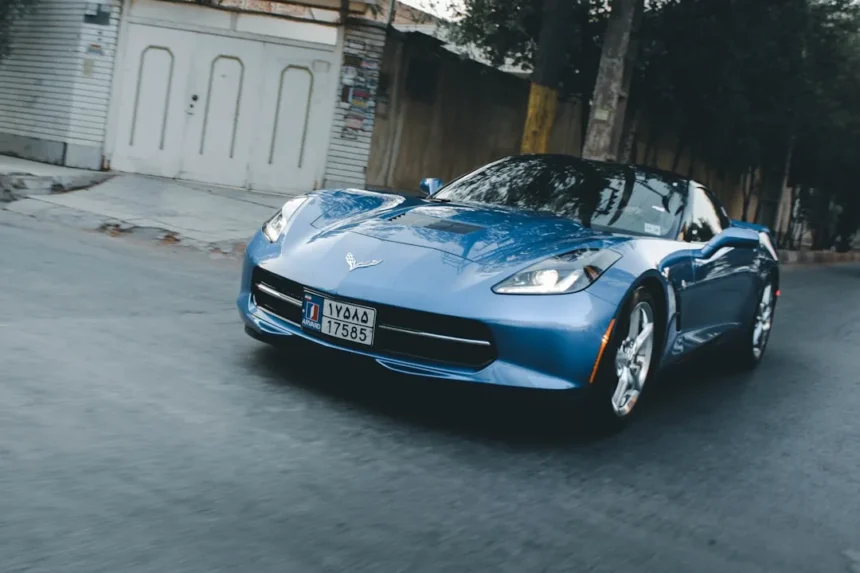
The 2026 Chevrolet Corvette E-Ray hybrid shouldn’t work. A sports car running on battery power sounds like a compromise, a bean-counter’s solution to emissions regulations that strips away the raw, visceral experience Corvette owners crave. After nearly a week behind the wheel, that assumption crumbles completely.
Key Takeaways
- The 2026 Corvette E-Ray combines hybrid power with traditional sports car performance expectations.
- Electric assistance in the E-Ray does not sacrifice the driving dynamics Corvette buyers demand.
- Hybrid technology represents a significant evolution for the Corvette lineup in 2026.
- The E-Ray maintains the value proposition that made prior Corvettes competitive against foreign exotics.
- Week-long testing confirmed hybrid operation works smoothly with high-performance driving.
Chevrolet Corvette E-Ray Hybrid Powertrain Delivers Without Compromise
The 2026 Chevrolet Corvette E-Ray hybrid is a fundamental rethinking of how a sports car can operate. Rather than treating electric power as a penalty box for efficiency, Chevrolet integrated hybrid technology directly into the performance equation. The result is a car that accelerates like a Corvette, handles like a Corvette, and somehow also runs on battery power when conditions allow. That combination should feel impossible, yet it works.
What makes the E-Ray hybrid compelling is that it doesn’t force a choice between performance and efficiency. The hybrid system operates smoothly during daily driving, switching between electric and combustion power based on demand. When you step on the accelerator hard, the car responds with the aggression you expect from the nameplate. When cruising, the electric motors take over, reducing fuel consumption without audible compromise. The engineering beneath the hood makes this possible, though Chevrolet has resisted the urge to advertise every technical detail as a selling point.
The E-Ray’s approach differs sharply from how competitors treat hybrid sports cars. Rather than bolting electric components onto a conventional platform, Chevrolet designed the hybrid system as integral to the car’s identity. This isn’t a Corvette with batteries strapped on—it’s a Corvette reimagined for a different era of performance driving.


How the E-Ray Hybrid Compares to Previous Corvette Models
The 2016 Corvette Z06 set a high bar for the nameplate, delivering supercar performance at a luxury sedan price point thanks to its supercharged 6.2-liter V8 producing 650 horsepower. That car proved Corvette could compete with six-figure foreign exotics without the six-figure price tag. The E-Ray hybrid now carries that torch forward, proving that the next generation of Corvette performance doesn’t require abandoning everything that made the Z06 special.
Where the E-Ray diverges is in how it achieves that performance. Rather than relying purely on displacement and forced induction, the hybrid system adds electric torque at precisely the moments when it matters most. The result feels different—more responsive in some ways, more efficient across the board—but it preserves the essential Corvette character. You still get the aggressive acceleration, the precise steering, and the confidence-inspiring handling that made the Z06 a benchmark for value-conscious performance buyers.


This evolution matters because it signals Chevrolet’s commitment to keeping the Corvette competitive as automotive technology shifts. The hybrid powertrain isn’t a retreat from performance; it’s an advancement of it. The E-Ray proves that electric motors and sports car thrills aren’t mutually exclusive.
Real-World Testing Confirms E-Ray Hybrid Performance Credentials
A week of driving reveals what specification sheets cannot: how a car actually behaves when pushed. The E-Ray hybrid accelerates with urgency, corners with precision, and brakes with authority. The hybrid system never feels intrusive or apologetic. Instead, it enhances the driving experience by providing electric torque exactly when needed, without the lag or delay that sometimes plagues traditional engines under hard acceleration.
The real shock comes from how naturally the hybrid system integrates into the driving experience. There’s no moment where you think about the electric motors or feel the car switching between power sources. The transitions happen invisibly, which is exactly what a performance car should deliver. You focus on the road, the line through the corner, and the acceleration out of the apex—not on what’s happening under the hood.
Chevrolet’s decision to prioritize performance over advertising the hybrid technology shows confidence in the engineering. The E-Ray doesn’t shout about its electric motors or battery capacity. It simply delivers the driving experience Corvette owners expect, then quietly returns better efficiency than a traditional V8 would provide.



Why the E-Ray Hybrid Matters for Corvette’s Future
The 2026 Chevrolet Corvette E-Ray hybrid represents a turning point for the nameplate. As emissions regulations tighten globally and fuel economy standards rise, manufacturers face a choice: compromise performance or innovate. Chevrolet chose innovation. The E-Ray proves that a hybrid sports car doesn’t have to feel like a guilty compromise.
This matters beyond Corvette enthusiasts. The E-Ray demonstrates that performance and efficiency aren’t opposing forces in 2026. A car can be genuinely fast, genuinely fun to drive, and genuinely efficient. That’s not a small achievement. It’s the kind of engineering that reshapes expectations for what sports cars can be.
The E-Ray also preserves the Corvette’s historical role as a value leader in performance. Previous generations proved you could get supercar thrills without supercar prices. The hybrid E-Ray extends that legacy into the electric era, offering advanced technology and genuine performance at a price point that makes sense for enthusiasts without deep pockets.
Does the E-Ray Hybrid Sacrifice Any Corvette Traditions?
The short answer is no. The E-Ray maintains the essential Corvette formula: accessible performance, responsive handling, and the kind of driving engagement that justifies the nameplate. The hybrid powertrain adds capability rather than subtracting from it. You get electric torque assist, improved efficiency, and all the performance characteristics that made the Corvette legendary.
How Does Hybrid Power Change the Corvette Driving Experience?
Hybrid power transforms the Corvette experience in subtle but meaningful ways. Electric torque arrives instantly, eliminating turbo lag and providing immediate throttle response. The car feels more responsive off the line and more composed during sustained acceleration. The hybrid system also enables smoother power delivery, reducing vibration and harshness that comes with traditional combustion engines under stress. For drivers who spend time on track or in spirited driving, these improvements compound into a noticeably better experience.
Is the 2026 Corvette E-Ray Hybrid Worth the Switch From Older V8 Models?
If you’re considering upgrading from a previous Corvette generation, the E-Ray hybrid offers compelling reasons to make the jump. The performance is genuine, the efficiency is real, and the technology is mature enough to feel reliable rather than experimental. The E-Ray proves that hybrid power isn’t a compromise for Corvette—it’s an evolution. For performance enthusiasts unwilling to sacrifice driving engagement, the E-Ray delivers on both fronts.
The 2026 Chevrolet Corvette E-Ray hybrid succeeds because it refuses to apologize for being a hybrid sports car. Instead of treating electric power as a constraint, Chevrolet leveraged it as an advantage, creating a car that accelerates harder, handles better, and runs more efficiently than traditional alternatives. That’s not just a clever engineering solution—it’s a statement about where performance driving is headed. The E-Ray proves the future of the sports car doesn’t require sacrificing its soul.
This article was written with AI assistance and editorially reviewed.
Source: Tom's Guide