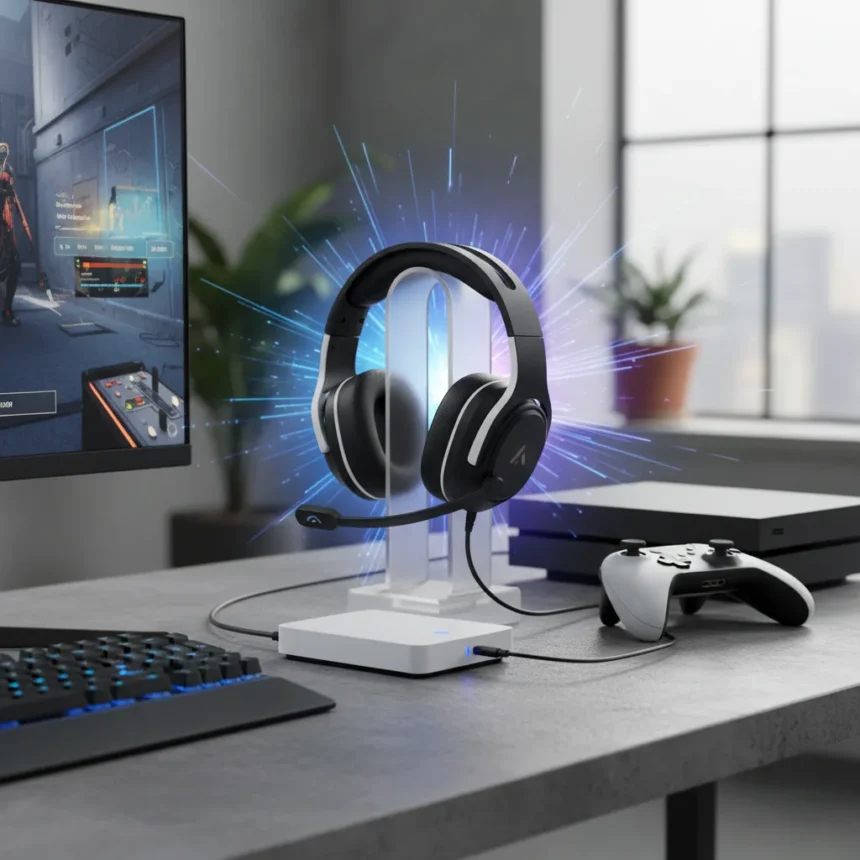
The Astro A20 X wireless gaming headset is a lightweight headset designed for gamers who split time between PC and console, featuring a small, slim base station that connects to two devices simultaneously. If you’ve ever fumbled with USB dongles or Bluetooth pairing menus mid-game, you understand the appeal: one headset, two active connections, zero rewiring. But does the A20 X deliver on the promise, or does it sacrifice too much to keep things simple?
Key Takeaways
- Connects to two devices at once via a single slim base station, eliminating USB dongle swapping between PC and console.
- Lightweight plastic frame and customizable RGB lighting balance durability with style.
- Nearly identical in design and functionality to the Logitech G522, making it a direct alternative.
- Multi-device switching enables instant audio transitions on shared HDMI displays without rewiring.
- Positioned as a mid-range option in a crowded market alongside the Astro A50 X and Logitech G Pro X 2 Lightspeed.
Design and Build: Lightweight, But Not Premium
The Astro A20 X uses a lightweight plastic frame that prioritizes portability over perceived durability. This is not a criticism—plastic construction keeps the headset comfortable during long sessions and reduces fatigue. The bright, customizable RGB lighting appeals to desk-setup enthusiasts, though it adds little functional value. The real story is the slim base station. Unlike bulkier competitors, the A20 X’s dock occupies minimal desk real estate while handling dual-device pairing smoothly. This architectural advantage matters for gamers with limited space or shared displays.
Compared to the Logitech G Pro X 2 Lightspeed, which uses a more robust build with 50mm neodymium speakers and graphite diaphragms for superior audio clarity, the A20 X trades raw audio fidelity for multi-device convenience. The G Pro X 2 is the e-sports choice for competitive players who prioritize sound isolation and precision. The A20 X is for the casual-to-serious gamer juggling two platforms.
Multi-Device Connectivity: The Core Strength
The Astro A20 X’s defining feature is its ability to maintain active connections to a PC and a console simultaneously through a single base station. This solves a genuine pain point: switching audio between devices without unplugging cables or re-pairing Bluetooth. On a shared HDMI display, you can play on your Xbox, pause, switch to your PC, and hear game audio instantly without touching the headset. The Astro A20 Wireless Gen2 predecessor used a USB dongle for PC and Xbox, requiring manual switching; the A20 X eliminates that friction.

The Astro A50 X offers similar multi-device wireless connectivity through its base station, but the A50 X commands a higher price point and targets players seeking premium sound quality. The A20 X undercuts it by focusing on the connectivity feature rather than audio supremacy, making it the smarter choice for budget-conscious multi-platform gamers.
Positioning in a Crowded Market
The gaming headset market is saturated. The Kingston HyperX Cloud II costs under $90 and remains a solid entry-level option. The Razer Man O’ War sits around $140 and appeals to Razer ecosystem loyalists. The Astro A40 TR, positioned at $200, targets players willing to spend for brand reputation and refined audio. The A20 X slots between budget and premium, competing directly with the Logitech G522, which shares nearly identical design and functionality. Neither headset dominates the segment—they are competent, not exceptional.
The Logitech G Pro X 2 Lightspeed represents the upper tier, with advanced audio engineering (7.1 surround sound virtualization) and support for PC, PlayStation, and Nintendo Switch via its DAC dongle. If you demand pristine audio and don’t mind paying premium prices, the G Pro X 2 justifies its cost. If you want two-device connectivity without breaking the bank, the A20 X is the pragmatic choice.
Who Should Buy the Astro A20 X?
Buy the A20 X if you split your gaming time between PC and console on the same display and value simplicity over sonic excellence. The slim base station and dual-device pairing eliminate setup friction that plagues other headsets. You are not an e-sports competitor chasing audio precision—you are a casual-to-serious gamer who wants convenience. The lightweight plastic frame suits desk-bound sessions and travel. Customizable RGB lighting is a bonus if your setup demands it.
Skip the A20 X if you prioritize audio quality above all else. The Logitech G Pro X 2 Lightspeed delivers superior sound clarity and is worth the premium if you stream, play competitively, or produce content. Skip it if you game exclusively on one platform—a single-device headset offers better value.
Is the Astro A20 X worth buying?
The Astro A20 X is worth buying if you game on both PC and console and use a shared display. The dual-device base station eliminates the frustration of swapping USB dongles or re-pairing Bluetooth between sessions. For multi-platform gamers, that convenience alone justifies the purchase. For single-platform players, cheaper alternatives exist.

How does the Astro A20 X compare to the Logitech G522?
The Astro A20 X and Logitech G522 are nearly identical in design and functionality, making them direct competitors. Both use lightweight plastic frames, customizable RGB, and slim base stations for dual-device connectivity. The choice between them comes down to brand loyalty and ecosystem integration. If you already own other Astro products, stick with A20 X. If you prefer Logitech’s software, choose the G522.
What makes the Astro A20 X different from the Astro A50 X?
The Astro A50 X is a wireless headset with similar multi-device connectivity through a base station, but it targets players willing to pay more for enhanced audio quality and build refinement. The A20 X is the budget-friendly alternative, sacrificing some sound fidelity for affordability. Choose the A20 X for value; choose the A50 X if audio excellence matters more than price.
The Astro A20 X wireless gaming headset is not revolutionary, but it solves a real problem for PC and console gamers: seamless, cable-free switching between two devices on a shared setup. It will not impress audiophiles or e-sports professionals. For the multi-platform casual gamer tired of dongle swapping, it is exactly what you need.
Where to Buy
$179 at Amazon | $179.99 at Amazon | $408.80
Edited by the All Things Geek team.
Source: Tom's Hardware