





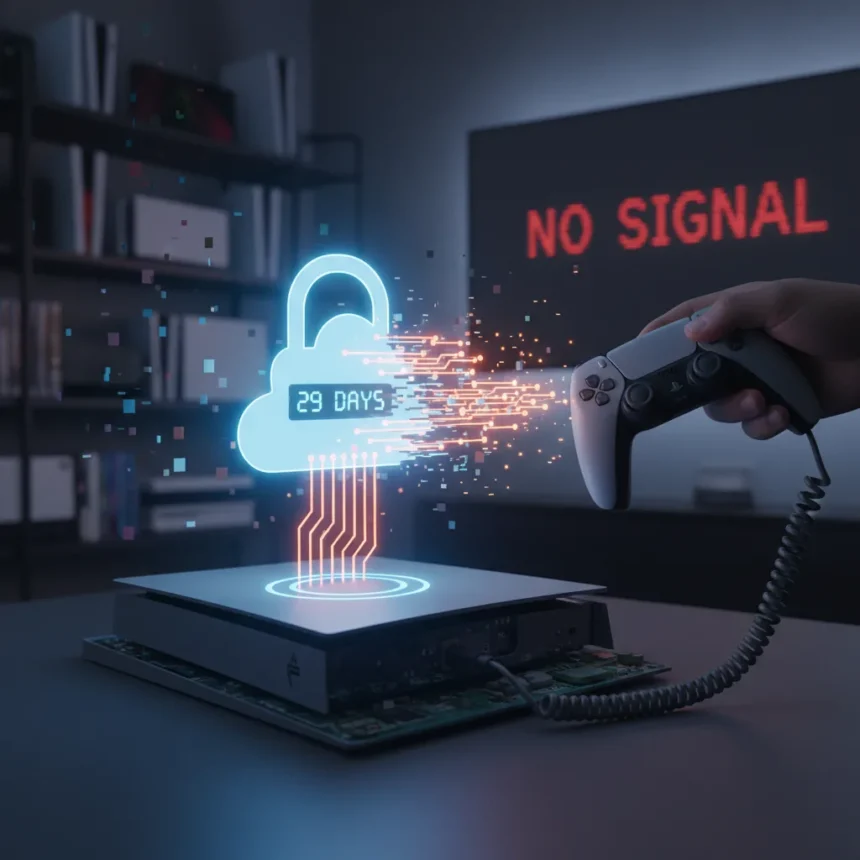
PlayStation 30-day DRM check-in has arrived, and it’s a brutal reminder of why digital ownership remains a thorny issue in gaming. Sony has rolled out a system requiring all newly purchased PS4 and PS5 digital games to verify their licenses online every 30 days, or face temporary revocation. Miss that window, and your games vanish until your console reconnects to PlayStation Network.
Key Takeaways
- New PS4 and PS5 digital games now require online license verification every 30 days
- Games fail to launch if 30 days pass without PlayStation Network connection
- The check-in cannot be bypassed using the “Activate as Primary Console” setting
- Previously purchased digital games appear unaffected by the new requirement
- No official Sony confirmation exists; the system emerged via modder reports in April 2026
How PlayStation 30-day DRM Check-in Works
The PlayStation 30-day DRM check-in is a periodic license verification system that requires your console to connect to PlayStation Network at least once every 30 days for any newly purchased digital game. When you launch an affected title, the system checks your license status. Some games display a counter showing remaining days before the next mandatory check-in. If 30 days elapse without online verification, the game becomes unplayable until your console reconnects and validates the license. This is not a permanent ban—access returns once you’re online again—but it effectively locks offline players out of their purchased library.
The mechanism bypasses the traditional workaround of designating your console as a primary PSN device, which normally allows other users on that system to play digital games offline. Modder Lance McDonald, who first documented the system, confirmed that “This can NOT be avoided by using ‘Activate console as primary'”. Every new digital purchase now carries this 30-day tether, regardless of account setup or console configuration.
Why This Matters for Digital Game Ownership
The PlayStation 30-day DRM check-in hits at a fundamental tension between purchasing and licensing. When you buy a digital game, you’re not buying a file—you’re buying a license to play it. Sony’s new system makes that distinction visceral. Players who purchased games expecting offline access, or who live in areas with unreliable internet, suddenly face mandatory connectivity requirements. For collectors and archivists concerned with game preservation, this is a nightmare scenario: digital games that depend on active servers and periodic online check-ins are inherently fragile. If PlayStation Network goes down, or if Sony eventually discontinues support for PS4 and PS5, these games become permanently inaccessible.


The timing amplifies the frustration. This emerges amid broader industry anxiety about digital ownership rights, following years of studios removing games from digital storefronts and licensing disputes that have locked players out of purchased content. The PlayStation 30-day DRM check-in feels less like a technical requirement and more like a control mechanism—a way for Sony to ensure constant engagement and license verification even for single-player, offline-capable titles.
Unconfirmed Status and Sony’s Silence
As of the initial reports in April 2026, Sony has not officially confirmed the PlayStation 30-day DRM check-in or explained why it was implemented. The system emerged via screenshots shared by Lance McDonald on X, with details corroborated by gaming sites like MP1st and Does it Play?. However, one anonymous source told Does it Play? that the check-in may be an unintentional bug introduced while fixing an exploit, and that an official statement from Sony was expected soon. This ambiguity is maddening for players: Is this a permanent policy shift, or a glitch that will be patched out? Without Sony’s confirmation, nobody knows.


The lack of transparency mirrors previous instances where Sony introduced unpopular changes without advance warning. The company’s silence also leaves room for speculation—some observers wonder if the check-in applies only to PlayStation Plus games, or if it’s truly universal across all new digital purchases. This uncertainty alone is damaging to player trust, regardless of whether the system stays or goes.
Comparison to Past DRM Failures
The PlayStation 30-day DRM check-in echoes Xbox One’s infamous always-online DRM requirement from 2013, which sparked such backlash that Microsoft reversed it within weeks. However, there’s a crucial difference: Xbox’s system demanded constant connectivity, while PlayStation’s requires check-in every 30 days. That’s marginally less onerous, but it’s still a mandatory tether that punishes offline play. The fact that Sony appears to have introduced this without announcement—unlike Microsoft’s transparent (if catastrophic) reveal—suggests the company may not expect this to survive public scrutiny either.
The comparison also highlights how little the industry has learned about digital ownership. Nearly 13 years after Xbox One’s debacle, console makers are still attempting to impose connectivity requirements that benefit corporate control over consumer rights. The PlayStation 30-day DRM check-in is a softer version of the same mistake.
What Happens to Older Digital Purchases?
One small mercy: games purchased before the PlayStation 30-day DRM check-in rolled out reportedly remain unaffected. This means your existing library should continue to work as before, even if you go offline for months. However, any new purchase going forward carries the 30-day requirement. This creates a two-tier system where older games are more playable than newer ones—a perverse incentive structure that punishes players for buying fresh content.



FAQ
What happens if my console stays offline for 30 days?
Your newly purchased digital games will become unplayable until your console reconnects to PlayStation Network and verifies the license. The games don’t delete—they’re just locked until you’re online again. This is temporary revocation, not permanent loss.
Can I avoid the 30-day check-in by setting my console as primary?
No. The PlayStation 30-day DRM check-in cannot be bypassed using the “Activate as Primary Console” feature, which normally allows offline play. The check-in applies to all new digital games regardless of console configuration.
Does this affect games I already own?
Games purchased before the rollout appear unaffected. Only newly purchased digital titles carry the 30-day requirement. However, without official Sony clarification, this status could change.
The PlayStation 30-day DRM check-in represents a troubling shift in how console makers view digital ownership. Whether it’s a bug or a permanent policy, it signals that Sony is willing to impose connectivity requirements on offline-capable games—a line that should concern anyone who values playing what they’ve purchased, whenever they want, regardless of internet access. If this stays, it’s a win for corporate control and a loss for player freedom.
This article was written with AI assistance and editorially reviewed.
Source: Tom's Hardware