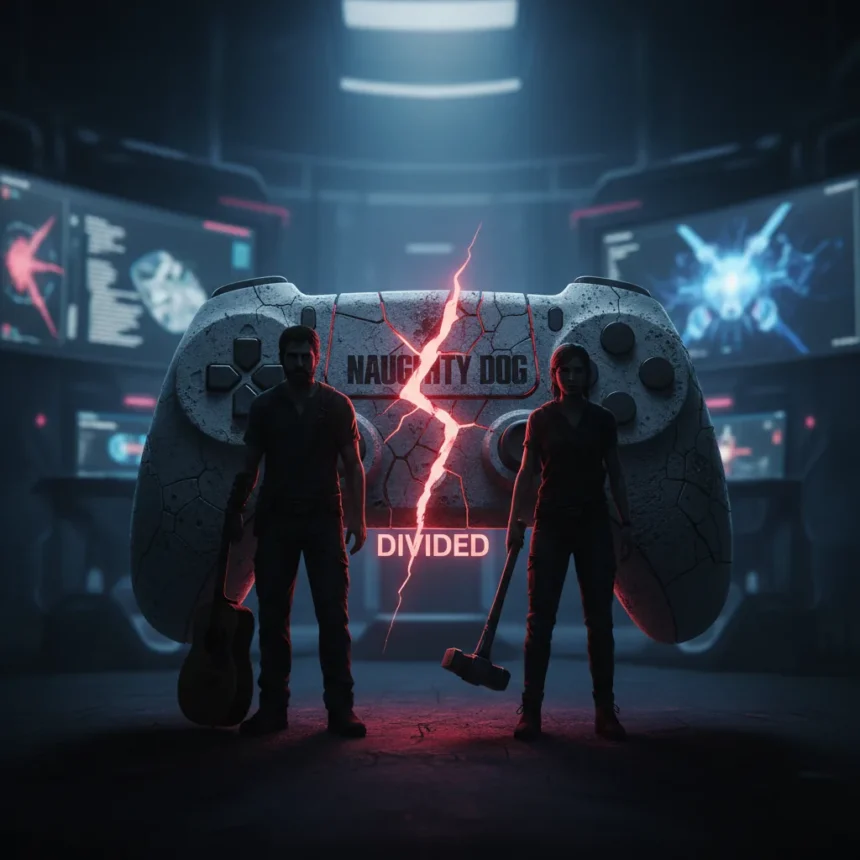
The Last of Us Part 2 Joel death wasn’t just controversial with players—it divided Naughty Dog itself. Former Naughty Dog artist Heather Cerlan revealed in a recent interview that the studio was deeply split on the decision to kill off Joel in the opening hours of the 2020 sequel, confirming that internal debate mirrored the firestorm that erupted online after the game’s release.
Key Takeaways
- Heather Cerlan, former Naughty Dog artist, worked on The Last of Us and Uncharted series.
- The studio was “pretty split” on Joel’s early death, according to Cerlan’s recent statements.
- Naughty Dog anticipated the controversy before the game’s 2020 release.
- The divisive narrative choice sparked backlash comparable to Star Wars: The Last Jedi discourse.
- Plot leaks pre-release intensified the online reaction to The Last of Us Part 2.
The Last of Us Part 2 Joel Death Split the Studio
Cerlan stated plainly that the studio anticipated the outcry. “I think the studio was pretty split on the outcome of what happens,” she said, adding that “it was controversial internally too.” This admission cuts through years of speculation about whether Naughty Dog knew what it was walking into. They did. The decision to kill Joel early wasn’t unanimous—most of the studio questioned the narrative choice, yet the creative direction moved forward anyway.
This internal division reflects a creative tension that rarely surfaces in post-mortems. Game studios often present a unified front after launch, celebrating their vision even when the work itself was contentious. Cerlan’s candor breaks that pattern. She described the studio as hesitant, even skeptical, about the narrative outcome, yet the game shipped with that exact decision intact. That gap between internal doubt and final product says something about how creative leadership operates at major studios—vision sometimes trumps consensus.
How Internal Debate Shaped The Last of Us Part 2
The Last of Us Part 2 underwent significant narrative iteration before launch. Creative director Neil Druckmann and narrative lead Halley Gross discussed story changes in pre-release interviews, including moments like Ellie letting Abby go at the final confrontation “to preserve or to elucidate that some little part of the old Ellie.” These adjustments suggest the team was wrestling with the emotional weight of their choices throughout development. Joel’s death wasn’t a late-stage addition—it was foundational to the story—yet the studio remained divided on whether it served the narrative.


The fact that Naughty Dog anticipated the backlash makes the decision even more deliberate. They weren’t blindsided by player reaction; they chose to proceed anyway. This speaks to a studio confident in its artistic direction, even when that confidence wasn’t shared universally within the walls of the company itself. Daring creative choices often require that kind of conviction, but they also require weathering internal friction.
The Last of Us Part 2 Joel Death and Fan Backlash
When The Last of Us Part 2 released in 2020, the backlash was immediate and intense. Plot leaks had circulated before launch, and Joel’s death became the focal point of online discourse comparable to the divisiveness surrounding Star Wars: The Last Jedi. Players felt blindsided by a narrative choice that killed a beloved character in the opening hours, shifting focus to Abby and a new perspective on the conflict.
The comparison to Star Wars is apt—both franchises faced fanbases that felt the creative direction betrayed their investment in the original characters. In The Last of Us Part 2’s case, Joel’s death wasn’t a twist reveal; it was a statement. The game was explicitly rejecting the comfort of familiar characters and forcing players into moral ambiguity. That artistic boldness came with a cost in goodwill, especially among players who wanted to continue Joel’s story rather than confront his absence.
Why Naughty Dog Stood by the Choice
Despite internal division, Naughty Dog never wavered publicly. The studio doubled down on the narrative vision, defending the decision through interviews and updates. This consistency—even in the face of studio-wide skepticism—suggests that creative leadership believed the story needed that shock to function. Killing Joel wasn’t shock for shock’s sake; it was meant to strip away player agency and force a reckoning with revenge and forgiveness.
Cerlan’s revelation doesn’t undermine that vision—it humanizes it. Great art often emerges from internal conflict. The fact that the studio was divided doesn’t make the final product weaker; it suggests the team was genuinely grappling with difficult storytelling choices rather than executing a predetermined formula.
Did The Last of Us Part 2 Joel death controversy affect the remaster?
The Last of Us Part 2 Remaster released in 2023, years after the original’s divisive launch. While the remaster didn’t change the narrative, the passage of time allowed some player perspective to shift. The controversy hadn’t disappeared, but it had settled into a more nuanced discussion about the game’s themes rather than pure rejection of the story.


How does The Last of Us Part 2 compare to the original game?
The original The Last of Us (2013) centered entirely on Joel and Ellie’s relationship and survival. The Last of Us Part 2 introduced a new playable character, Abby, and fundamentally changed the narrative scope. Where the first game was about protection and connection, the sequel was about cycles of violence and the cost of revenge. That shift in focus—made possible by Joel’s death—represented a deliberate creative departure from the predecessor.
Was Heather Cerlan involved in the controversial narrative decisions?
Cerlan worked as an artist on The Last of Us and Uncharted series, not as a narrative designer. Her perspective comes from observing studio culture and the internal reaction to creative choices rather than making those choices herself. That position actually makes her testimony more valuable—she’s describing how the broader team received the direction, not justifying her own decisions.
Naughty Dog’s internal division over The Last of Us Part 2 Joel death reveals something important about game development: ambitious creative choices rarely come with unanimous support, even within the studio that makes them. Heather Cerlan’s honesty breaks through the usual corporate messaging to show that the team knew what it was doing, anticipated the reaction, and chose to proceed anyway. Whether that choice was right depends on what you believe games should do—provoke or comfort, challenge or affirm. The Last of Us Part 2 chose provocation, and the studio paid the price for that conviction, both internally and in the court of public opinion.
Edited by the All Things Geek team.
Source: TechRadar