






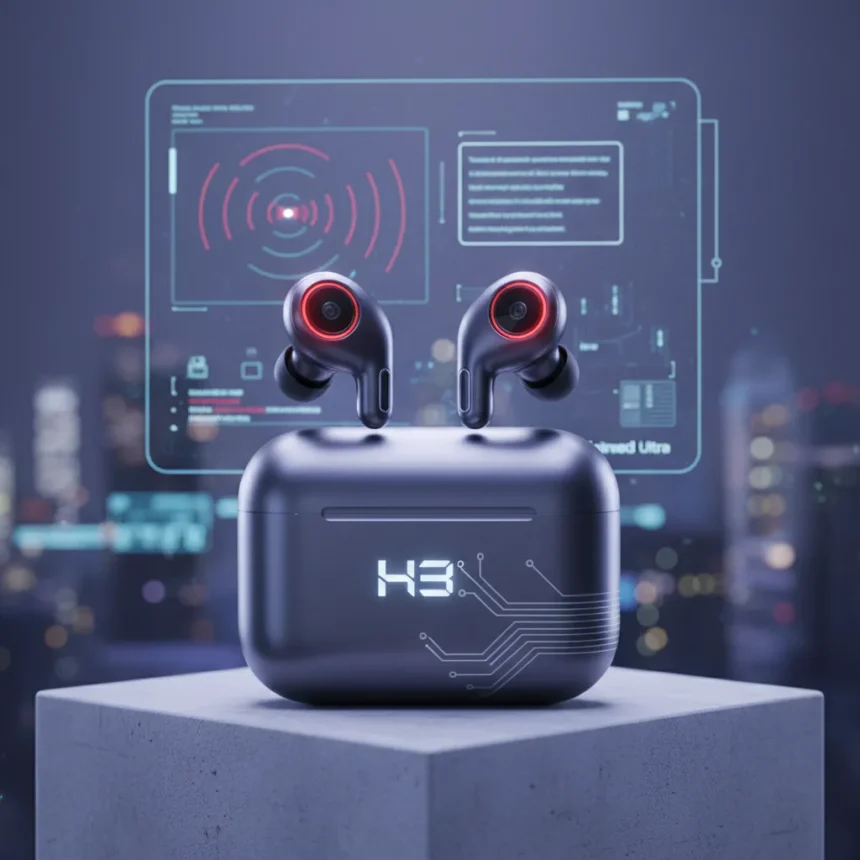
AirPods Ultra are rumored to introduce infrared cameras and a next-generation H3 chip, marking Apple’s first venture into an Ultra-tier earbud category positioned above the AirPods Pro 3. These aren’t incremental tweaks—they represent a fundamental shift in how Apple views earbuds, transforming them from audio-only devices into AI-aware environmental sensors. If the rumors hold, AirPods Ultra could launch later in 2026 at around $299, a $50 premium over today’s AirPods Pro 3.
Key Takeaways
- AirPods Ultra rumored to feature built-in infrared cameras for environmental awareness and gesture control
- Next-gen H3 chip expected to enable lower latency, improved audio, and AI/camera processing
- Pricing estimated at $299 USD, launching later 2026
- Part of broader Apple Ultra product strategy alongside potential iPhone Ultra and MacBook Ultra
- Positioned above AirPods Pro 3 ($249) as Apple’s premium audio tier
What AirPods Ultra cameras actually do
The infrared cameras embedded in AirPods Ultra would serve multiple functions beyond standard audio capture. According to reports, these sensors would enable environmental awareness, supporting Siri interactions with visual context, Apple Intelligence features, and hand gesture recognition. The cameras could also enhance spatial audio experiences when paired with Apple Vision Pro, creating a seamless bridge between audio and spatial computing ecosystems. This isn’t just about seeing—it’s about the earbuds understanding what you’re doing and responding accordingly.
Hand gesture support represents a particularly intriguing use case. Imagine controlling playback, answering calls, or triggering Siri without touching your phone or using voice commands. The infrared approach also avoids the privacy concerns of visible cameras, since IR operates outside the human visual spectrum. These capabilities position AirPods Ultra as something fundamentally different from AirPods Pro 3, which rely on audio input and touch controls alone.
The H3 chip: processing power meets AI
Apple’s H3 chip would represent a meaningful upgrade from the H2 processor in AirPods Pro 3. The new silicon would handle lower latency audio processing, improved sound quality, and the computational demands of on-device camera and AI features. Analyst Mark Gurman has characterized the AirPods Ultra as a “major new product category,” hinting that the H3 chip’s capabilities extend well beyond traditional earbud functions. This suggests Apple is betting on local processing rather than offloading all AI tasks to your iPhone.



The H3 chip also signals Apple’s commitment to keeping sensitive data—like visual information from the IR cameras—processed locally within the earbuds themselves. This approach aligns with Apple’s privacy-first messaging and reduces latency compared to cloud-based alternatives. For users concerned about what their earbuds are seeing and sending, local processing on the H3 offers meaningful reassurance.
How AirPods Ultra fit into Apple’s Ultra lineup
AirPods Ultra don’t exist in isolation. They’re part of a broader Apple strategy to establish “Ultra” as a premium tier across multiple product categories. Rumors suggest potential iPhone Ultra and MacBook Ultra models could follow, creating a cohesive high-end ecosystem. This naming convention mirrors how Apple positioned the Apple Watch Ultra as a rugged alternative to standard models, establishing Ultra as synonymous with enhanced capabilities and higher price points.



Positioning AirPods Ultra above AirPods Pro 3 ($249) rather than replacing them creates a clear three-tier structure: standard AirPods, Pro models with active noise cancellation and health features, and Ultra variants with advanced AI and environmental sensing. This strategy maximizes addressable market segments while signaling that Apple’s audio roadmap extends far beyond traditional noise-canceling earbuds.
Timeline and what remains uncertain
The rumored launch window of “later 2026” gives Apple roughly six months to finalize hardware, validate the IR camera and H3 chip integration, and prepare manufacturing. That timeline seems aggressive but plausible given Apple’s development cycles. What remains unclear is the exact naming convention—whether these will be branded as “AirPods Ultra” or “AirPods Pro 3 with Cameras,” a distinction that matters less to consumers than to Apple’s marketing strategy.
Pricing at $299 positions AirPods Ultra as a luxury audio product, comparable to high-end noise-canceling earbuds from competitors but justified by the unique camera and spatial computing integration. For context, AirPods Pro 3 launched at $249 in September 2025 with ANC improvements and a second-generation Ultra Wideband chip, leaving room for AirPods Ultra to command a premium.
Should you wait for AirPods Ultra or buy AirPods Pro 3 now?
If you need earbuds today, AirPods Pro 3 deliver solid active noise cancellation and seamless Apple ecosystem integration. But if you’re intrigued by spatial computing and willing to wait, AirPods Ultra’s rumored camera and AI features could justify the $50 premium. The question isn’t whether AirPods Ultra will be better—it’s whether the improvements matter to your use case.



What makes AirPods Ultra different from AirPods Max?
AirPods Ultra are in-ear earbuds with AI-powered cameras, while AirPods Max are over-ear headphones focused on spatial audio and immersive listening. They serve different use cases: AirPods Ultra for active users and environmental awareness, AirPods Max for stationary listening and premium sound quality. Both could coexist in Apple’s lineup without direct competition.
Will infrared cameras in earbuds actually improve audio quality?
Not directly. The IR cameras enhance spatial awareness and gesture control rather than sound reproduction itself. The H3 chip’s audio improvements would come from better processing power, not the cameras. The cameras enable AI and environmental features that complement audio, creating a richer overall experience rather than purely better sound.
AirPods Ultra represent Apple’s bet that the future of audio lies beyond sound alone. Infrared cameras and an advanced H3 chip position these earbuds as environmental sensors first and audio devices second—a meaningful departure from how Apple has traditionally approached audio products. Whether that gamble pays off depends on whether consumers embrace earbuds as AI companions or simply want better-sounding music. The rumors suggest Apple is betting heavily on the former.
This article was written with AI assistance and editorially reviewed.
Source: Tom's Guide