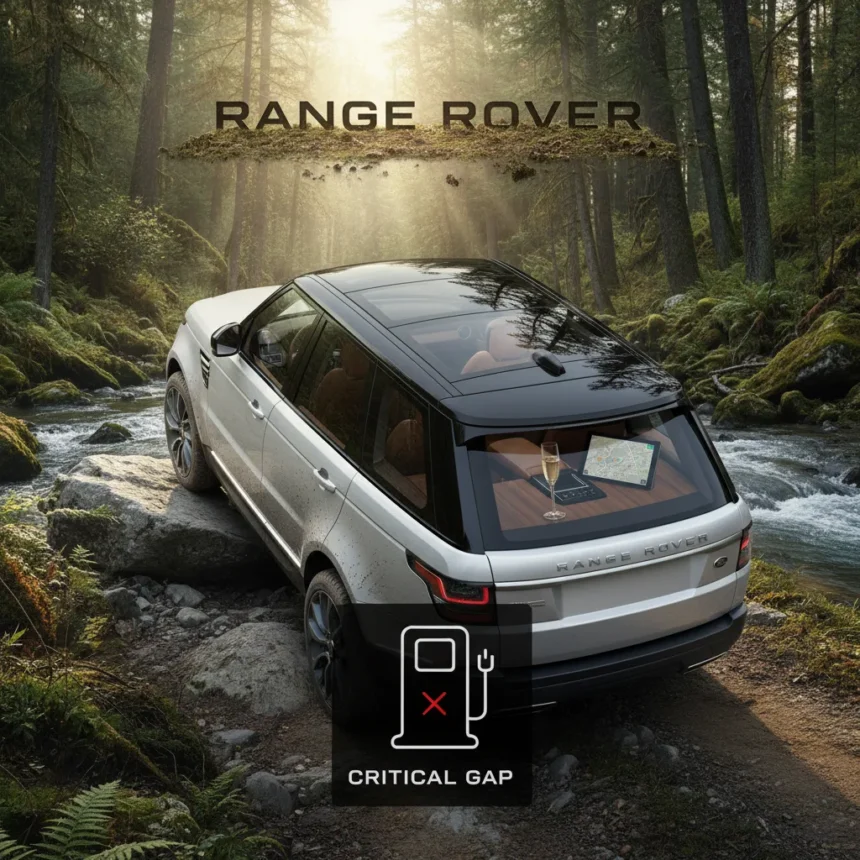
The Range Rover stands as the most adaptable luxury SUV on the market, smoothly transitioning from refined urban cruiser to serious off-road machine. Yet despite this remarkable versatility, one conspicuous gap prevents it from reaching true automotive perfection.
Key Takeaways
- Range Rover combines limousine-like interior comfort with genuine off-road capability in a single package.
- Advanced air suspension and adaptive dynamics deliver smooth city rides and confident terrain handling.
- Multiple powertrain options—petrol, diesel, and plug-in hybrid—cater to different performance and efficiency priorities.
- Premium materials and spacious cabins feature large digital displays and latest infotainment systems.
- A critical shortcoming in electrification or autonomy features keeps the Range Rover from matching next-generation rivals.
Range Rover luxury adaptability sets the standard
Few vehicles navigate the contradiction between luxury and capability as successfully as the Range Rover. The car delivers the plush, enveloping comfort you’d expect from a high-end sedan while retaining the engineering prowess needed to tackle genuinely challenging terrain. This dual nature makes Range Rover luxury adaptability the benchmark against which competitors measure themselves. The interior wraps occupants in premium materials, with spacious cabins that feel more penthouse than vehicle. Large digital displays and advanced infotainment systems create a tech-forward environment that rivals anything in the premium automotive space. Yet step outside the city limits, and the Range Rover sheds its limousine persona entirely.
The engineering that enables this transformation sits beneath the surface. Air suspension systems automatically adjust ride height and stiffness depending on driving conditions, while adaptive dynamics manage weight distribution and traction in real time. These systems work in concert to deliver a ride that feels composed and controlled whether you’re navigating potholed urban streets or rocky mountain passes. Few luxury SUVs manage both tasks without compromise—the Range Rover does it without apology.
Powertrain flexibility addresses different buyer priorities
Range Rover luxury adaptability extends beyond suspension and handling into its powertrain lineup. Buyers can choose from powerful petrol engines for those prioritizing performance, efficient diesel options for long-distance touring, or plug-in hybrid variants that balance emissions concerns with driving range. This flexibility means the Range Rover can serve families prioritizing fuel economy, enthusiasts chasing acceleration, or environmentally conscious buyers seeking lower emissions. No single powertrain dominates the lineup—instead, each option reflects genuine engineering choices rather than marketing segmentation.

The availability of multiple powertrains underscores a fundamental philosophy: the Range Rover should adapt to its owner’s needs rather than forcing owners to adapt to the car. This approach contrasts with rivals increasingly pushing toward full electrification, which narrows the choices available to buyers with specific requirements. While electrification will eventually become mandatory, the current Range Rover generation recognizes that real-world buyers have diverse priorities that extend beyond environmental credentials.
The critical gap that holds it back
For all its strengths, the Range Rover remains conspicuously behind the curve in one essential area. Whether it’s advanced driver-assistance systems, full-electric capability, or next-generation digital integration, the Range Rover lacks the forward-looking technology that defines the automotive frontier. Rivals from Mercedes-Benz, BMW, and Volvo have already moved further down the electrification and autonomy path, leaving the Range Rover positioned as a masterpiece of the current era rather than a preview of the next one.



This gap becomes more apparent as the broader luxury market accelerates toward full EV platforms and Level 3 autonomous driving capabilities. The Range Rover’s current generation represents near-perfect execution of a traditional luxury SUV formula, but that formula itself is aging. The next-generation Range Rover will need to address this shortcoming if it hopes to reclaim its position at the absolute pinnacle of the segment. Buyers seeking latest autonomy, full electrification, or next-generation software ecosystems will likely look elsewhere—at least for now.
What the next generation must deliver
The Range Rover’s future hinges on closing the gap between its exceptional adaptability and the technological expectations of premium buyers in 2025 and beyond. A fully electric platform would align the brand with industry trends while maintaining the multi-terrain capability that defines it. Enhanced autonomous driving features and more sophisticated digital ecosystems would signal that Range Rover hasn’t rested on its reputation. The good news: the engineering foundation is solid. The company simply needs to build the next generation with the same commitment to bridging contradictions that made the current car so successful.
How does the Range Rover compare to other luxury SUVs?
The Range Rover delivers superior adaptability between on-road refinement and off-road capability compared to most competitors, though rivals like Mercedes-Benz and BMW offer more advanced electrification and autonomous driving features. The Range Rover prioritizes balanced performance across both environments, while newer competitors increasingly specialize in one or the other.
What makes the Range Rover’s suspension system special?
The advanced air suspension automatically adjusts ride height and stiffness based on driving conditions, while adaptive dynamics manage weight distribution and traction in real time. This combination creates a composed ride on urban streets and confident handling on challenging terrain without manual intervention.



Will the next Range Rover address the missing technology?
While no official specifications have been announced, the article suggests the next-generation Range Rover could close the gap in electrification and autonomy features that currently separate it from the most technologically advanced rivals. This remains speculative until official details emerge.
The Range Rover represents a masterclass in automotive compromise—not the bad kind where everything suffers slightly, but the rare kind where genuine strengths emerge from balancing opposing demands. Its adaptability remains unmatched, its engineering sound, and its execution refined. Yet the automotive landscape is shifting, and standing still in a moving industry is a slow form of falling behind. The Range Rover’s next chapter must prove that adaptability extends beyond terrain and comfort into the technological frontier, or it risks becoming a nostalgic tribute to a formula that once defined luxury rather than a vision of what luxury will become.
Where to Buy
Edited by the All Things Geek team.
Source: T3