






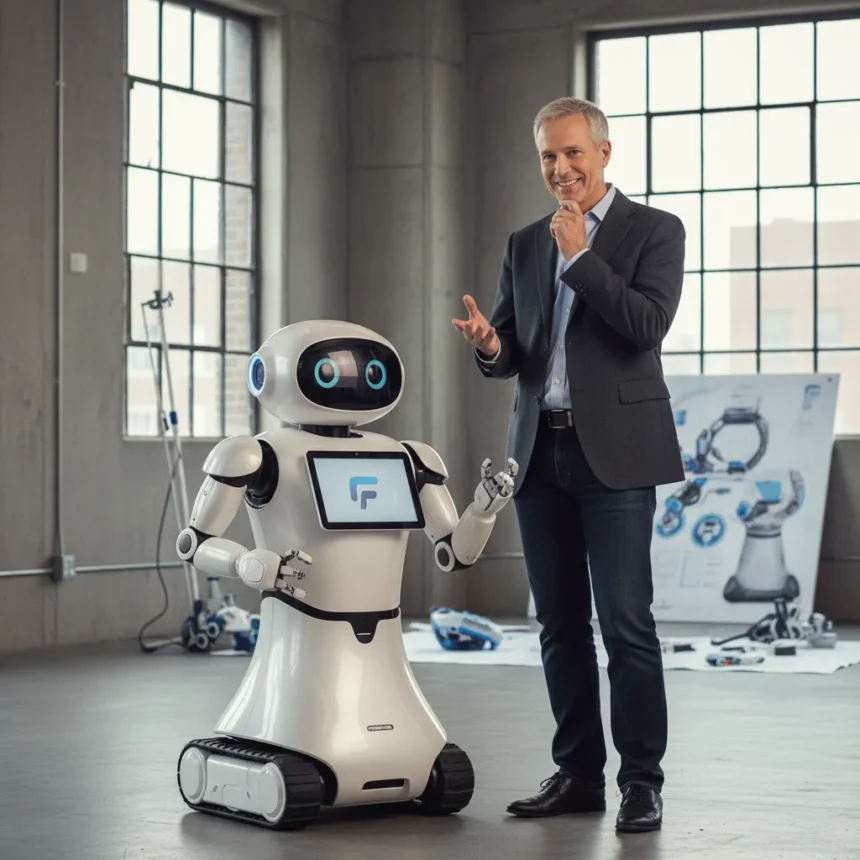
Colin Angle, the former CEO of iRobot, has returned to robotics with a project called Familiar, an AI companion robot that represents his personal vision for the future of consumer robotics. In a recent interview with TechRadar, Angle described Familiar as the machine he wanted to build throughout his entire career, marking a significant shift from his work on Roomba vacuum cleaners to a more ambitious personal AI companion.
Key Takeaways
- Colin Angle is the former CEO of iRobot, the company behind Roomba vacuum robots.
- Familiar is an AI companion robot designed to resemble a bear but is explicitly not a bear.
- Angle describes Familiar as “the robot I wanted to build forever,” indicating a lifelong personal ambition.
- The project represents Angle’s transition from household cleaning robots to personal AI companions.
- Familiar is positioned as an extraordinary AI companion in the evolving consumer robotics space.
From Roomba to Familiar: A Career Pivot
Angle’s journey from iRobot’s leadership to launching Familiar demonstrates a fundamental shift in his vision for what robots should do. While Roomba focused on automating a single household task—vacuum cleaning—Familiar targets something far more personal: companionship through artificial intelligence. This pivot reflects broader industry trends toward robots that interact with humans on emotional and practical levels rather than simply performing isolated functions.
The distinction matters because it signals how the robotics industry is evolving. Household robots like Roomba solved a specific problem efficiently. Familiar, by contrast, aims to be a constant presence in users’ daily lives, powered by AI capabilities that enable interaction and understanding. Angle’s statement that this is “the robot I wanted to build forever” suggests this vision has been driving his thinking for decades, waiting for technology to catch up to ambition.
What Makes Familiar Different
Familiar is designed to resemble a bear, though Angle is explicit that it is not a bear. This design choice—an animal-like form factor without claiming to be an actual animal—positions Familiar in a unique space within consumer robotics. The bear-like appearance likely serves both functional and emotional purposes: it creates a friendly, approachable aesthetic while the actual engineering focuses on AI companion capabilities rather than animal behavior replication.



The emphasis on Familiar being an AI companion distinguishes it from task-oriented robots or even entertainment robots. An AI companion implies deeper interaction, learning, and responsiveness to individual users. This positions Familiar against simpler robotic devices and closer to the emerging category of personal AI assistants, but with a physical embodiment that text-based or screen-based AI lacks. The physical presence of a robot companion may offer psychological and practical benefits that purely digital AI cannot match.
The Vision Behind the Machine
Angle’s characterization of Familiar as “the robot I wanted to build forever” reveals something important about his career trajectory. After decades leading iRobot through explosive growth in the vacuum robot market, he is pursuing a more personal, ambitious project. This is not a corporate mandate or market-driven pivot—it is a founder returning to his original dream. The willingness to step away from an established company and established success to chase a long-held vision suggests deep conviction in Familiar’s potential.



The timing of this project also matters. AI capabilities have advanced dramatically in recent years, making personal AI companions more feasible than they were even five years ago. Angle likely waited for the technology to mature enough to realize his vision properly. Launching Familiar now, rather than earlier in his career, reflects both technological readiness and market conditions that make such a product more viable for consumers.
Where Does Familiar Fit in Consumer Robotics?
The consumer robotics market includes various categories: task robots like Roomba, entertainment robots, educational robots, and increasingly, social robots designed for companionship. Familiar appears to occupy the companionship space, competing implicitly against other personal AI devices and robots, though the research brief contains no specific competitor mentions. The key differentiator is Familiar’s physical form combined with AI capabilities—it is not a voice assistant in a speaker, nor is it a purely virtual AI. It is a physical object designed to be a companion, which creates a different user experience and relationship dynamic than screen-based or audio-only alternatives.
This positioning reflects where Angle believes consumer robotics is heading: toward machines that are not just functional tools but social entities that users interact with regularly. Whether this market will embrace physical AI companions at scale remains to be seen, but Angle’s confidence in the concept—demonstrated by his decision to pursue it—suggests he believes the demand exists.
Why This Matters Now
Angle’s return to robotics with Familiar comes at a moment when AI is reshaping consumer expectations. Consumers are increasingly comfortable interacting with AI systems, from ChatGPT to voice assistants. Familiar takes that interaction and grounds it in a physical presence. For Angle, this represents the culmination of a career-long vision. For the industry, it signals that experienced roboticists believe the next frontier is personal AI companions, not just smarter versions of existing task robots.


The project also highlights how even successful entrepreneurs can feel unfulfilled by their greatest commercial achievements. Roomba was a massive success, but it was not Angle’s original dream. Familiar is. This distinction between commercial success and personal vision is important for understanding innovation in tech: sometimes the most ambitious projects come from founders who have already proven themselves and can afford to pursue their true passion.
Is Familiar available for purchase?
The research brief contains no information about Familiar’s availability, pricing, or launch timeline. Angle is discussing the project in an interview, but specific consumer availability details have not been announced.
How does Familiar differ from other AI robots?
Familiar is positioned as an AI companion robot with a bear-like design, but it is not a bear. Unlike task-focused robots such as Roomba or purely digital AI assistants, Familiar combines physical embodiment with AI capabilities designed for companionship and interaction.
Why did Colin Angle leave iRobot to build Familiar?
Angle describes Familiar as the robot he wanted to build throughout his career. His decision to pursue this project reflects a long-held personal vision that he is now realizing. While Roomba was commercially successful, Familiar represents his original ambition for what consumer robotics could become.
Colin Angle’s pursuit of Familiar demonstrates that innovation often comes from individuals willing to chase long-held visions, even after achieving major commercial success. The project signals where experienced roboticists believe the industry is heading: toward personal AI companions that combine physical presence with intelligent interaction. Whether Familiar succeeds commercially remains uncertain, but Angle’s conviction and track record suggest this is a vision worth watching closely.
This article was written with AI assistance and editorially reviewed.
Source: TechRadar