






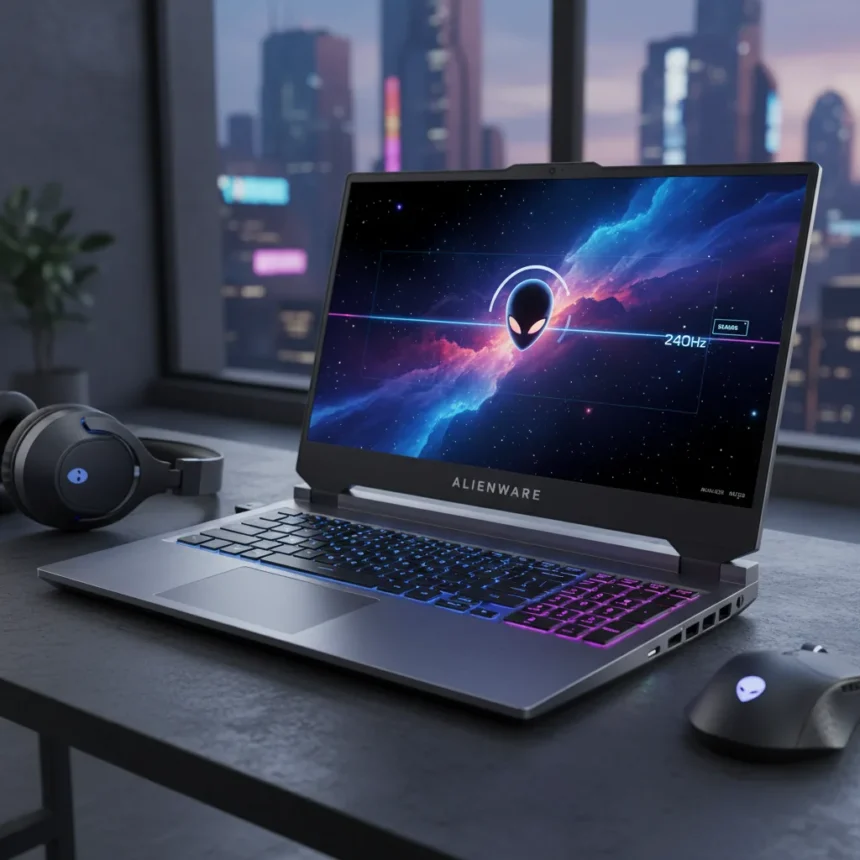
The Alienware 16 Area-51 OLED is a 16-inch gaming laptop that combines a new anti-glare OLED panel with Intel Arrow Lake-HX Refresh processors and configurable RTX 50-series GPUs, positioned as a high-end desktop replacement for enthusiasts willing to pay $2,999 and up. For years, Alienware’s premium gaming machines shipped with mediocre displays despite their flagship pricing. The 16 Area-51 OLED finally closes that gap.
Key Takeaways
- New 240Hz anti-glare OLED panel at 2560 x 1600 with 0.2ms response time replaces older 3ms IPS display
- Peak brightness jumps to 620 nits from 500 nits; previous IPS measured 515.8 nits in lab testing
- Intel Core Ultra 9 275HX and RTX 5080/5090 options deliver strong gaming performance, outpacing Razer Blade 16 in some benchmarks
- Design weighs 7.92 pounds with liquid teal color-shifting anodized shell and Cherry MX mechanical keyboard option
- Battery life remains poor at approximately 4 hours 10 minutes in testing
The Alienware 16 Area-51 OLED Display Finally Justifies the Price
The display upgrade is the story here. Alienware 16 Area-51 OLED ships with a 2560 x 1600 anti-glare OLED panel running 240Hz with a 0.2ms response time—a massive leap from the previous IPS model’s 3ms response time and 500-nit peak brightness. The new panel hits 620 nits, a 24 percent jump that matters in bright rooms and outdoors. In lab testing, the older IPS display measured 515.8 nits brightness with 81.6 percent DCI-P3 color gamut and Delta-E 0.21 accuracy. The OLED upgrade addresses the single biggest complaint about Alienware’s prior premium models: a display that felt like an afterthought.
That 0.2ms response time crushes competitors. The Razer Blade 16 boasts higher color gamut at 144.6 percent DCI-P3, but the Area-51 OLED’s brightness advantage and pixel response speed create a sharper, more responsive feel in fast-paced games. This is not a marginal improvement—it is a generational shift in what gamers expect from a $3,000 laptop display.
Performance Specs That Compete with Desktop Replacements
The Alienware 16 Area-51 OLED pairs that display with Intel Core Ultra 9 275HX processors and GPU options ranging from RTX 5060 to RTX 5090, with power allocations up to 175W for the GPU and 105W for the CPU under a 280W thermal ceiling. Memory goes up to 64GB DDR5-6400, and storage scales to 12TB using three 4TB M.2 SSDs in RAID 0 configuration, though single 2TB drives and PCIe 5.0 options exist.


In gaming benchmarks, the Area-51 OLED outperforms the Razer Blade 16 despite the Razer’s strong color gamut advantage, particularly when both systems use RTX 5090 GPUs. The machine supports DLSS 4, which gives it an edge in newer titles. The 96Whr battery is standard for this class, but the real weakness emerges in real-world testing: approximately 4 hours 10 minutes of battery life. That is poor for a laptop marketed as portable, even if the thermal and power ceiling claims remain unverified in hands-on thermal testing.
Design That Turns Heads but Weighs Heavy
The chassis features a liquid teal color-shifting anodized shell with a Gorilla Glass bottom window exposing the RGB fans underneath. It measures 14.37 x 11.41 x 1.12 inches and weighs 7.92 pounds—add another 2.2 pounds for the power adapter. For context, that makes it heavier than most 15-inch ultrabooks and barely portable for daily commuting. The per-key RGB keyboard with Cherry MX mechanical switches is a $50 upgrade, and the touchpad includes RGB lighting. A thermal shelf bump and diffused RGB light ring round out the aesthetic.


The port selection is comprehensive: three USB-A 3.2 Gen 1, two Thunderbolt 5, HDMI 2.1, SD card reader, combo headphone jack, and 2.5G Ethernet. An 8MP 4K HDR webcam with Windows Hello rounds out the connectivity. These specs read like a desktop replacement, and the design language reinforces that positioning—but the weight and battery life undermine claims of portability.
How Does the Alienware 16 Area-51 OLED Compare to Other Premium Gaming Laptops?
Against the Razer Blade 16, the Area-51 OLED trades color accuracy for brightness and response time. The Blade achieves 144.6 percent DCI-P3 versus the Area-51’s older IPS baseline of 81.6 percent, but the Area-51’s new OLED panel and superior pixel response time create a faster, brighter gaming experience. The ROG Strix Scar 16 measures only 457.2 nits brightness, making it dimmer than even the Area-51’s previous IPS panel. For raw gaming performance, the Area-51 edges ahead when equipped with RTX 5090, though both machines target the same audience: players who prioritize performance over portability.
The Alienware 18 Area-51, the larger sibling, receives identical CPU and GPU upgrades plus the same storage and port options, but it retains an IPS 300Hz display instead of the OLED. That makes the 16-inch model the better value if you want the OLED advantage without sacrificing too much desk real estate.
Is the Alienware 16 Area-51 OLED Worth Buying?
Yes, if you prioritize gaming performance and display quality over battery life and portability. The OLED panel is genuinely excellent, the CPU and GPU options scale to extreme performance, and the design stands out. The 4-hour battery life is a dealbreaker for road warriors, but for someone building a high-end gaming setup that occasionally moves between rooms or offices, the trade-off is acceptable. At $2,999 to $3,249 for tested configurations, the Area-51 OLED competes directly with the Razer Blade 16 and demands the same commitment to desktop-replacement gaming.


What is the response time on the Alienware 16 Area-51 OLED display?
The new OLED panel delivers a 0.2ms response time, compared to 3ms on the previous IPS display. This makes pixel transitions snappier in competitive games like first-person shooters and fast-paced action titles where milliseconds matter.
How much does the Alienware 16 Area-51 OLED cost?
Reviewed configurations range from $2,999 to $3,249, depending on GPU and CPU selection. High-end builds with RTX 5090 and maxed-out storage exceed $3,000.
Can you upgrade the keyboard to mechanical switches on the Alienware 16 Area-51 OLED?
Yes. Alienware offers a per-key RGB keyboard with Cherry MX mechanical switches as a $50 upgrade option over the standard keyboard.
The Alienware 16 Area-51 OLED represents the first time in years that Alienware has paired its premium gaming platform with a truly competitive display. The OLED panel, Arrow Lake-HX CPUs, and RTX 50-series options justify the premium pricing for enthusiasts who spend most of their time gaming at a desk. Just do not expect this machine to become your ultraportable travel companion—at nearly 8 pounds with 4 hours of battery, it is a desktop replacement in every sense of the term.
This article was written with AI assistance and editorially reviewed.
Source: Tom's Hardware