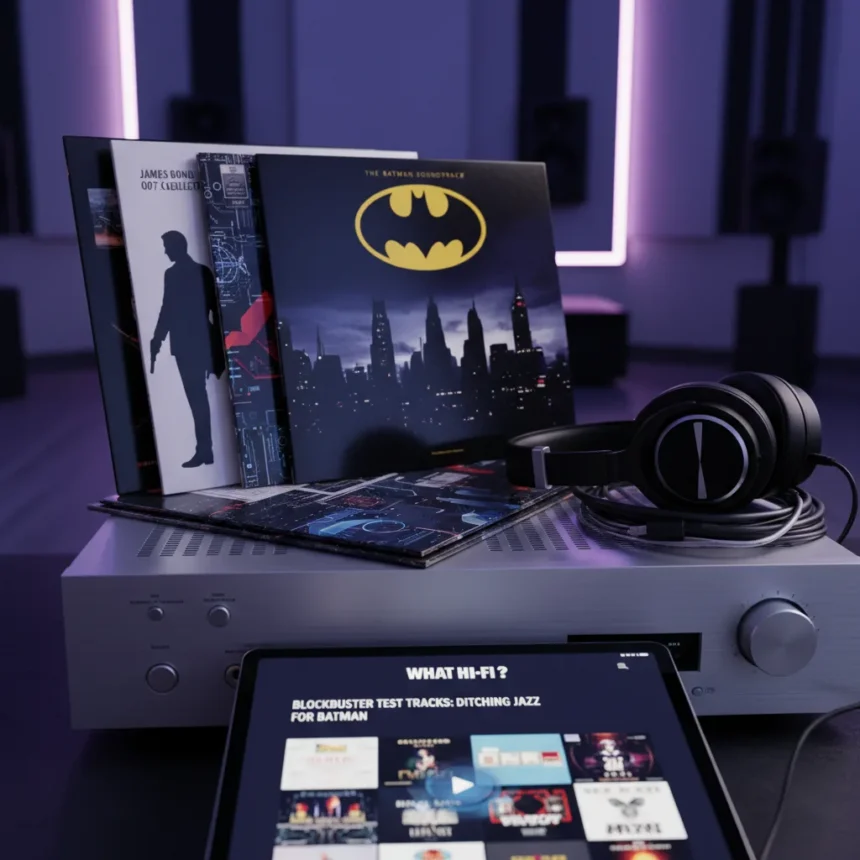
Blockbuster test tracks have become the new standard for evaluating hi-fi and streaming systems in May, replacing the classical and jazz staples that dominated test rooms for decades. What Hi-Fi’s monthly “Now Playing” series now features cinematic material tied to major superhero and spy franchises, selected specifically for their dynamic range, bass impact, and ability to expose weaknesses in audio equipment and streaming platforms.
Key Takeaways
- Blockbuster test tracks emphasize dynamic range and bass impact over traditional classical benchmarks.
- Superhero and spy-themed soundtracks now dominate monthly hi-fi testing rotations.
- High-quality streaming versions available on Tidal, Qobuz, and Spotify HiFi enable fair comparisons.
- Cinematic test material reveals equipment performance in ways standard jazz recordings cannot.
- Monthly rotation keeps test material fresh and tied to current cinema releases.
Why Blockbuster Soundtracks Beat Classical for Testing
Traditional test tracks—think solo piano or chamber orchestra recordings—reveal equipment limitations through subtlety. Blockbuster test tracks take the opposite approach. They assault audio systems with explosive dynamic swings, deep bass frequencies, and layered orchestration that expose processing artifacts, compression issues, and streaming bottlenecks immediately. A hi-fi system that handles Debussy flawlessly might stumble on a Hans Zimmer score packed with percussion, synthesizers, and spatial effects.
The shift reflects how modern listeners actually use streaming services. Nobody subscribes to Tidal or Qobuz to audition classical recordings anymore—they want to hear their favorite films and shows in the best possible quality. Testing with blockbuster material ensures that the equipment and platforms being reviewed perform where users actually care: with movies, trailers, and soundtrack albums tied to major releases. This alignment between test material and real-world use cases makes results more credible than abstract classical benchmarks.
Blockbuster Test Tracks and Streaming Quality Tiers
Not all streaming platforms deliver blockbuster test tracks equally. Spotify HiFi, Tidal, and Qobuz offer lossless or high-resolution versions of cinematic soundtracks, but bitrate, format, and dynamic range handling vary significantly. A Batman or Superman soundtrack streamed via standard Spotify compression sounds dramatically different from the same track on Qobuz’s lossless tier. This makes blockbuster test tracks ideal for stress-testing the audio quality claims that streaming services make.



The May selection deliberately targets material available across multiple platforms, ensuring that reviewers can conduct fair comparisons without relying on exclusive content. A track tied to a superhero blockbuster typically appears on every major streaming service within weeks of release, making it accessible for consistent, repeatable testing. This accessibility is crucial—if a test track exists only on one platform or in one format, reviewers cannot isolate whether performance differences come from the equipment or the stream itself.
From Classical Benchmarks to Cinematic Reality
The move toward blockbuster test tracks represents a philosophical shift in how hi-fi reviewers approach their work. Classical and jazz recordings emphasize tonal purity and instrumental separation—valuable metrics, but ones that disconnected test rooms from the actual listening habits of consumers. Superhero and spy soundtracks, by contrast, demand that equipment handle complex, densely layered mixes with aggressive dynamic compression, heavy bass, and spatial effects. These are the sonic challenges modern listeners face daily.



What Hi-Fi’s May blockbuster selections also tie into the broader entertainment calendar. When a major film releases or an awards season heats up, the soundtrack becomes culturally relevant, and readers are more likely to own or stream the material themselves. This creates a feedback loop: the test track is not some obscure reference recording but something the audience already knows and cares about. A reviewer’s assessment of how a hi-fi system handles a Batman or Superman theme instantly becomes relatable because readers have heard the same track on their own systems.
Practical Implications for Streaming Listeners
If you’re evaluating a new hi-fi setup or considering a streaming platform upgrade, blockbuster test tracks offer a practical starting point. Rather than hunting for obscure classical recordings, open your preferred streaming service and play a major soundtrack from a recent blockbuster. Listen for clarity in the dialogue, definition in the bass, and how the system handles sudden dynamic shifts. Does the bass hit hard without distorting? Do orchestral swells sound layered or compressed into a muddy wall of sound? These are the questions blockbuster material answers better than any classical standard.
The May blockbuster test tracks also serve as a reminder that streaming quality varies by platform and format. If you hear a difference between Spotify and Qobuz when playing a superhero soundtrack, that gap likely persists across your entire library. Blockbuster material makes these differences audible because cinematic mixes are engineered to reveal equipment strengths and weaknesses. A subtle difference in midrange clarity might be invisible in a solo piano recording but glaringly obvious in a densely orchestrated action sequence.
Can Blockbuster Soundtracks Replace Classical Standards?
Classical and jazz recordings remain valuable for specific testing purposes—they excel at revealing distortion, noise floor, and tonal balance in ways that blockbuster material cannot. However, as the primary testing material, they fail to represent how most listeners actually use their equipment. Blockbuster test tracks fill this gap by offering dynamic, complex, and culturally relevant material that challenges audio systems in realistic ways. The ideal test room probably uses both: classical recordings for technical benchmarking and blockbuster material for real-world performance assessment.


What Hi-Fi’s May selection demonstrates that the hi-fi testing industry is finally catching up to consumer behavior. Listeners care about how their systems perform with the content they actually stream: movies, shows, and soundtracks. Blockbuster test tracks acknowledge this reality and make equipment reviews more credible and actionable as a result.
What are the best streaming platforms for blockbuster test tracks?
Tidal, Qobuz, and Spotify HiFi all offer high-quality versions of major film soundtracks. Tidal and Qobuz provide lossless audio, while Spotify HiFi aims for CD-quality streaming. The best choice depends on your equipment capabilities and listening priorities—lossless platforms suit high-end systems, while Spotify HiFi offers a middle ground for casual listeners.
Why do blockbuster soundtracks reveal equipment flaws better than classical recordings?
Blockbuster test tracks combine aggressive dynamics, complex layering, and heavy bass that expose processing artifacts, compression issues, and bitrate limitations. Classical recordings emphasize subtlety, which reveals different flaws. Blockbuster material tests how equipment handles the sonic chaos of modern film mixing, making performance differences immediately obvious.
Should I use blockbuster test tracks to evaluate my own hi-fi system?
Yes. Play a major blockbuster soundtrack on your preferred streaming platform and listen for clarity, bass definition, and how the system handles dynamic shifts. If you hear significant differences between platforms or formats, that gap likely affects your entire listening experience across all content types.
The shift toward blockbuster test tracks reflects a maturation in hi-fi reviewing—one that finally aligns testing material with how people actually listen. Superhero and spy soundtracks are not replacing classical benchmarks entirely, but they are becoming essential tools for evaluating whether audio equipment and streaming platforms deliver on their performance promises. In May and beyond, blockbuster material is where real-world audio quality gets tested.
Edited by the All Things Geek team.
Source: What Hi-Fi?