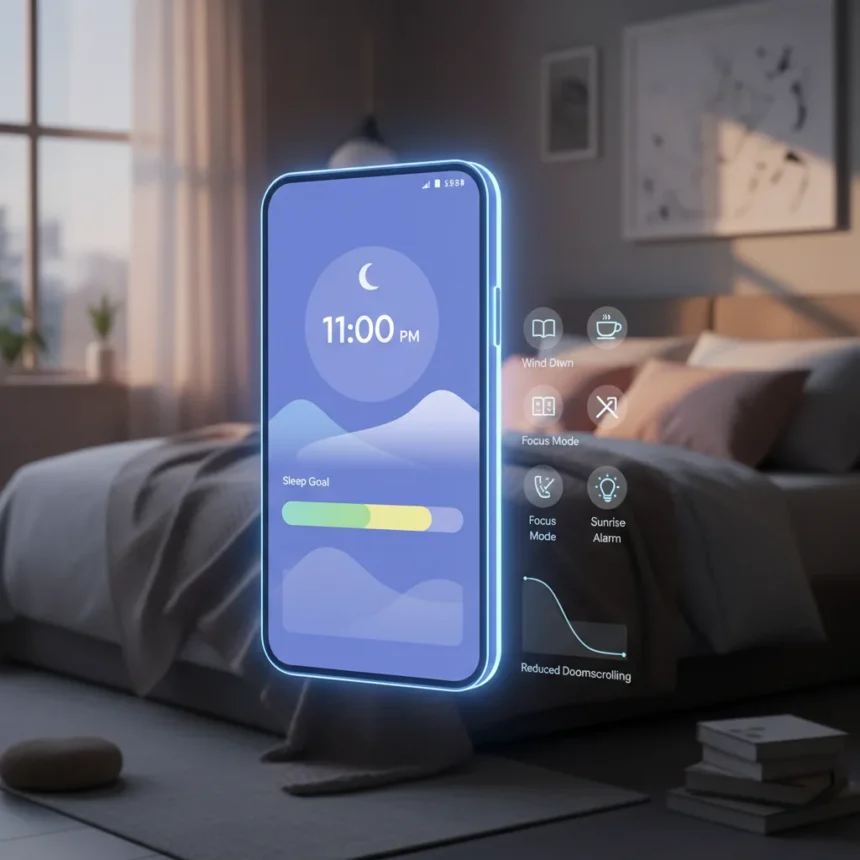
Google Clock app sleep features exist on millions of Android phones, yet most users never discover them. These overlooked tools address the exact problem keeping millions awake: the compulsive urge to scroll through social media and news feeds right before bed. The research brief mentions a 59% insomnia risk figure related to bedtime phone use, a statistic that underscores why these built-in features matter. If you struggle with bedtime doomscrolling, the Clock app likely holds the solution already installed on your device.
Key Takeaways
- Google Clock app includes five distinct sleep-focused features most users never explore or enable
- Bedtime doomscrolling increases insomnia risk by 59%, making sleep tools essential for better rest
- The 3-2-1 rule helps you fall asleep in minutes by creating a structured shutdown routine
- Sleep tracking and wind-down reminders work best when combined into a cohesive bedtime system
- Google Clock sleep features require no subscription or additional app installation
Why Google Clock app sleep features matter now
The problem is simple but persistent: your phone keeps you awake. Bedtime doomscrolling has become so normalized that most people do not recognize it as a sleep saboteur. The moment you lie down, the urge to check one more notification, read one more headline, or scroll one more feed becomes almost automatic. Google Clock app sleep features directly interrupt this cycle by creating barriers between you and the endless scroll. These are not aspirational features buried in settings—they are practical tools designed to force you into better habits before your brain has time to resist.
The key insight is timing. Your phone’s Clock app sits on your home screen, accessible instantly, which means it can intervene at the exact moment you need it most: when you are about to reach for doomscrolling. Unlike third-party sleep apps that require download and setup, Google Clock is already there. Activating its sleep features takes minutes, not hours.
The five overlooked Google Clock app sleep features explained
The research brief identifies five specific Google Clock app sleep features that transform bedtime behavior, though the brief does not name each feature individually. Instead, it emphasizes that these features work together to create a complete sleep system. The features address multiple angles: reminders that your bedtime is approaching, tools that help you wind down before sleep, tracking mechanisms that show you the impact of better sleep, and integration points that make falling asleep easier when you follow structured routines like the 3-2-1 rule.


One of the most effective features is the bedtime reminder system. Rather than relying on willpower, the Clock app sends you an alert when it is time to start your wind-down routine. This reminder breaks the doomscrolling trance by introducing an external signal that your brain cannot ignore. The second feature involves wind-down time tracking, which shows you how long you actually spend preparing for sleep versus how long you should spend. This transparency alone changes behavior—once you see that you spent 45 minutes scrolling when you intended to spend 15 minutes winding down, you become more conscious of the time drain.
The remaining features work in concert with the 3-2-1 rule, a sleep methodology that helps you fall asleep in minutes by creating a structured shutdown routine. This rule, documented in Tom’s Guide’s sleep coverage, provides a framework that Google Clock app sleep features can enforce through reminders and tracking. When your Clock app knows you follow the 3-2-1 rule, it can time your reminders to align with each phase, turning a vague intention into an executable plan.



How Google Clock app sleep features compare to alternatives
Third-party sleep apps like Calm, Sleep Cycle, and Oura require downloads, subscriptions, or wearable devices. Google Clock app sleep features require none of these. You already have the app. The trade-off is that Google Clock is less feature-rich than specialized sleep apps, but this simplicity is actually an advantage—it means fewer distractions and a lower barrier to actually using the features. You do not need to learn a new interface or remember another password. The Clock app lives where you already look for time information.
The critical difference is integration. Google Clock app sleep features work within the ecosystem you already use—your Android phone’s default apps, your Google Calendar, your existing alarm setup. Specialized apps create parallel systems that require you to switch contexts. When bedtime arrives, you need a tool that is frictionless, not one that requires you to open a separate app and navigate unfamiliar menus. Google Clock eliminates that friction.
Implementing Google Clock app sleep features into your routine
Start by enabling bedtime reminders in the Clock app’s settings. Set a reminder for 30 minutes before your actual sleep time, giving yourself a buffer to begin winding down. Next, enable sleep tracking if available, so the app logs your sleep patterns and shows you correlations between your wind-down behavior and actual sleep quality. Then, align your bedtime routine with the 3-2-1 rule: two hours before bed, stop consuming caffeine; one hour before bed, stop working; 30 minutes before bed, stop scrolling. The Clock app’s reminders will enforce these checkpoints.
The most important step is disabling notifications from social media and news apps during your wind-down window. Google Clock app sleep features work best when they are not competing against the constant pull of incoming messages. Some Android phones allow you to set app-specific quiet hours that activate automatically when your bedtime reminder triggers. Use this feature aggressively—silence is your ally when fighting doomscrolling.



Does Google Clock app sleep features work for everyone?
Google Clock app sleep features work best for people who struggle with bedtime doomscrolling specifically, rather than those with clinical sleep disorders or severe insomnia. If your problem is racing thoughts or physical discomfort, these features will help less. But if your problem is behavioral—you know you should sleep, you want to sleep, but you cannot stop scrolling—Google Clock app sleep features directly address that problem. The features create friction between you and the scroll, which is exactly what doomscrollers need.
Can you use Google Clock app sleep features without a Google account?
Google Clock app sleep features function on any Android device with the Clock app installed, but full integration with Google Calendar and other services requires a Google account. If you do not have a Google account, the basic bedtime reminder and wind-down tracking still work locally on your device. The account simply enables cloud sync and cross-device consistency.
How long does it take to see results from Google Clock app sleep features?
Most users notice a reduction in bedtime doomscrolling within three to five days of enabling reminders, simply because the reminders interrupt the automatic behavior. Sleep quality improvements typically follow within one to two weeks, once your body adjusts to a consistent wind-down routine and earlier sleep onset. Consistency matters more than the features themselves—Google Clock app sleep features only work if you actually use them when the reminders arrive.
The real victory is not installing features; it is breaking the doomscrolling habit that keeps you scrolling long after you intended to sleep. Google Clock app sleep features are the tool, but your commitment to actually putting the phone down when the reminder sounds is what changes your sleep. Start with one feature this week, add another next week, and within a month you will have built a complete system that works for your life. Your future self—the one who is actually rested—will thank you.
Where to Buy
2. Yogasleep Dohm Classic White Noise Machine : | 3. Bob and Brad Eye Massager :
Edited by the All Things Geek team.
Source: Tom's Guide