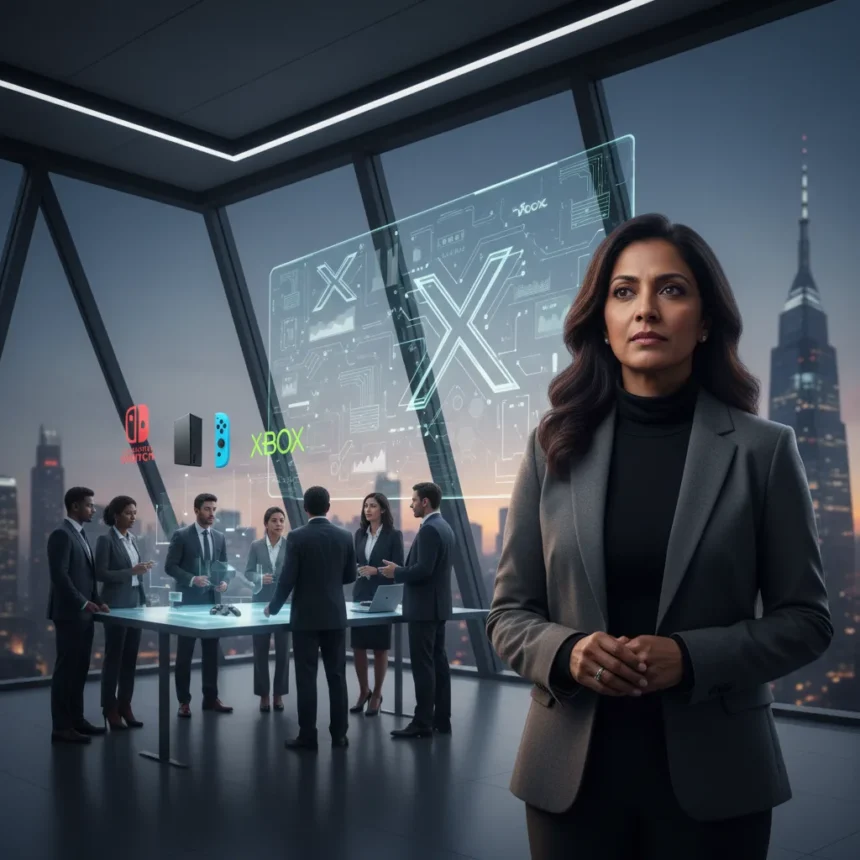
Xbox leadership changes are reshaping Microsoft’s gaming ambitions as the platform confronts a difficult earnings report and shrinking hardware market share. Asha Sharma, newly appointed CEO of Microsoft Gaming, is the executive architect of this overhaul, replacing Phil Spencer who retired on February 20, 2026. Her mandate is clear: reset Xbox’s brand, prove results over promises, and decide whether the console’s future is worth fighting for.
Key Takeaways
- Asha Sharma appointed CEO of Microsoft Gaming after Phil Spencer’s retirement in February 2026.
- Major departures include Sarah Bond as Xbox President; Kevin Gammill and Roanne Sones also leaving.
- Matt Booty promoted to Executive Vice President and Chief Content Officer under Sharma’s leadership.
- Sharma personally retired the “This is an Xbox” campaign, signaling immediate brand reset priorities.
- Sharma states “nothing is off the table” for revising Xbox strategy, including hardware future.
Why Xbox Leadership Changes Matter Right Now
The timing of Xbox leadership changes is not coincidental. Xbox is losing ground to PlayStation and Nintendo in the current console generation, a reality made stark by recent earnings results. Satya Nadella, Microsoft’s Chairman and CEO, backs Sharma’s appointment, stating he is “long on gaming and its role at the center of our consumer ambition”. Yet the endorsement masks a deeper strategic crisis: the traditional console business model that defined Xbox for two decades is no longer delivering results. Sharma’s appointment signals Microsoft is willing to question everything, including whether hardware remains central to its gaming future.
Sharma brings a different profile to the role than her predecessor. Her background centers on building platforms, aligning business models to long-term value, and scaling operations globally—skills honed in her previous role as President of CoreAI and experience at Instacart. This is not a traditional gaming executive. It is a platform strategist tasked with asking uncomfortable questions about where gaming fits in Microsoft’s broader consumer ecosystem.
Xbox Leadership Changes: Who’s In, Who’s Out
The Xbox leadership changes announced in February 2026 are sweeping. Sarah Bond, Xbox President, is departing. Kevin Gammill and Roanne Sones are also leaving the organization. Matt Booty, a veteran gaming executive, is promoted to Executive Vice President and Chief Content Officer, reporting directly to Sharma. This restructuring signals a shift away from hardware-focused leadership toward content and platform strategy.

Sharma has also brought in talent from her CoreAI network and external hires from companies like Instacart, suggesting Microsoft is importing operational and scaling expertise from outside traditional gaming. This is not a cosmetic reshuffle—it is a fundamental reimagining of how Xbox’s leadership operates. The departures of established gaming figures and arrival of platform-building specialists indicate Sharma intends to challenge existing assumptions about what Xbox should be.
Sharma’s Immediate Actions: Brand Reset and Fan Focus
Within weeks of her appointment, Sharma has already taken concrete action. She personally retired the “This is an Xbox” campaign because “it didn’t feel like Xbox,” according to a Microsoft statement. This is not a small decision. Brand campaigns represent millions in investment and strategic messaging. Sharma’s willingness to scrap it signals she is not bound by predecessor decisions or institutional inertia. She is leading a complete reset of how Xbox presents itself to the world.
Sharma has also prioritized delivering top-requested features to Xbox Insiders within one month of her appointment, demonstrating a commitment to listening to the fanbase rather than imposing top-down strategy. Her public statements emphasize this philosophy: “Xbox starts with its fans and will continue to grow”. This contrasts sharply with the perception that Xbox had drifted from its core audience in recent years. Whether this fan-first approach can reverse market losses remains to be seen, but it signals a different leadership mentality.
What “Nothing Is Off the Table” Really Means
Sharma’s most provocative statement is her promise that “nothing is off the table when it comes to revising Xbox’s strategy”. In the context of a struggling hardware business, this phrase carries weight. It could mean aggressive price cuts, a pivot toward game-pass-first strategy, deeper integration with cloud gaming, or even a fundamental rethinking of whether dedicated Xbox hardware remains a priority. The vagueness is intentional—Sharma is signaling openness to radical change while buying time to gather data and develop a new long-term plan.
She has stated that “finalizing the strategy will take time and data,” a deliberate pivot from the rapid-fire announcements that characterized previous Xbox leadership. This suggests Sharma will not rush into decisions. She will analyze market position, fan sentiment, and financial realities before committing to a new direction. For a platform losing market share, this cautious approach could be either wise or costly—the next 12 months will determine which.
The Broader Strategic Question
Xbox leadership changes are ultimately about answering one fundamental question: what is Xbox in 2026 and beyond? Is it a hardware platform competing with PlayStation and Nintendo? Is it a cloud and subscription service? Is it a content library accessible across devices? Sharma’s appointment suggests Microsoft is open to redefining the answer. Her statement that she will use her “expertise and the leaders that have the deep gaming depth around the table to help us grow the business and make sure that we have an incredible next 25 years” indicates a multi-year reset is underway.


The contrast with PlayStation and Nintendo is stark. Sony and Nintendo remain committed to their hardware platforms, investing heavily in exclusive games and innovation. Xbox, under Sharma, is questioning whether that model is right for Microsoft. This divergence could position Xbox as either a visionary pivot toward the future of gaming or a retreat from the console wars. Sharma’s leadership will determine which narrative prevails.
Is Asha Sharma the right choice to lead Xbox?
Sharma’s platform-building and scaling expertise are valuable assets for a company trying to reposition itself, but she lacks traditional gaming industry credentials. Her strength lies in operational alignment and long-term strategy, not in shipping games or managing gaming communities. Whether these skills transfer to an industry where fan loyalty and creative vision matter deeply remains unproven. However, Xbox’s previous approach clearly was not working—a fresh perspective may be exactly what the platform needs.
Will Xbox hardware survive under Asha Sharma’s leadership?
Sharma has stated a “renewed commitment to Xbox, starting with console which has shaped who we are,” suggesting hardware remains part of the strategy. However, her openness to revisiting all assumptions and the phrase “nothing is off the table” indicate that commitment is conditional on data and market performance. If hardware continues to underperform, do not expect Sharma to defend it for nostalgia’s sake.
What does the Xbox leadership shake-up mean for game releases?
The promotion of Matt Booty to Chief Content Officer suggests content strategy will be centralized under Sharma’s oversight. This could lead to more aggressive exclusive releases, changes to Game Pass strategy, or shifts in how Xbox approaches third-party relationships. No specific changes have been announced, but the restructuring signals content decisions will now flow through a different organizational structure than before.
Xbox leadership changes represent a genuine inflection point for Microsoft’s gaming division. Asha Sharma is not a caretaker—she is a strategist tasked with rebuilding a platform that lost its way. Whether she succeeds depends not on her background or Satya Nadella’s endorsement, but on whether her new strategy can reverse Xbox’s market losses and rebuild fan trust. The next 12 months will be telling. For now, Xbox is in reset mode, and that openness to fundamental change is both its greatest opportunity and its biggest risk.
Edited by the All Things Geek team.
Source: Windows Central