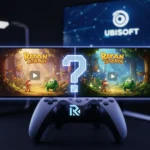
Rayman Legends Retold is getting a complete visual overhaul, and the artists behind it are making one thing crystal clear: not a single asset came from an AI generator. In an era when studios routinely lean on generative tools to accelerate production, this team is doing the opposite—hand-painting, hand-animating, and hand-crafting every element from scratch.
Key Takeaways
- Rayman Legends Retold uses zero AI; all art is handcrafted by the team.
- The project represents a deliberate rejection of generative tools in favor of traditional artistry.
- The stance comes amid growing industry debates over AI use in game development.
- Handcrafted visuals allow for distinctive style and creative control impossible with AI.
- The makeover preserves the original Rayman Legends while modernizing its visual presentation.
Why Rayman Legends Retold Chose the Hard Way
The decision to ban AI from Rayman Legends Retold is not accidental—it is deliberate philosophy. The artists have stated explicitly: “We don’t use AI in the project; everything is handcrafted”. This commitment means longer timelines, more labor, and zero shortcuts. Yet for a project reworking a beloved platformer, that constraint may be exactly the point. Handcrafted art carries intention. Every brush stroke, every frame of animation, every color choice reflects a human decision rather than a statistical probability generated by a machine learning model.
The original Rayman Legends, released over a decade ago, already possessed a distinctive visual identity—vibrant, expressive, and deeply personal. A remake that outsources its art to AI would betray that legacy. By insisting on handcrafted work, the Rayman Legends Retold team is signaling that they understand what made the original special and are refusing to dilute it for speed.
Rayman Legends Retold vs. The Original’s Artistic Legacy
Rayman Legends built its reputation on hand-drawn charm and meticulous animation. The original game’s art direction was a collaboration between human artists who understood character, movement, and visual storytelling. Rayman Legends Retold respects that foundation while modernizing the look for contemporary screens and expectations. The comparison matters because it shows the difference between updating a game and replacing it.

A remake that used AI-generated backgrounds, characters, or effects would technically still be Rayman Legends—same levels, same mechanics, same story. But it would not be the same artistic statement. Handcrafted work demands accountability. An artist’s name can be attached to a painting; a neural network’s output cannot. That accountability is what separates art from automation, and it is why the Rayman Legends Retold team’s stance resonates with players tired of seeing creative corners cut.
The Broader Meaning of Handcrafted Game Art
The Rayman Legends Retold artists are not alone in resisting AI, but they are notable for saying it so plainly. The gaming industry is fracturing into two camps: those embracing generative tools to speed production and reduce costs, and those doubling down on human craft as a selling point. For a fan-driven or indie remake project, the second path is more defensible. There is no quarterly earnings call demanding faster turnaround. There is only the commitment to make something worth making.
Handcrafted visuals also allow for quirks, inconsistencies, and personality that AI tends to sand away. A human artist might exaggerate a character’s expression, break a rule of perspective for emotional impact, or introduce a visual joke that serves no mechanical purpose. These moments are what players remember. They are also what AI struggles to produce on demand, because they require taste, context, and intent rather than pattern-matching.
What This Means for Rayman Legends Retold’s Reception
The explicit rejection of AI is a marketing asset and a creative statement rolled into one. It tells players that the team believes in the work enough to do it the hard way. It also sets expectations—if the visuals disappoint, the excuse cannot be “we were limited by our tools.” The handcrafted approach puts the artistic burden squarely on the creators, which is exactly where it should be.
For fans of the original Rayman Legends, this stance offers reassurance. The remake is not a cash grab or a cynical update. It is a love letter built by people who care enough to refuse the easy path. Whether that commitment translates to a finished product that justifies the effort remains to be seen, but the intent is clear.
Is Rayman Legends Retold an official Ubisoft project?
The research material does not confirm whether Rayman Legends Retold is an official Ubisoft-sanctioned remake or a fan-led project. The article focuses on the artists’ statements about their handcrafted approach rather than the project’s official status or commercial nature.

When is Rayman Legends Retold releasing?
No release date or launch window is provided in the available source material. The project’s timeline and platform availability have not been disclosed in the statements from the artists.
How long does a handcrafted game remake typically take?
The research material does not specify timelines for Rayman Legends Retold or provide general benchmarks for handcrafted remake projects. Production schedules depend heavily on team size, scope, and resources.
The Rayman Legends Retold artists are betting that players still value craftsmanship over convenience. In a gaming landscape increasingly dominated by AI-assisted workflows, that bet feels like a small act of rebellion—one that honors both the original game and the idea that some things are worth doing by hand.
Edited by the All Things Geek team.
Source: TechRadar