
The Steam Controller has loyal fans, but the best PC gamepads available today outperform it in one area that competitive gamers cannot ignore: polling rate. While Valve’s controller remains a solid choice for many players, a growing lineup of alternatives delivers faster input response that makes a measurable difference in fast-paced titles.
Key Takeaways
- Twelve leading PC gamepads feature higher polling rates than the Steam Controller
- Polling rate directly impacts input latency in competitive games
- Price is not the deciding factor—premium and budget options both beat Steam Controller specs
- Hall Effect sensors and TMR technology represent the current standard in controller innovation
- Choosing the right gamepad depends on your game genre and personal preference, not just raw specifications
What Makes Polling Rate the Key Differentiator
Polling rate measures how often a controller communicates its input state to your PC, measured in hertz (Hz). A higher polling rate means faster, more responsive input transmission—critical for fighting games, shooters, and competitive multiplayer titles where milliseconds determine victory. The Steam Controller’s polling rate falls behind what modern alternatives deliver, making this the single most important specification where competitors pull ahead.
Gamers chasing competitive edge prioritize polling rate above price point or brand loyalty. This shift reflects a broader industry trend where input latency has become as important as display refresh rate or mouse DPI in determining competitive viability. Controllers with superior polling rates reduce the gap between your button press and the game’s response, translating to faster reaction times in high-stakes matches.
Why Best PC Gamepads Matter More Than Ever
The best PC gamepads have evolved beyond the Steam Controller’s design philosophy. Where Valve focused on trackpad innovation and customization depth, competitors have zeroed in on sensor technology and response speed. This reflects what PC gamers actually demand: predictable, lag-free input that works across every title without extensive configuration.

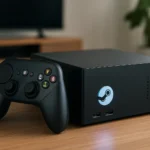
Modern controllers increasingly adopt Hall Effect sensors and newer TMR (tunneling magnetoresistance) technology, which detect stick movement without physical contact. These eliminate stick drift—the gradual loss of precision that plagued older controllers—and maintain consistent performance across thousands of hours of use. The Steam Controller’s mechanical design, while innovative, lacks the durability advantages these sensor technologies provide.
Best PC Gamepads vs Steam Controller: The Polling Rate Gap
Twelve leading controllers now ship with polling rates that exceed the Steam Controller’s specification. This is not a marginal improvement—the difference translates directly to input latency that players feel in real matches. Controllers designed for competitive gaming have made polling rate a baseline requirement rather than a premium feature, forcing all manufacturers to prioritize this metric.
The competitive landscape has shifted dramatically. Gamers no longer accept trade-offs between input speed and feature depth. The best PC gamepads deliver both fast polling rates and rich customization, making the Steam Controller’s slower response feel noticeably sluggish by comparison. This gap matters most in genres where split-second timing determines outcomes: fighting games, rhythm games, and fast-paced shooters.
Should You Still Consider the Steam Controller?
The Steam Controller remains viable for specific use cases. Players who value its trackpad for navigating menus, its extensive customization options through Steam Input, or its unique design may find its slower polling rate acceptable. Casual gamers playing story-driven titles, strategy games, or turn-based games won’t notice the input latency difference.
However, if you play competitive multiplayer games or demand the fastest possible input response, the best PC gamepads offer a measurable advantage. The choice ultimately depends on your priorities: innovation and customization versus speed and durability. For most modern PC gamers, the polling rate advantage of competing controllers justifies the switch.
What Should You Look for in a PC Gamepad
Polling rate is essential, but not the only factor worth considering. Look for controllers featuring Hall Effect sensors or TMR technology to avoid stick drift entirely. Check compatibility with your preferred games—some titles have better controller support than others. Consider the ergonomics of the grip, the layout of buttons, and whether you prefer symmetrical or offset stick placement.

Price should not be your primary decision driver. The best PC gamepads span a wide range of costs, and premium pricing does not guarantee better performance. Mid-range controllers often deliver the same polling rate and sensor technology as expensive options, making them smarter purchases for budget-conscious gamers.
FAQ
What polling rate does the Steam Controller have?
The Steam Controller operates at a lower polling rate than modern competitors, which is why twelve alternative gamepads outperform it in this specific metric. The exact specification varies by source, but the gap is significant enough that competitive gamers notice the difference in input latency.
Do you really need a high polling rate gamepad for casual gaming?
No. Casual players, story-driven game enthusiasts, and those playing turn-based or strategy titles won’t perceive the input latency difference between the Steam Controller and faster alternatives. High polling rate becomes critical only in competitive multiplayer and fast-action genres where reaction time matters.
Are Hall Effect sensors worth the extra cost?
Hall Effect sensors eliminate stick drift and maintain precision longer than mechanical sticks, making them a worthwhile investment if you play for hundreds of hours. They pay for themselves through durability, though budget gamers can find adequate controllers without this feature.
The best PC gamepads have moved beyond the Steam Controller’s era of design innovation into an age of raw performance optimization. Polling rate has become the defining metric separating controllers worth buying from those worth skipping. Whether you need that speed advantage depends entirely on what games matter most to you—but for competitive players, the choice is clear.
Where to Buy
RazerRazer Wolverine V3 Pro 8K (8000Hz)$199.99shop now | 5% OFFGameSirGameSir Cyclone 2 (1000Hz)$47.33$49.83shop now | 8Bitdo8BitDo Ultimate 2 Wireless (1000Hz)$59.99shop now | 30% OFFXboxXbox Elite Series 2 (1000Hz)$139$199.99shop now | 18% OFFSCUFSCUF Valor Pro (1000Hz)$89.99$109.99shop now
Edited by the All Things Geek team.
Source: Tom's Guide