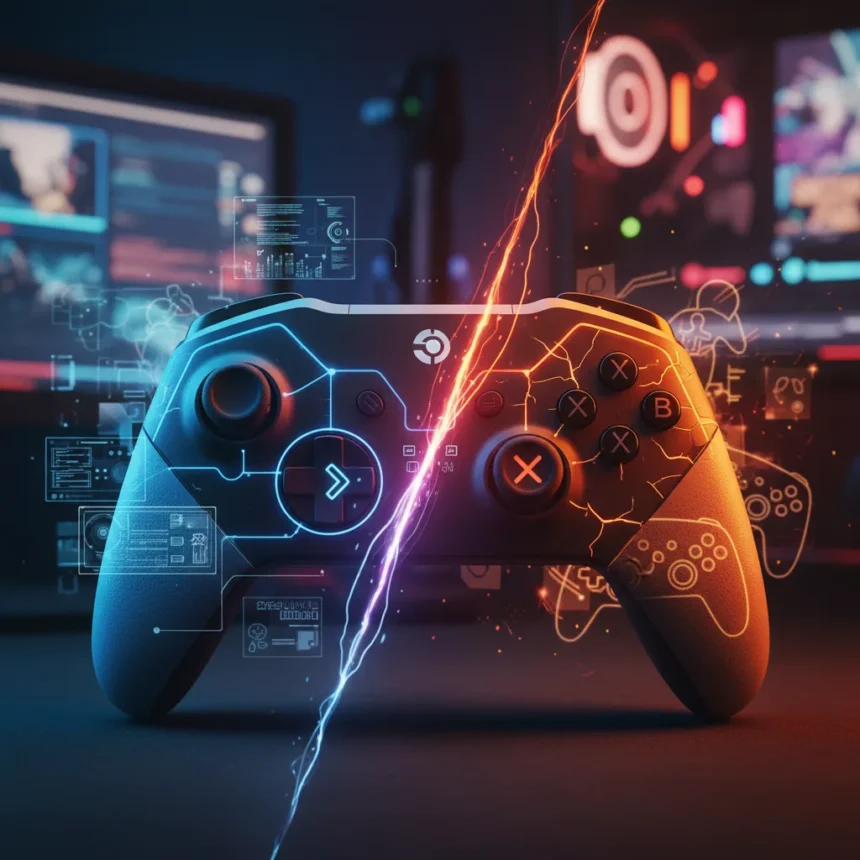
Steam Controller reviews are in, and they reveal a peripheral that excels where traditional gamepads fail but stumbles where it matters most for casual players. Valve’s trackpad-based design sparked genuine enthusiasm from critics willing to invest time in configuration, yet exposed a fundamental tension: revolutionary input methods demand revolutionary patience.
Key Takeaways
- Dual pressure-sensitive trackpads deliver mouse-like precision for FPS and strategy games on PC.
- Deep software customization via Steam allows game-specific control profiles, unmatched by competitors.
- Reviewers scored it 8-9/10 but noted steep learning curve and poor default configurations.
- Launched November 10, 2015, at $49.99 USD standalone; now discontinued but available used for $20-50.
- Excels in Counter-Strike and couch co-op but struggles with racing sims and platformers requiring analog sticks.
Why Steam Controller Reviews Praise Its Trackpad Design
The Steam Controller’s dual trackpads represent Valve’s most controversial bet on PC gaming input. Polygon awarded it 8/10, with a reviewer stating, “I can’t imagine playing my PC games with anything else” after extended use, praising the trackpad’s ability to mimic mouse input with precision. PC Gamer went further, scoring it 9/10 and calling it “the most customizable gamepad ever made, and it works brilliantly for PC gaming.” The Verge gave 4/5 stars, concluding “Valve has finally made a controller that feels right at home on the PC.” These scores reflect a genuine achievement: pressure-sensitive trackpads that respond to subtle input variations, delivering competitive-grade accuracy in first-person shooters without requiring a keyboard and mouse setup on a couch.
What separates the Steam Controller from competitors like the Xbox One Controller or PlayStation DualShock 4 is not ergonomics but ecosystem integration. The Xbox One Controller prioritizes console comfort and traditional analog sticks, making it superior for couch gaming on consoles but inferior for Steam library titles demanding mouse-like precision. The DualShock 4 offers better analog stick feedback but lacks trackpads entirely and provides minimal Steam-specific customization. The Steam Controller inverts these priorities: it sacrifices immediate ergonomic familiarity to unlock PC gaming potential competitors simply cannot match. IGN noted that “once you configure it, the Steam Controller handles PC games better than a keyboard and mouse in many cases,” highlighting the critical role of software customization in unlocking its hardware advantages.
The Customization Advantage Steam Controller Reviews Emphasize
Steam Controller reviews consistently highlight customization as its defining strength. Valve’s software allows players to create game-specific control profiles, remapping buttons, adjusting trackpad sensitivity, and even assigning macros—capabilities that Razer’s Wolverine and Logitech F710 simply do not offer at the same depth. This flexibility transforms the Steam Controller from a generic gamepad into a tool tailored to individual titles. A player can configure Counter-Strike for competitive aiming, then switch profiles for a turn-based RPG where button combos matter more than stick precision. No competitor integrates this level of per-game customization into the OS itself.

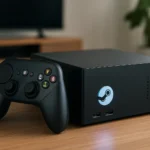
However, Steam Controller reviews also expose the dark side of this power: default configurations are notoriously poor. Players receive a controller that feels alien out of the box, requiring 20-30 minutes of tweaking before it becomes usable. This barrier to entry separates enthusiasts from casual gamers. Reviewers who spent time configuring profiles raved about the results; those expecting plug-and-play functionality reported frustration. The Verge and PC Gamer both acknowledged this trade-off, noting that the learning curve is steep but the payoff is genuine for players willing to invest effort.
Where Steam Controller Reviews Reveal Its Weaknesses
Not every game suits the Steam Controller. Racing simulations and platformers—genres demanding analog stick precision and spring-return feedback—exposed the trackpad’s limitations. A trackpad cannot replicate the tactile center position of a traditional stick, making gradual steering adjustments in racing games feel imprecise. Platformers requiring split-second directional input also suffered. Reviewers noted these genres as the controller’s weak points, where a traditional gamepad like the Xbox One Controller remains superior. The Steam Controller is not a universal solution; it is a specialist tool optimized for mouse-driven PC games played from the couch.
Pricing and availability also shaped the Steam Controller’s market impact. Launched November 10, 2015, at $49.99 USD standalone, it seemed affordable until bundled with Steam Machine consoles at $449 USD, signaling Valve‘s broader ecosystem bet. The controller remained available through Steam, Best Buy, and Amazon across US, UK, and EU markets, priced around £40-50 GBP in Europe at launch. Valve discontinued the controller in 2019, but used and refurbished units still circulate for $20-50 USD as of 2026, making it accessible to curious players unwilling to pay full retail.
How Steam Controller Reviews Compare to Competitors
The competitive landscape matters. The Xbox One Controller dominates comfort and universal compatibility—it works on PC, Xbox, and Android with zero configuration. But it lacks trackpads and deep Steam integration, making it a compromise device. The PlayStation DualShock 4 offers superior build quality and analog stick feedback, yet provides no trackpad alternative and minimal customization for PC gaming. Razer’s Wolverine targets pro gamers with programmable buttons and wired stability, but it costs significantly more and sacrifices wireless convenience. The Logitech F710 is the budget wireless option, yet it has no trackpads and no Steam-specific features. None of these controllers offer the combination of wireless connectivity, dual trackpads, and per-game software customization that reviewers found compelling in the Steam Controller.
Is the Steam Controller Still Worth Buying Today?
The Steam Controller’s value depends entirely on your game library. If you play FPS titles, strategy games, or couch co-op experiences on PC, the trackpad design delivers precision no traditional controller matches. Reviewers who played Counter-Strike and similar competitive games found the investment worthwhile. If your library skews toward racing games, platformers, or action titles requiring instant analog stick response, the Steam Controller will frustrate you. The 2015 launch date also means the hardware is aging—wireless reliability and button durability may degrade on used units. For new players, the steep learning curve remains a barrier. The controller demands configuration literacy and patience that casual gamers often lack.
Does the Steam Controller work with all PC games?
The Steam Controller works with any PC game through Steam’s Big Picture Mode, but not all games benefit equally. FPS and strategy titles shine with trackpad precision. Racing and platformer games struggle with trackpad steering. Reviewers emphasized that the controller excels in games designed with mouse input in mind, but traditional console-style games may feel awkward without proper configuration.

What makes the Steam Controller different from the Xbox One Controller?
The Steam Controller features dual pressure-sensitive trackpads instead of traditional analog sticks, enabling mouse-like precision for PC gaming. The Xbox One Controller prioritizes ergonomic comfort and console compatibility. The Steam Controller integrates deeply with Steam’s software for per-game customization, while the Xbox One Controller offers universal plug-and-play simplicity. For couch gaming on PC, the Steam Controller’s trackpads deliver competitive accuracy; for console-style games, the Xbox One Controller’s familiar layout wins.
Can you use the Steam Controller wirelessly?
Yes, the Steam Controller connects wirelessly via USB dongle, allowing couch gaming without cable constraints. Reviewers praised this wireless flexibility as essential for living room PC gaming. The dongle uses 2.4 GHz wireless, providing reliable range for typical living room distances.
Steam Controller reviews ultimately capture a product caught between innovation and pragmatism. Valve built a controller that genuinely reimagines PC gaming input, earning 8-9/10 scores from critics willing to embrace its learning curve. Yet those same reviews expose why it never became mainstream: revolutionary hardware demands revolutionary commitment from users. For FPS enthusiasts and strategy gamers seeking couch precision, the trackpad design remains unmatched. For everyone else, traditional controllers remain the safer choice. The Steam Controller is not a universal upgrade—it is a specialist tool that rewards configurators and frustrates those seeking simplicity.
Edited by the All Things Geek team.
Source: Tom's Guide