The Valve Steam Controller is a PC gaming peripheral launched around late 2015, priced at $99, designed to bridge the gap between traditional console controllers and mouse-keyboard input for living-room gaming on Windows, macOS, Android, iOS, and SteamOS. Rather than mimicking the Xbox 360 pad, Valve positioned it as a mouse-keyboard replacement for genres where precision pointing matters. That vision was bold. The execution, however, proved too unconventional for mainstream adoption.
Key Takeaways
- Sold over 500,000 units within seven months of launch, indicating early enthusiasm
- Featured dual trackpads, one analog stick, gyroscope, and extensive Steam Input customization for different games and genres
- Priced at $99, more expensive than PS5, Xbox, and Nintendo Joy-Con controllers
- Discontinued by Valve; remaining inventory liquidated at $5 per unit
- Excelled as a mouse-keyboard alternative for RTS, city builders, and 4X games, not as a standard gamepad substitute
The Trackpad Gamble: Innovation or Overcomplexity?
The Valve Steam Controller’s defining feature was its pair of touch-sensitive trackpads replacing the dual analog sticks found on every mainstream controller. This choice reflected Valve’s conviction that PC gaming from the sofa demanded more than console conventions. Trackpads enabled precise cursor movement for real-time strategy, city builders, and turn-based games where clicking UI elements matters more than analog stick precision. For players accustomed to mouse-and-keyboard control schemes, this made sense. For everyone else, it felt alien.
Valve backed the trackpad design with a single analog stick on the left side, traditional ABXY buttons, D-Pad, dual triggers, dual bumpers, and motion controls via gyroscope. This hybrid layout tried to satisfy multiple input philosophies at once—and satisfied none completely. The trackpad could replicate mouse movement, but it required learning entirely new muscle memory. A standard controller player picking up the Steam Controller faced a learning cliff, not a learning curve.
Steam Input: Customization That Demanded Mastery
Where the Valve Steam Controller truly distinguished itself was in software depth. Steam Input, Valve’s configuration layer, allowed users to create action sets—separate control schemes that switched context-sensitively within the same game. In Just Cause 3, for example, you could map one configuration for running and another for flying, with the controller automatically switching between them. Desktop configuration support meant you could navigate Windows, launch applications, and browse from the couch without touching a keyboard. Rumble recreation, cross-game control schemes, and non-Steam game support rounded out a feature set that no competing controller matched.

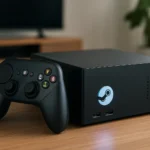
This customization depth was also the Valve Steam Controller’s greatest weakness. It required users to invest time learning Steam Input’s interface and understanding what each trackpad gesture, trigger sensitivity curve, and action set could accomplish. For casual players, the barrier to entry was prohibitive. For enthusiasts willing to tinker, it unlocked possibilities that standard controllers simply couldn’t match. The controller worked with demanding titles like Doom and Dark Souls III at launch, and even supported VR use cases in Game Theater Mode, such as acting as a virtual steering wheel. Yet adoption remained limited.
Why Trackpads Lost to Dual Sticks
The Valve Steam Controller’s fundamental problem was positioning. Valve explicitly stated it was not competing with the Xbox 360 pad—it was a mouse-keyboard replacement. That message, however accurate, confused the market. Consumers saw a $99 controller and compared it to cheaper alternatives like the PS5 DualSense, Xbox Series X controller, and Nintendo Joy-Cons, all priced lower and offering immediately familiar dual-stick layouts. For players who wanted a traditional gamepad experience, the Steam Controller was an expensive detour.
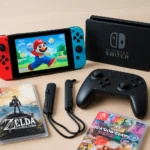
Meanwhile, for players who genuinely wanted a mouse-keyboard alternative for sofa-based RTS and strategy gaming, the trackpad learning curve and reliance on Steam Input mastery created friction. The controller was never quite the right tool for either audience. It occupied an uncomfortable middle ground between console gaming and PC gaming, failing to dominate either space. Sales of 500,000 units within seven months showed early interest, but that momentum didn’t sustain. Valve eventually discontinued the controller, selling remaining inventory at $5 per unit—a symbolic admission of defeat.
The Lesson for PC Gaming Hardware
The Valve Steam Controller’s legacy is instructive. Innovation in input design requires either a massive installed base willing to adapt (like Nintendo’s motion controls with the Wii) or a crystal-clear use case where the new design is objectively superior (like touchscreens on phones). The Steam Controller had neither. It was innovative without being necessary, flexible without being intuitive, and ambitious without achieving critical mass adoption.
Valve’s subsequent controller designs, including prototypes spotted in SteamVR data and the controls built into the Steam Deck, moved toward more conventional dual-joystick layouts with added back paddles and trackpads as supplementary features rather than primary input. This suggests Valve itself learned that unconventional input philosophy must be paired with undeniable practical advantage to succeed in the mainstream market.
Is the Valve Steam Controller worth buying today?
No. The Valve Steam Controller is discontinued, and finding one at retail is difficult. Even if you locate used inventory, the controller’s learning curve and reliance on Steam Input customization make it impractical for most players. Modern alternatives like the Xbox Series X controller or DualSense offer better ergonomics and broader game support for standard gameplay.

What made the Valve Steam Controller different from other PC controllers?
The dual trackpads, gyroscope, and Steam Input’s action sets gave the Valve Steam Controller capabilities that standard controllers lacked. It could function as a mouse-keyboard replacement for strategy games and desktop navigation from the sofa. No competing controller offered this flexibility, though the complexity required to unlock it deterred casual users.
Did the Valve Steam Controller work well for FPS and MOBA games?
Not particularly. For fast-paced shooters and MOBAs, traditional dual analog sticks and a mouse-keyboard setup remain superior. The Valve Steam Controller’s trackpad design was optimized for pointing and clicking, not for the rapid stick-flicking required in competitive FPS and MOBA titles. It supported these genres but didn’t excel in them.
The Valve Steam Controller remains a fascinating case study in hardware ambition meeting market reality. It proved that innovation alone doesn’t guarantee adoption—clarity of purpose and accessibility matter just as much. For a niche audience of strategy game enthusiasts and sofa-based PC gamers, it delivered genuine value. For everyone else, it was a well-intentioned experiment that arrived too early and asked too much of its users.
Where to Buy
$226.97 at Amazon | $485.78 at Amazon | 81 Amazon customer reviews
Edited by the All Things Geek team.
Source: Tom's Hardware