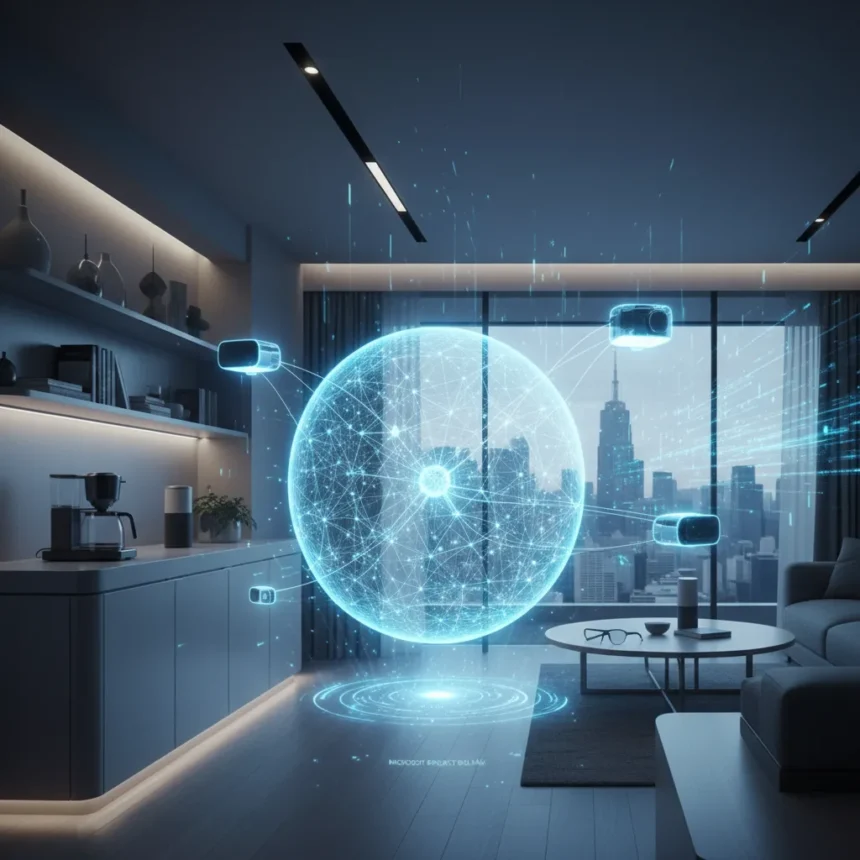
Microsoft Project Solara is an AI agent platform designed to move artificial intelligence beyond traditional personal computers and into real-world devices and environments. The project represents a fundamental shift in how Microsoft envisions computing—not as something confined to a laptop or desktop, but as intelligence embedded in everyday objects and ambient displays. Rather than treating AI as a PC-centric tool, Solara positions AI agents as active participants in physical spaces, responding to user needs without requiring a traditional computer interface.
Key Takeaways
- Microsoft Project Solara is an AI agent platform that breaks AI out of traditional PC environments
- The platform has been demonstrated on smart display devices and wearable smart badges, not laptops
- Microsoft is also developing a Surface AI dev desktop for developers who prefer non-laptop hardware
- Solara represents a shift toward ambient computing and always-present AI interfaces
- The project frames AI agents as the potential next evolution beyond the personal computer
Where Microsoft Project Solara Fits in the Ambient Computing Shift
The core idea behind Microsoft Project Solara is that AI should not live exclusively on your laptop or desktop. Instead, the platform enables AI agents to operate continuously in physical environments, accessible through multiple device types rather than a single computer. Microsoft demonstrated Solara on an Echo Show-style smart display and a smart key badge, two form factors that represent the opposite of traditional PC computing. These ambient devices stay in place or travel with you, constantly available and context-aware, rather than requiring you to open a laptop and launch an application.
This approach addresses a real limitation of PC-centric AI. When artificial intelligence is bound to your computer, it is only accessible when you are actively using that machine. An AI agent embedded in a smart display in your home, or worn as a badge, can operate continuously and respond to your needs in real time. The distinction matters because it changes what AI can do—it becomes less of a tool you use and more of an ambient presence that works alongside you.
Microsoft Project Solara and the Hardware Ecosystem
Microsoft is not treating Solara as software alone. The company is simultaneously developing a Surface AI dev desktop, indicating that the broader strategy includes custom hardware designed specifically for AI-native workflows. This is a significant signal: Microsoft is not just announcing an AI platform and expecting existing devices to run it. Instead, the company is building hardware from the ground up to support AI agents in ways traditional PCs were not designed for.


The Surface AI dev desktop suggests that Microsoft recognizes developers need different tools to build and test AI agents than what a conventional laptop provides. Whether this device becomes a consumer product or remains a developer tool, it underscores that Solara is part of a larger hardware-software ecosystem. Microsoft is betting that the future of computing requires purpose-built devices, not just software updates to existing form factors.
How Microsoft Project Solara Compares to Traditional PC Computing
The key difference between Microsoft Project Solara and traditional computing is presence and accessibility. A PC sits on your desk and waits for you to interact with it. An AI agent running on Solara-compatible devices is always present, always listening, and always ready to act. This is not just a software difference—it is a fundamental architectural shift. Traditional PCs are user-initiated: you open an application, type a command, and get a response. AI agents on Solara are environment-initiated: they observe your context and respond proactively.



This distinction also changes the relationship between user and machine. With a PC, you are clearly in control—you decide when to use the computer and what to ask it. With ambient AI agents, the relationship becomes more collaborative and continuous. The agent can suggest actions, anticipate needs, and operate in the background. For some users, this will feel like genuine assistance. For others, it will feel intrusive. Microsoft Project Solara’s success will depend partly on getting that balance right.
Is Microsoft Project Solara a Real Product or a Research Project?
Based on available information, Microsoft Project Solara is currently a demonstrated platform and announcement rather than a finished consumer product. The company has shown working prototypes on smart displays and badges, which indicates the technology is real and functional. However, no verified launch date, pricing, or broad availability details have been announced. This is typical for emerging AI platforms—Microsoft is publicly staking its claim to the ambient computing space while still developing the full ecosystem.
The distinction matters because it shapes expectations. Solara is not something you can buy today. It is a direction Microsoft is pursuing, backed by working hardware and software demonstrations. For developers and enterprises interested in AI agents, the project signals where Microsoft is investing. For consumers, it is a preview of what might arrive in future devices.
FAQ
What devices can run Microsoft Project Solara?
Microsoft has demonstrated Project Solara on Echo Show-style smart displays and smart key badges. These represent the initial form factors, though the platform is designed to work across multiple device types beyond traditional computers. Broader device support will likely expand as the platform matures.



Is Microsoft Project Solara available to buy now?
No verified launch date or pricing for Microsoft Project Solara has been announced. The platform is currently in the demonstration phase, with working prototypes shown on select devices. Consumer availability remains unconfirmed.
How does Microsoft Project Solara differ from other AI assistants?
Microsoft Project Solara is designed as an ambient AI agent platform that operates continuously across multiple devices, rather than as a chatbot confined to a single application or computer. The focus is on environmental intelligence and proactive assistance rather than user-initiated queries.
Microsoft Project Solara represents a genuine shift in how the company thinks about computing’s future. Rather than asking how to make AI work better on existing PCs, Microsoft is asking what computing looks like when AI is ambient, always present, and embedded in everyday objects. Whether this vision becomes mainstream depends on execution, developer adoption, and whether users actually want AI agents operating continuously in their physical spaces. For now, Solara is the clearest signal yet that the PC-centric era of computing is ending, and the ambient AI era is beginning.
Edited by the All Things Geek team.
Source: TechRadar