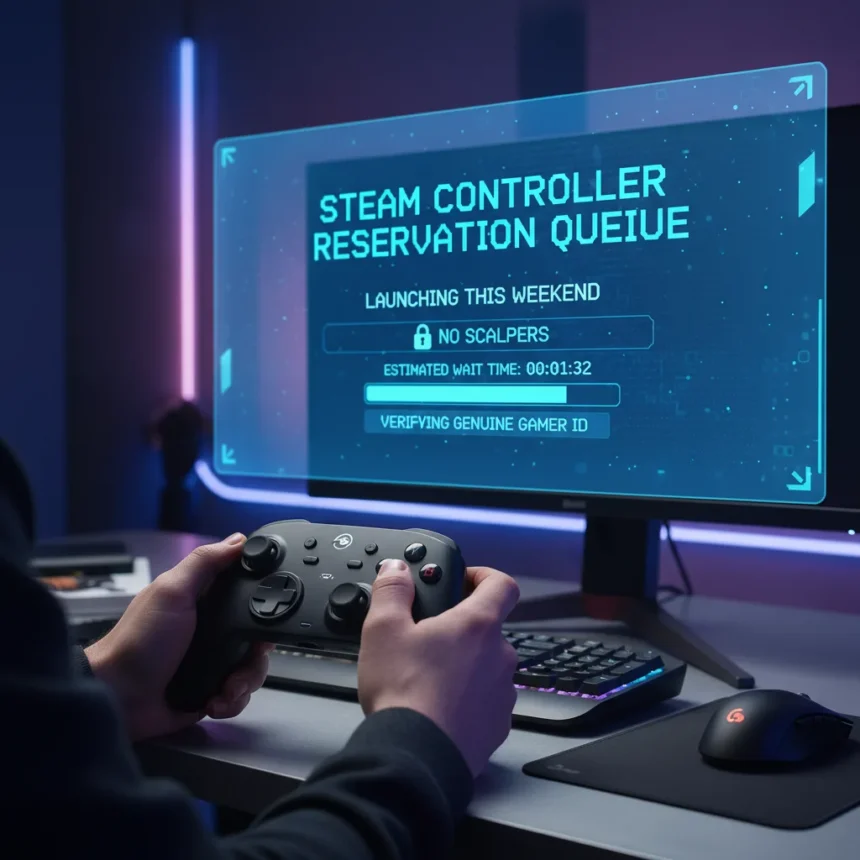
Valve is opening a Steam Controller reservation queue this weekend to combat resellers who have been buying up inventory and flipping units on secondary markets at inflated prices. The move marks Valve’s direct response to scalping that has plagued the Steam Controller launch, with units disappearing from retail within hours and reappearing on eBay at two to three times the manufacturer’s suggested retail price.
Key Takeaways
- Steam Controller reservation queue opens this weekend via Steam client or website
- MSRP set at $49.99 USD; reservation system prevents bulk purchases by resellers
- Valve implements purchase limits per account and IP checks to deter scalping
- Queue notifies users when stock is available; purchases must complete within 72 hours
- Steam Controller features dual trackpads, haptic feedback, and gyro aiming for Big Picture Mode
How the Steam Controller Reservation Queue Works
The Steam Controller reservation queue operates as a first-come, first-served system tied directly to individual Steam accounts. Players log into the Steam client or visit store.steampowered.com, navigate to the Hardware section under Controllers, and click the reservation button when it becomes available this weekend. Payment details are collected at signup but charges only apply when stock is allocated to your position in the queue.
Once Valve notifies you via email or Steam notification that your turn has arrived, you have a 72-hour window to complete the purchase. Miss that window and you lose your spot, returning to the back of the queue. This time-sensitive mechanism prevents speculators from reserving controllers with no intention of buying them immediately, a tactic that had previously inflated wait times for genuine customers.
Why Valve Needed Anti-Resale Measures
The Steam Controller’s November 2015 launch created an immediate supply crunch. Without queue restrictions, first-come-first-served sales allowed resellers to buy in bulk using multiple accounts and credit cards, then list controllers on eBay within hours at $80 to $150 USD—a markup of 60 to 200 percent over retail. Valve’s official statement emphasized the core problem: stock was reaching resellers instead of real gamers who wanted to use the controller with Steam Big Picture Mode and the emerging Steam Machines ecosystem.

Beyond the reservation queue, Valve implements additional safeguards including purchase limits per account and IP address checks. These technical controls make it harder for a single operation to accumulate dozens of controllers across seemingly independent transactions. The combination of queue management and purchase restrictions represents a deliberate shift toward protecting the customer experience over maximizing short-term sales volume.
Steam Controller vs. Traditional Gaming Controllers
The Steam Controller’s dual trackpads and haptic feedback differentiate it sharply from competitors like the Xbox One Controller and PlayStation DualShock 4. Where the Xbox One Controller relies on traditional thumbsticks familiar to console gamers, the Steam Controller’s trackpads enable precise cursor control and customizable button mapping—features that appeal to players transitioning from keyboard-and-mouse gaming to Big Picture Mode on television screens.
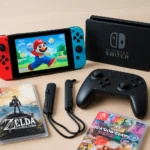
The PlayStation DualShock 4 delivers strong haptic feedback but lacks trackpads entirely, making it less flexible for non-traditional game genres like strategy and point-and-click adventures. Third-party alternatives such as the Razer Wolverine and Logitech F710 exist but lack the deep Steam ecosystem integration and customization options built into Valve’s own hardware. The trackpad learning curve remains a legitimate criticism—some users struggle with aiming precision compared to traditional sticks—but the reservation queue targets players already committed to the Steam platform rather than casual buyers.
Regional Availability and Rollout
The Steam Controller reservation queue launches in the US, UK, and EU markets this weekend, with Valve planning global expansion by 2016 as production scales. Initial stock remains limited due to manufacturing constraints, which is precisely why the queue system exists: it ensures that whatever inventory Valve produces goes to customers willing to wait and complete purchases within the designated window, rather than to resellers who can flip units immediately for profit.
Valve has not committed to unlimited stock in the near term, so early queue positions carry genuine scarcity value. Players in regions outside the initial rollout should expect delays, but the reservation system will eventually expand to include their markets as production increases.
Does the Steam Controller reservation queue prevent all reselling?
No. The queue and purchase limits reduce reseller access significantly, but they cannot eliminate secondary market sales entirely. Players who legitimately purchase controllers can still resell them if they choose. Valve’s system targets bulk scalping operations that exploit launch-day chaos—it cannot prevent individual resales on eBay or other platforms after purchase.

What happens if I miss the 72-hour purchase window after my queue notification?
You lose your position and return to the back of the queue. The 72-hour window is strict by design; it prevents speculators from reserving controllers indefinitely while waiting for prices to rise on secondary markets. If you receive notification, prioritize the purchase within that timeframe or forfeit your spot.
Can I reserve multiple Steam Controllers using different Steam accounts?
Valve’s purchase limits and IP address checks are designed to prevent this. While the brief does not detail exact thresholds, the system flags accounts and IP addresses attempting bulk reservations, making it difficult to circumvent limits through account multiplication. Attempting to do so risks account suspension.
The Steam Controller reservation queue represents a pragmatic solution to a real problem: ensuring that hardware launches benefit the gaming community rather than reseller networks. By tying purchases to Steam accounts, imposing time limits, and implementing anti-fraud checks, Valve has created friction that discourages scalping without preventing genuine customers from buying the controller they want. This weekend’s queue opening will test whether the system actually works at scale—but the intent is clear: the Steam Controller belongs in the hands of players, not speculators.
Edited by the All Things Geek team.
Source: Tom's Guide