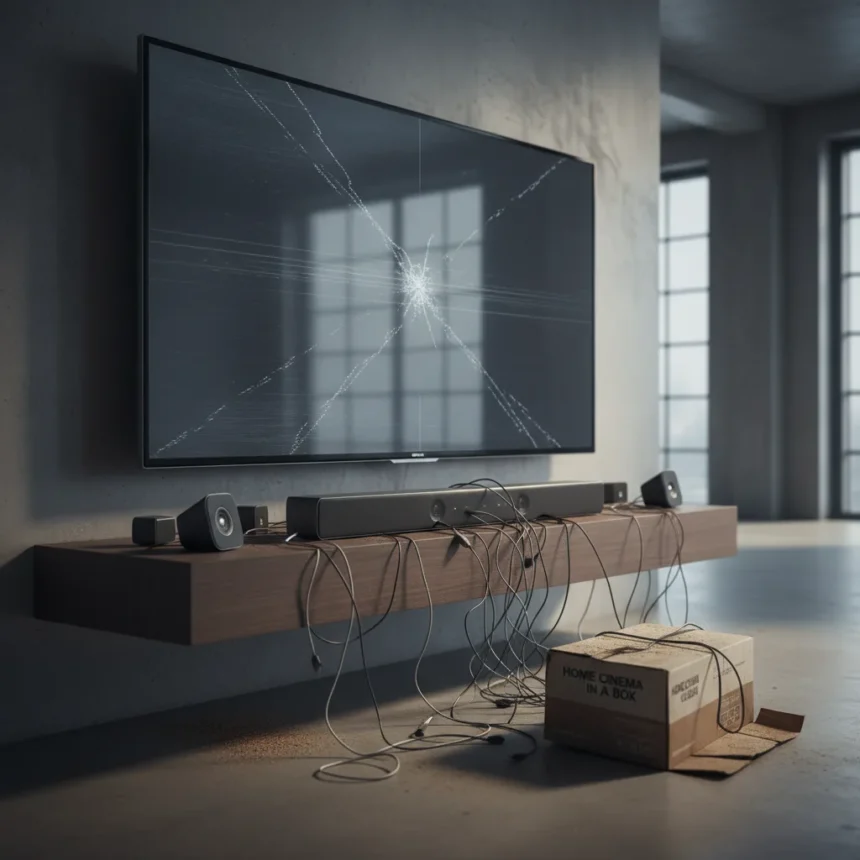
Wireless soundbar systems have become the default choice for anyone upgrading their TV sound, but the trend carries an uncomfortable echo of a previous home cinema disaster. The rise of wireless soundbar systems mirrors the hype cycle that surrounded home cinema in a box products over a decade ago—a movement that ultimately disappointed consumers and faded from prominence.
Key Takeaways
- Wireless soundbar systems are currently experiencing peak popularity in consumer audio markets
- Home cinema in a box products dominated the 2010s before declining due to poor performance and user dissatisfaction
- Both trends promise convenience over quality, repeating the same broken promise
- The architectural differences between wireless soundbars and traditional setups mirror the compromises that doomed earlier all-in-one systems
- Consumer expectations for wireless soundbar systems may face the same reality check
The Home Cinema in a Box Precedent
Home cinema in a box systems dominated consumer audio marketing throughout the 2010s. These all-in-one packages promised to deliver cinematic sound without the complexity of separate amplifiers, speakers, and cables. The appeal was obvious: simplicity, compact design, and a single price point. Yet the category largely collapsed because the core promise was fundamentally flawed. Consumers discovered that bundling components into one box meant accepting compromises in sound quality, flexibility, and longevity that no marketing could overcome.
The trajectory was predictable. Initial enthusiasm gave way to buyer’s remorse as users realized that convenience came at the expense of performance. A system that could not be upgraded, reconfigured, or repaired without replacing the entire unit became a liability rather than an asset. By the mid-2010s, home cinema in a box had become synonymous with false economy—you saved money upfront but sacrificed audio quality and future-proofed your setup.
Why Wireless Soundbar Systems Are Following the Same Path
Wireless soundbar systems promise the same fundamental appeal: simplicity, minimal setup, and the illusion of a complete audio solution. A single soundbar with wireless satellite speakers or subwoofers eliminates visible cables and complex installation. The pitch is seductive, especially to consumers who view audio as an afterthought to their television purchase. But the architecture reveals the same structural weakness that undermined home cinema in a box.



The problem is not wireless technology itself—it is the assumption that wireless convenience can replace wired performance without compromise. Wireless connectivity introduces latency, bandwidth limitations, and interference vulnerabilities that wired systems simply do not face. A soundbar that sends audio wirelessly to rear speakers or a subwoofer must balance convenience against sync stability and signal reliability. Manufacturers optimize for the marketing message (wireless, cable-free, minimal setup) rather than the technical reality (latency, interference, power consumption). This mirrors exactly how home cinema in a box manufacturers prioritized the all-in-one pitch over audio performance.
Additionally, wireless soundbar systems inherit the inflexibility that doomed their predecessors. A consumer locked into a proprietary wireless ecosystem cannot easily swap in a better subwoofer from a different brand or upgrade individual components. The system degrades as a whole, and replacement means starting over—not upgrading. This is the same economic trap that made home cinema in a box unpopular once buyers realized the long-term cost of ownership.



The Convenience Myth and Performance Reality
Both wireless soundbar systems and home cinema in a box exploit a persistent consumer fantasy: that convenience and quality are compatible. They are not. Professional audio engineers and experienced listeners know that sound quality requires deliberate speaker placement, proper amplification, and acoustic tuning. Wireless soundbar systems compress these requirements into a single product category, then market the result as a solution rather than a compromise.
The wireless component adds another layer of false economy. Consumers pay a premium for wireless convenience—the ability to avoid running cables—but gain no improvement in audio quality. In fact, the wireless protocol introduces potential points of failure and performance degradation that wired systems avoid entirely. A wired subwoofer connection is deterministic; a wireless one is probabilistic. Over time, as interference increases or device density grows, wireless systems degrade. Wired systems do not.
Home cinema in a box suffered from the same marketing sleight of hand. Manufacturers bundled five speakers and a subwoofer into a single box, charged a premium for the convenience of not shopping separately, then delivered audio performance that fell short of the price point. Consumers who had invested in traditional separate components knew the difference immediately. Those new to home audio discovered it within months of purchase.
Will Wireless Soundbar Systems Face the Same Reckoning?
The timeline suggests yes. Wireless soundbar systems are currently in the enthusiasm phase—the period when marketing dominates perception and early adopters drive sales. As the installed base grows, two forces will converge. First, consumers will accumulate long-term experience with wireless reliability, interference, and the cost of replacing entire systems rather than upgrading components. Second, the comparison class will shift from traditional soundbars to competing wireless systems, then to wired alternatives that deliver better performance at similar price points.



The home cinema in a box category did not disappear because wireless technology failed or because consumers stopped wanting simple audio solutions. It declined because the fundamental promise—simplicity without compromise—proved impossible to keep. Wireless soundbar systems face the identical promise and the identical physics problem. The only question is how long the current enthusiasm cycle lasts before reality reasserts itself.
Manufacturers betting on wireless soundbar systems should study what happened to home cinema in a box. The lesson is not that all-in-one audio is inherently bad, but that marketing a convenience feature as a performance solution creates a gap between expectation and reality that grows wider with time. Consumers tolerate that gap initially, but eventually it becomes the reason they abandon the category entirely.
Are wireless soundbar systems better than traditional soundbars?
Not necessarily. Wireless soundbar systems offer convenience in cable routing, but this convenience comes at the cost of potential latency, interference vulnerability, and inflexible component replacement. Traditional wired soundbars and separate speaker systems avoid these compromises, though they require more visible cabling and setup complexity. The choice depends on whether you prioritize ease of installation or audio performance and long-term flexibility.
Did home cinema in a box systems ever deliver good sound quality?
Some premium home cinema in a box packages delivered respectable sound for casual listening, but the category became synonymous with mediocre audio because manufacturers prioritized the all-in-one pitch over component quality. By bundling five speakers and a subwoofer into a single enclosure, manufacturers sacrificed speaker placement, driver quality, and amplification power—the core elements that determine audio performance. The category declined not because wireless technology was flawed, but because the fundamental compromise between simplicity and quality proved unsustainable.
What should consumers look for instead of wireless soundbar systems?
Consumers seeking better audio should prioritize component quality and acoustic design over wireless convenience. A wired soundbar paired with separate bookshelf speakers and a quality subwoofer, connected via traditional cables, will outperform a wireless soundbar system at the same price point. If wireless is essential, prioritize systems that use reliable, interference-resistant protocols and allow component upgrades rather than forcing full-system replacement. Avoid the trap of confusing convenience with value.
Wireless soundbar systems represent the latest iteration of a familiar consumer audio trap: the promise that convenience can replace performance. History suggests this promise will not survive contact with reality. As the installed base grows and consumers accumulate long-term experience with wireless reliability and the cost of system replacement, the current enthusiasm will give way to the same skepticism that killed home cinema in a box. The cycle is not new. Only the technology is different.
Edited by the All Things Geek team.
Source: What Hi-Fi?