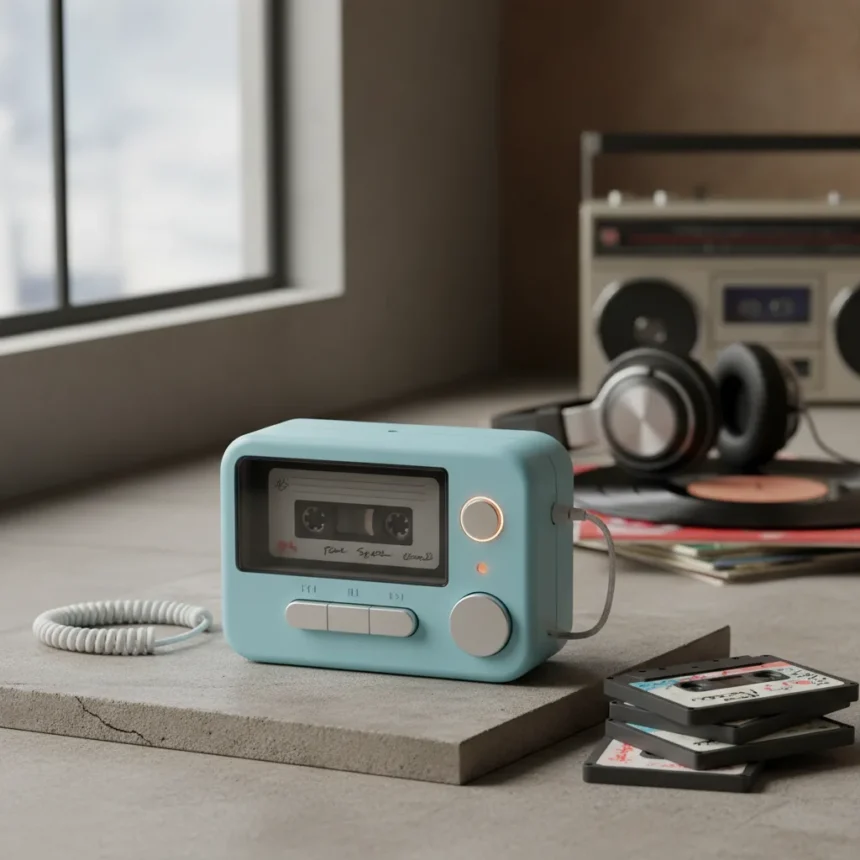
The Gadhouse MIKO is a portable cassette player priced at $99, designed for cassette collectors and space-limited listeners seeking affordable tape playback without breaking the bank. Released as a budget-friendly option in the growing retro audio market, the MIKO targets an audience nostalgic for analog sound but unwilling to spend hundreds on vintage equipment or high-end reproductions.
Key Takeaways
- The Gadhouse MIKO costs $99 and targets budget-conscious cassette collectors
- Portable cassette players appeal to space-limited users and analog enthusiasts
- The MIKO enters a niche market experiencing renewed interest from younger audiences
- Entry-level pricing makes tape playback accessible to first-time cassette buyers
- Design prioritizes portability and affordability over premium audio components
Who Should Buy the Gadhouse MIKO Portable Cassette Player?
The portable cassette player market has fractured into two camps: premium vintage machines commanding $200–$500 on the secondhand market, and new budget options like the MIKO. The Gadhouse MIKO sits squarely in the latter, making it an entry point for collectors hesitant to invest heavily in a format they may not stick with long-term. If you own a small collection of tapes and want lightweight playback without committing to a shelf-mounted boombox, this machine addresses that specific need.
Cassette collecting has resurged among Gen Z and millennial audiences seeking tangible, screen-free listening experiences. Unlike streaming services that algorithmically curate your music, a tape deck forces intentionality—you load a cassette, press play, and commit to the full album. The MIKO capitalizes on this trend by removing the gatekeeping price point that previously made entry into tape collecting feel like a luxury hobby.
What Makes the Gadhouse MIKO Stand Out in the Portable Cassette Player Category?
At $99, the Gadhouse MIKO competes against vintage portable players from the 1980s and 1990s—machines that, if functional, typically sell for $80–$150 on eBay or Reverb. The advantage of a new device is reliability. Vintage portables suffer from worn capstans, degraded belts, and corroded battery contacts. A new portable cassette player eliminates those mechanical uncertainties, offering consistent playback without requiring restoration.



The MIKO’s positioning as a retro-styled device distinguishes it from purely functional digital alternatives. While smartphone apps can simulate cassette interfaces, they lack the tactile feedback of loading a physical tape. The portable cassette player category thrives on this sensory authenticity—the click of the cassette slot, the resistance of the play button, the mechanical whir of the motor. These details matter to collectors who view the format as more than audio storage.
Practical Considerations Before Buying a Portable Cassette Player
Cassette maintenance is non-negotiable if you plan to use the MIKO regularly. Tapes degrade over time, and cheap players with poorly calibrated heads can accelerate deterioration. Budget collectors should expect to spend money on tape preservation—cleaning solutions, demagnetizers, and eventually new recordings of favorite albums as originals wear out. The $99 entry price should not suggest that tape collecting is a low-cost hobby overall; the player is just one component.



Portability comes with trade-offs. Compact cassette players typically sacrifice audio fidelity for size and battery efficiency. If you prioritize sound quality, a stationary deck with better amplification and speaker design will outperform any handheld option. The portable cassette player category accepts this compromise in exchange for convenience—you can listen to tapes while traveling, at work, or outdoors, which a stationary player cannot offer.
Battery life and power options matter more for portable devices than stationary ones. Verify whether the MIKO runs on rechargeable batteries, disposable AAs, or USB power. Each option has cost and convenience implications. Disposable batteries accumulate waste; rechargeable units require charging infrastructure; USB power limits true portability unless paired with a power bank.
How Does the Gadhouse MIKO Compare to Vintage Portable Cassette Players?
Vintage portable players like the Sony Walkman or Panasonic RQ-SX series command collector premiums despite their age. A functioning 1980s Walkman might cost $100–$200, depending on condition. The Gadhouse MIKO undercuts these prices and eliminates the uncertainty of buying untested vintage gear. However, vintage machines often feature superior build quality and audio components compared to budget new players. Collectors who prioritize authenticity and sound may prefer spending more on a restored vintage unit rather than settling for a new budget alternative.
The trade-off is simple: new equals reliability and warranty support; vintage equals character and potentially better audio. The MIKO targets buyers who value the former over the latter.


Is the Gadhouse MIKO Worth Buying?
At $99, the Gadhouse MIKO occupies a defensible position in the portable cassette player market. It removes financial barriers to tape collecting and offers predictable functionality without the gamble of secondhand purchases. If you own a handful of cassettes and want a compact, affordable way to play them, the MIKO delivers on its core promise. If you expect premium audio quality or long-term durability comparable to vintage machines, you will likely be disappointed.
The real question is not whether the MIKO is worth $99—it probably is, for its intended audience—but whether you are genuinely committed to cassette collecting as a hobby. If buying the MIKO is a novelty purchase you will abandon in three months, the money is wasted regardless of price. If you have a real tape collection and want consistent playback, the MIKO merits consideration as an entry-level option.
What should I look for in a portable cassette player?
Prioritize tape compatibility first. All portable cassette players should handle standard Compact Cassettes, but some struggle with Type II (chrome) or Type IV (metal) tapes. Check whether the MIKO supports your existing collection. Second, examine the power options—battery life matters for true portability. Third, consider build quality and warranty coverage. A $99 player with a one-year warranty offers more protection than a vintage machine with no recourse if it fails.
Can I use modern headphones with a portable cassette player?
Most portable cassette players feature a 3.5mm headphone jack, a standard that has remained consistent for decades. You can use any modern headphones or earbuds with the MIKO, assuming it includes a jack. Some budget players omit headphone outputs entirely, forcing you to use built-in speakers only. Verify this specification before purchasing if you plan to listen privately.
Are cassettes still being manufactured?
Yes, cassette tape manufacturing has resurged in recent years, though production volumes remain tiny compared to the 1980s and 1990s. Independent labels and artists release music on cassette as a niche format, and blank tapes are still available for recording. However, availability varies by region and selection is limited. If you plan to expand your collection beyond existing tapes, expect fewer options and potentially higher prices than vinyl or CDs.
The Gadhouse MIKO represents a calculated bet that cassette collecting will sustain interest long enough to justify manufacturing new portable players. Whether that bet pays off depends on your commitment to the format. For casual collectors or curious newcomers, the $99 price point makes the experiment worth trying. For serious tape enthusiasts, the real investment lies not in the player but in building and maintaining a collection worth playing.
Where to Buy
Edited by the All Things Geek team.
Source: Tom's Guide