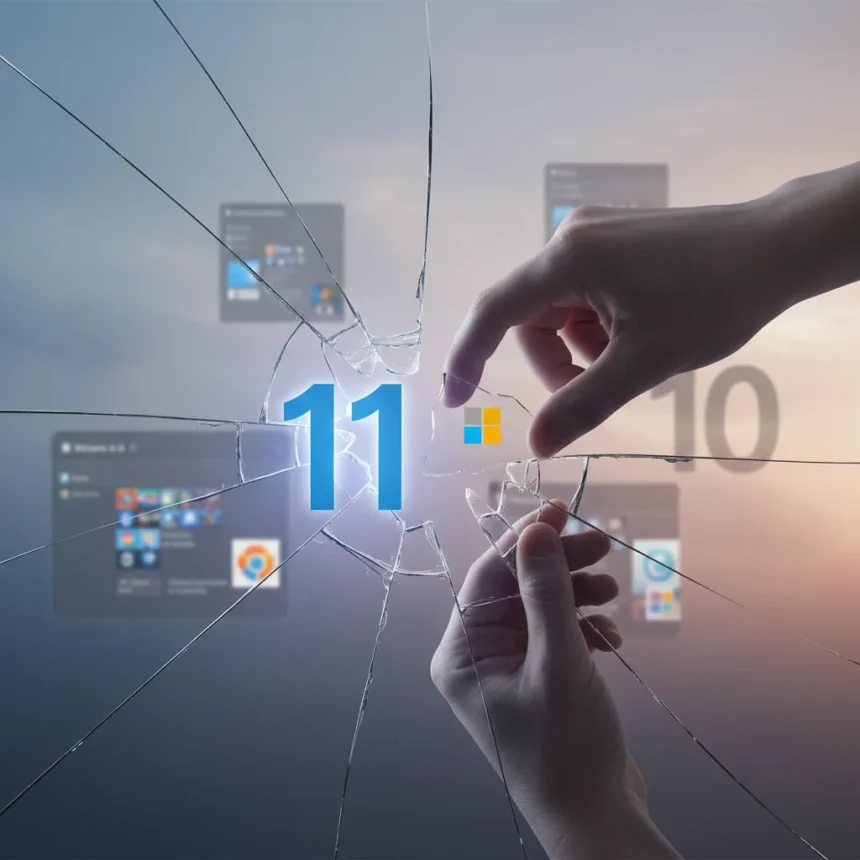
Windows 11 fixes are finally rolling out after years of community frustration, yet Microsoft faces a credibility crisis that no single patch can solve. The company is implementing long-requested changes—pausing updates indefinitely, speeding up context menus and file transfers, bundling updates into single monthly reboots—but the damage to user sentiment runs deeper than feature gaps.
Key Takeaways
- Microsoft is rolling out Windows 11 fixes for update management, performance, and bloat after sustained community complaints.
- Windows 10 support ends October 14, 2025, forcing millions of users toward Windows 11 despite lingering trust issues.
- Xbox Mode launched with minor performance gains but faces rollout glitches and underwhelming real-world results.
- Windows K2, Microsoft’s internal overhaul initiative, targets major improvements by end of 2026 into 2027.
- macOS, Linux, and SteamOS are gaining traction as alternatives as Windows 11 loses favor.
Why Microsoft is finally listening to Windows 11 complaints
Microsoft restructured its Windows team under president Pavan Davuluri to address what the company calls serious pain points—performance issues, broken updates, unwanted AI integrations, and what users term enshittification, the gradual degradation of user experience through forced features. The timing is not accidental. Windows 10 end-of-support arrives October 14, 2025, a deadline that forces millions of users toward Windows 11 whether they trust it or not. This approaching cliff, combined with rising competition from macOS, Linux, and SteamOS, appears to have shifted Microsoft’s priorities from pushing new features to stabilizing what exists.
The specifics matter. Users can now pause Windows updates indefinitely instead of facing forced restarts. Context menus and folder navigation are faster. File transfers have been optimized. Updates are being bundled into a single monthly reboot rather than scattered across weeks. These are not revolutionary changes, but they address real friction points that have eroded user confidence since Windows 11 launched in October 2021 with strict hardware requirements that slowed adoption.
The skepticism runs too deep for quick fixes
Yet the community response to these Windows 11 fixes remains hostile on Reddit’s r/Windows and X (formerly Twitter), and not without reason. Users have watched Microsoft promise improvements before. The company’s earlier commitment to reduce Windows 11 pain points received mixed responses. More critically, the timing of these changes signals financial and competitive pressure rather than genuine commitment—a distinction readers are quick to notice. One analysis of the shift notes that Microsoft’s strategy change appears driven by potential earnings concerns and competition rather than altruism, a perception that undercuts the goodwill these fixes might otherwise generate.


Windows 11 launched with the promise of a modern, streamlined operating system. Instead, users encountered bloat, aggressive ads, stability issues, and AI features pushed without clear value. The contrast with Windows 10, which most users view as simply good, has hardened into a narrative: Microsoft broke what worked, and now it is scrambling to fix it. That narrative is difficult to reverse with incremental patches.
Xbox Mode arrives, but underwhelms on performance
Xbox Mode rolled out approximately one week before this article’s context through a phased rollout via KB503831, offering a glimpse into Microsoft’s approach to performance optimization. The feature promises to boost gaming and application performance by prioritizing resources. In practice, testing shows only minor gains, and the rollout itself has been glitchy—some users on the relevant update report the feature missing entirely. More fundamentally, Xbox Mode is not sufficient reason alone to upgrade or enable new features, which limits its impact on the broader Windows 11 perception problem.



Windows K2: the long-term bet
Microsoft’s real answer to Windows 11 criticism lies in Windows K2, an internal initiative to overhaul Windows 11 fundamentals rather than patch around them. The plan targets major improvements by the end of 2026 into 2027, a timeline that acknowledges the scale of work required. Windows K2 is designed to address the architectural and experience issues that incremental fixes cannot solve—removing the Microsoft account requirement for setup, redesigning core systems for performance and reliability, and fundamentally shifting how Windows integrates AI features.
The initiative also signals a shift in philosophy. Rather than treating Windows as a platform for pushing new features and services, Microsoft appears to be repositioning it as a foundation that users control. A Microsoft VP is actively working to remove the mandatory Microsoft account requirement, a change that would have been unthinkable two years ago. These moves suggest internal recognition that Windows 11 lost user trust precisely because it felt designed around Microsoft’s interests rather than user needs.
The Windows 12 question
Some observers argue Microsoft should abandon Windows 11 entirely and release Windows 12 next year to wipe the slate clean. The logic is appealing: a fresh start, a new name, a chance to shed the negative perception. But OEM hardware requirements, marketing complexity, and the reality that Windows 12 would inherit many of the same underlying systems make this a surface-level solution. Windows K2 is the harder, more honest path—fixing what is broken rather than rebranding it.
Alternatives are gaining ground
The longer Windows 11 struggles with user perception, the more credible alternatives become. macOS attracts users seeking a stable, curated experience. Linux distributions and SteamOS appeal to those willing to trade convenience for control. None of these are mainstream replacements for Windows, but they no longer feel fringe. Microsoft’s dominance in personal computing has never been guaranteed—it is earned through reliability and user trust. Windows 11 spent the last three years burning both.



Will Windows 11 fixes actually rebuild trust?
The features Microsoft is rolling out address real problems, but they arrive after years of user frustration. Trust is easier to break than rebuild. A user who switched to macOS or Linux because Windows 11 felt hostile may not return simply because update pauses are now available. The question is not whether Windows 11 fixes are good—they are—but whether they arrive fast enough and comprehensively enough to matter before the October 2025 Windows 10 end-of-life deadline forces a reckoning.
Is Windows K2 Microsoft’s last chance to save Windows 11?
Windows K2 represents Microsoft’s acknowledgment that incremental patches will not restore user confidence. By targeting fundamental architectural changes and removing forced features, the initiative addresses why users left in the first place. Success depends on execution and timeline—delivering on promises by end-2026 into 2027, not slipping further. If Windows K2 delivers, Windows 11 could transition from a cautionary tale to a recovery story. If it stalls, users will have already found alternatives.
Why do users keep complaining if Microsoft is fixing Windows 11?
User frustration reflects three years of accumulated broken promises, forced features, and design decisions that prioritized Microsoft’s interests over user control. Current fixes address symptoms, not the underlying perception that Windows 11 was built wrong from the start. Trust requires not just fixing problems but demonstrating a sustained commitment to user priorities—something Microsoft must prove, not assert.
Microsoft is finally taking Windows 11 seriously, and the fixes being rolled out are genuine improvements. But the company faces a credibility gap that no single feature or update can close. Users will judge Microsoft not by what it promises but by what it delivers, consistently, over the next two years. Windows K2 is the real test. Until then, skepticism is not unreasonable—it is earned.
Where to Buy
WD_Black SN7100: | See at Amazon (4TB) | See at Amazon (1TB) | See at Amazon (2TB)
Edited by the All Things Geek team.
Source: Windows Central